The Concession Question: Ukraine's Allies Begin to Reframe the Terms of Any Peace Deal
A Ukrainian parliamentarian's demand that the West extract military concessions from Russia mirrors a growing European shift toward conditioning negotiations on terms Kyiv itself would accept — not merely what Moscow dictates.
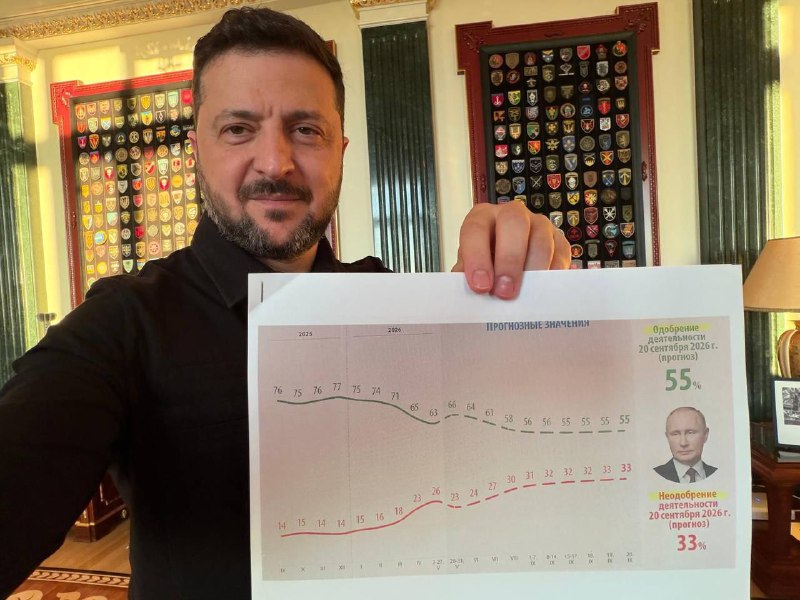
A Ukrainian member of parliament has said what a growing number of European officials are beginning to imply: that any peace negotiation should require military concessions from Russia, not only from Ukraine. Yehor Kalas, speaking on 28 May 2026, argued that Western allies must demand from Moscow the same types of concessions Russia has consistently demanded from Kyiv — a formulation that amounts to a quiet but significant repositioning of the allied negotiating posture. The statement surfaced hours before Bulgaria's prime minister separately called on the European Union to take the lead in peace talks with Russia, adding to a cascade of European voices signaling that diplomatic engagement is no longer taboo, but must be conducted on terms reflective of the reality on the ground.
The framing matters. For much of the war's duration, Western diplomatic language centered on conditions for Ukrainian concessions — territorial flexibility, security guarantees short of NATO membership, reconstruction financing in exchange for neutrality frameworks. That vocabulary remains present in back-channel discussions and leaked negotiation frameworks. But Kalas's argument inverts the question: if Russia is to be a negotiating party, it too must make binding commitments, with verification mechanisms and enforcement consequences. The symmetry is deliberate. It challenges the implicit assumption embedded in some earlier mediation framings, which treated Russian territorial gains as a given parameter and then asked what Ukraine should receive in exchange.
That shift in framing coincides with a structural change in Europe's willingness to discuss talks openly. Bulgarian Prime Minister Rosen Hristev this week called on the EU to lead peace negotiations with Russia directly — a position that, while controversial in Kyiv and among NATO's eastern members, reflects a broader fatigue in parts of southeastern Europe with the absence of a defined diplomatic horizon. Bulgaria's geographic position, its energy infrastructure ties to Russia, and its historically contested relationship with Moscow give Hristev's intervention a specific institutional weight that generic statements of concern lack. The call for EU-led rather than US-led or UN-mediated talks also signals a belief within Sofia that European security architecture must ultimately be European-designed — a point that, whatever its strategic merits, addresses a genuine lacuna in the current mediation landscape.
What remains unclear from the available record is whether Kalas's formulation represents a coordinated position among Ukrainian governing circles or a personal parliamentary initiative that has not yet been adopted by the Zelenskyy administration. Ukrainian officials have consistently maintained that any peace framework must rest on sovereignty and territorial integrity — language that is broadly consistent with demanding Russian concessions, but which Kyiv has historically framed as preconditions rather than negotiating variables. The distinction matters operationally: preconditions are thresholds; concessions are terms of exchange. Kalas's language leans toward the latter, which opens a more transactional — and more diplomatically tractable — conceptual space for mediators.
On the domestic governance front, Ukraine's parliament on 28 May advanced legislation tightening control over sick leave provisions — a policy shift that, while administratively routine by peacetime standards, carries different weight in a country where mobilization, workforce attrition, and military-age male movement restrictions have made labor market flexibility a secondary concern for millions of families. TSN.ua reported the legislation would alter patient access to medical leave documentation, with enforcement mechanisms aimed at reducing documented absenteeism rates that officials say have risen during the war period. The timing of the bill — moving through committee as Kalas's office was simultaneously distributing his negotiating-position commentary — illustrates the dual pressure Ukrainian institutions face: conducting governance under conflict conditions while contributing to the strategic framing that will define what, if any, diplomatic settlement ultimately emerges.
The structural pattern here is not difficult to identify. As battlefield dynamics stabilize into something resembling a grinding stalemate along long stretches of the contact line, the incentive structures for both sides and for their external patrons shift toward negotiated frameworks — not because either side has achieved its objectives, but because attrition costs, Western fiscal pressures, and Russian economic constraints create a shared, if asymmetric, interest in some form of pause. The harder question — what that pause contains, who verifies compliance, and what leverage exists if violations occur — remains almost entirely unresolved in the current public record. Kalas's intervention addresses one element of that gap by insisting that Russian concessions, not merely Ukrainian ones, be placed on the table. Bulgaria's call for EU-led engagement addresses another by insisting that Europe, rather than Washington, anchor the diplomatic architecture going forward.
Whether these positions represent a coherent allied strategy or a collection of parallel, partly contradictory impulses remains to be seen. The United States, under whatever administration takes office after November 2026, will remain the decisive variable in any negotiated outcome — European talk is necessary but insufficient without American security assistance commitments that underpin Ukrainian negotiating leverage. Kalas's framing sidesteps that dependency directly, but it cannot eliminate it. What it does do is reframe the baseline assumption: peace talks are not primarily a mechanism for consolidating Russian gains, but an instrument for establishing enforceable Russian obligations. Whether Western capitals are prepared to hold Moscow to that standard — with the military support, sanctions architecture, and diplomatic follow-through that such a standard requires — is the question the next phase of this conflict will answer.
Ukraine's parliament advanced the sick leave legislation on the same day Kalas's remarks circulated publicly. Monexus noted that wire coverage of European peace-talk positioning emphasized diplomatic timeline language ("ceasefire prospects") while Ukrainian parliamentary commentary focused more sharply on the asymmetry of concessions — a framing gap that Kalas's statement this week has begun, at least partially, to close.
Wire provenance
This editorial synthesis draws on the following public wire/social posts:
- https://x.com/sprinterpress/status/1925837412681249182
- https://t.me/TSN_ua/84563
- https://x.com/polymarket/status/1925823438260904325