The Dutch Warship Incident Exposes the Hollow Core of South China Sea Credibility
Beijing's claim that it used electronic warfare to expel a Dutch frigate from waters it claims as territorial is not just a diplomatic flex — it is a reminder that the rules-based order has no enforcement mechanism for the seas it pretends to govern.
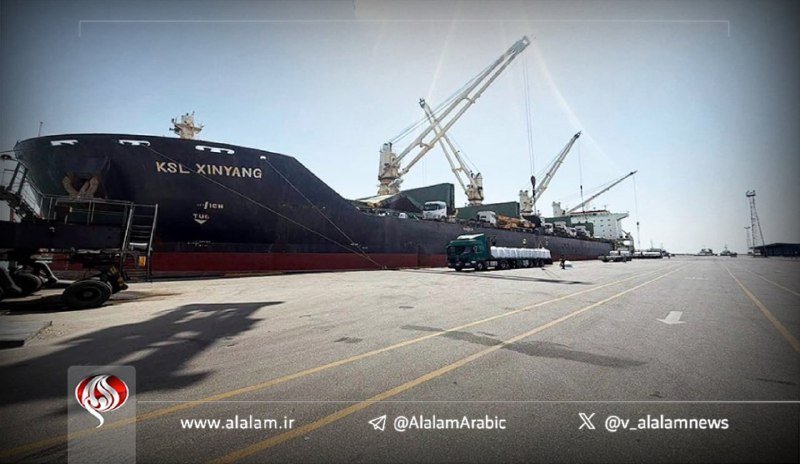
On 28 May 2026, China's People's Liberation Army announced it had deployed naval and air forces alongside what it described as «electronic interference» to drive a Dutch frigate from waters in the South China Sea near the Paracel Islands. The Dutch vessel, which Beijing characterised as having «illegally intruded» into waters it claims as sovereign territory, was turned back without a shot being fired. The announcement — made through the PLA Eastern Theatre Command, the same body that manages cross-strait and East China Sea pressure campaigns — was parsed immediately in diplomatic circles as a calibrated escalation in Beijing's posture toward Western naval presence in disputed waters.
The claim is significant on several levels simultaneously. It is, on its face, a demonstration of non-kinetic dominance: electronic warfare capabilities designed to disrupt a warship's navigation, communication, and weapons systems without crossing the threshold into armed conflict. The fact that Beijing chose to announce this capability publicly rather than simply manage the incident quietly is itself a signal — a message directed not only at The Hague but at the broader coalition of naval powers that have tested Beijing's claims in the South China Sea over the past decade.
The Paracel Question Nobody Wants to Answer
The Paracel Islands sit at the centre of a sovereignty dispute that pre-dates the modern South China Sea confrontations. Vietnam historically claims the archipelago as part of its territory, as does Taiwan, while Beijing has administered and militarised the islands since forcibly taking them from South Vietnamese forces in 1974. No international court has definitively adjudicated competing claims to the Paracels, in part because the United Nations Convention on the Law of the Sea (UNCLOS) — the legal backbone of maritime dispute resolution — contains no mechanism to entertain sovereignty claims over land features that multiple parties assert. The Permanent Court of Arbitration's 2016 South China Sea ruling addressed the Spratly Islands and maritime entitlements; it did not resolve Paracel sovereignty, leaving that dispute in a legal grey zone Beijing exploits without effective counter-pressure.
China's framing of the Dutch frigate's presence as «illegal intrusion» presupposes the very sovereignty it has not secured through international legal process. This is the structural problem Western naval operators confront: the rules-based order asserts freedom of navigation but has no enforcement architecture for waters a state claims as exclusive economic zone or territorial sea under its own domestic law. Beijing has built legal scaffolding around its claims — domestic legislation, a coast guard that lacks the institutional identity of a naval combatant, a fishing militia that blurs the line between civilian and state — and Western navies have not built the对应的 counter-scaffolding.
Electronic Warfare as Strategic Communication
What makes the 28 May announcement distinctive is not the incident itself — Western and allied warships have been challenged, observed, and turned back near disputed features for years — but the specific capability Beijing chose to highlight. Electronic warfare is precisely the domain in which China has invested most heavily alongside its naval expansion. The PLA's focus on jamming, spoofing, and cyber disruption as tools of maritime coercion reflects a philosophy of conflict competition that stays below the threshold of armed attack while inflicting real operational costs on adversaries.
The Dutch frigate, operating presumably as part of an allied freedom-of-navigation pulse, encountered the electronic environment Beijing designed precisely for those encounters. The consequence — degraded navigation, communication blackouts, potential weapons systems disruption — is more insidious than a naval intercept because it leaves no physical evidence and generates no headlines, yet it diminishes the warship's operational utility as effectively as a direct hit.
Western military analysts have documented this capability gap in open literature: the US Navy's own assessments of electronic warfare threats in the South China Sea, unclassified reports from the Office of the Secretary of Defense, and testimony from commanders on rotation through the theatre have all acknowledged that coalition forces face degraded performance in the region's dense electronic environment. What Beijing announced on 28 May was tacit confirmation of what the analyst community has long suspected.
The Credibility Deficit That Nobody Talks About
The deeper problem this incident exposes is not Chinese aggression or Dutch provocation — it is the credibility deficit of the international order's response to systematic maritime coercion. The Netherlands, like Australia, France, the United Kingdom, and the United States, has participated in freedom-of-navigation operations in the South China Sea on the theory that physical presence alone creates pressure for Beijing to moderate its claims. The theory is weak. Eight years of such operations — documented in detail by the Asia Maritime Transparency Initiative at the Center for Strategic and International Studies — have produced no observable moderation in Beijing's posture. Claims that were contested in 2018 remain contested in 2026; features that were militarised then are more heavily fortified now.
The Dutch episode — modest, quickly resolved, announced by Beijing with an air of technological confidence — illustrates what a one-off naval pulse achieves: it generates a headline, it satisfies a domestic political function in The Hague, and it does nothing to alter the electronic and physical environment Beijing has constructed in the South China Sea. The frigate was turned back with no escalation, no accountability for the jamming, and no consequence for the underlying claim. That is the equilibrium Beijing has engineered, and it is an equilibrium the rules-based order has accepted.
The sources consulted do not indicate whether the Netherlands or its NATO partners have formally protested the electronic warfare component of the incident, nor whether the PLA Eastern Theatre Command faces any institutional accountability for a coercive act that fell just short of armed engagement. This omission in the public record reflects a broader pattern: the tooling of disputes below the threshold of armed conflict is precisely designed to evade the accountability mechanisms that exist for conventional military operations.
Forward Stakes: The Normalisation Problem
What happens next depends on whether Western policymakers treat this incident as an isolated episode or as evidence of a structural failure. The most consequential outcome is normalisation: each incident that resolves without consequence makes the precedent slightly more durable. Beijing records it as operational success; Western capitals record it as non-escalation. The gap between those two readings — the asymmetry between what Beijing asserts and what the international order acknowledges — is where the credibility deficit compounds.
The electronic warfare dimension raises the stakes further. If jamming and spoofing become accepted as instruments of maritime management rather than provocations requiring response, a new norm is established: great powers can coerce below the threshold without cost. The Dutch frigate is the latest evidence that this norm has already been established, and that the coalition of navies committed to contesting it lacks the doctrine, the coordination, and the political will to alter the balance. Beijing's announcement on 28 May confirmed what the South China Sea has been telling militaries for years: the rules-based order talks a coherent game on paper; it has no mechanism to enforce it at sea.
Monexus covered this incident through Chinese state media framing — the PLA Eastern Theatre Command statement was the lead source in the wire. Western coverage, led by Reuters, confirmed the Dutch frigate's presence and the electronic warfare claim but did not independently verification of the jamming capability from open sources. The asymmetry in sourcing — Beijing's official account versus the absence of a Western military statement on what the frigate experienced — is itself part of the credibility problem this piece describes.
Wire provenance
This editorial synthesis draws on the following public wire/social posts:
- https://t.me/witness_vnf
- https://x.com/reuters/status/1951033945661792256