Escalation as Doctrine: What the U.S.-Iran Strikes Tell Us
U.S. strikes inside Iran on 27 May 2026 were framed as defensive. But a pattern has emerged that is harder to dismiss than any single incident.
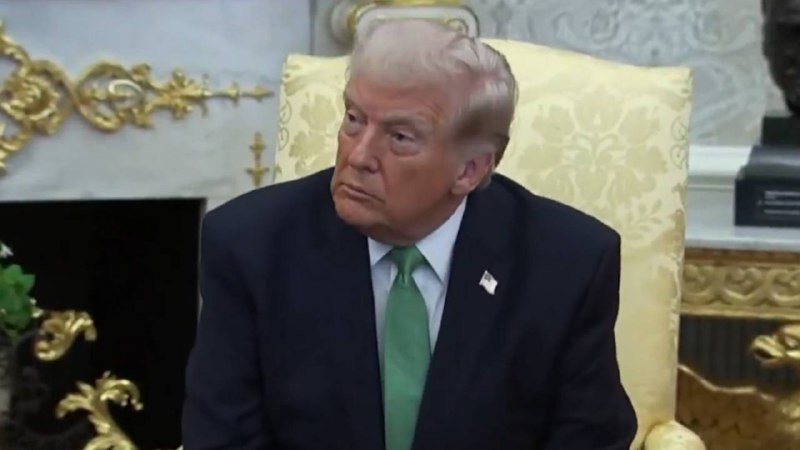
The pattern is becoming too consistent to ignore. The United States struck an Iranian military installation overnight on 27 May 2026, according to reporting confirmed across multiple intelligence and open-source channels. The target was described by U.S. officials as a site that posed a threat to American forces and commercial shipping operating through the Strait of Hormuz. Hours earlier, Iranian one-way attack drones targeted a U.S. Navy vessel and a commercial ship in the same waters. U.S. forces intercepted the drones. Both incidents are now in the public record. The sources do not specify whether the Iranian drone launch was a response to U.S. activity in the Gulf that preceded it, or an unprovoked initiation. That ambiguity matters enormously, and it is precisely the ambiguity that gets lost in each successive announcement of this kind.
The official framing is predictable: defensive posture, credible threat, proportionate response. The administration has leaned into a permissive definition of what constitutes a threatening Iranian site, one that could justify direct strikes inside Iranian territory with minimal public deliberation. Each strike is presented as an isolated incident, each one framed as a logical reaction to the last. What is harder to see in that presentation — and what the record across recent months suggests — is that the escalation itself has become the policy. The strike is not the exception. It is the strategy.
The Threat That Wasn't
Let us take the official framing at face value for a moment. Iranian drones targeted a U.S. Navy vessel and a merchant ship. U.S. forces intercepted them. The American strike then destroyed a site that officials said threatened those same forces and commercial traffic. Even within that sequence, the U.S. action escalated from defensive interception to offensive strike inside Iran. The proportionality question deserves more scrutiny than it typically receives. A site destroyed overnight in Iranian territory is not a minor tactical move. It carries escalatory weight regardless of what the site was or when it was built. The sources do not specify what the target site was — whether it was a weapons depot, a radar installation, a staging area, or something else entirely. That information is not yet public. What is public is the asymmetry: a drone attack was intercepted, and a military installation inside Iran was subsequently destroyed. That sequence deserves scrutiny on its own terms.
The administration has also maintained the strikes at a threshold designed to avoid triggering a broader Iranian military response. That restraint is real — and it is also a form of escalation management that normalizes the strikes themselves. The message to Tehran is clear: the U.S. will strike inside Iran when it chooses, at a level calibrated to avoid triggering full retaliation, and it will call each strike defensive. Iranian decision-makers are left with two options: absorb the strikes silently or respond in kind and risk the cycle continuing. Neither option is satisfactory, and both have been tested before.
The Counterpoint Iran Can Make
Iranian state media and the IRGC Navy have not stayed quiet. The IRGC declared that vessels from "hostile countries" remain barred from transiting the Strait of Hormuz. The statement is rhetorical escalation — it signals intent to weaponize the strait's strategic chokepoint without yet operationalizing it. For oil markets, for LNG carriers moving product to Europe and Asia, for the broader economy of the Gulf, this is not abstract. Every escalation in Hormuz has a measurable effect on energy costs downstream. Iran's calculation appears to be that it can impose costs on the global economy and on U.S. allies in the region faster and more visibly than the U.S. can degrade Iranian military infrastructure. Whether that calculation is accurate is contested. What is not contested is that it is a live calculation Tehran is making.
The United States and its allies have their own response calculus. The strikes on 27 May were calibrated — as previous strikes have been — to avoid triggering an Iranian military response that would justify a larger U.S. operation. That calibration is itself a form of pressure: it normalizes direct attacks inside Iran while keeping the threshold below full-scale conflict. Iranian strategists know this. They also know that every strike they absorb without a military response is registered as a concession in the region. The drone launch, then, may not have been intended to succeed. It may have been intended to give Iran a recorded response — evidence that it is not standing still — while preserving room to absorb the U.S. retaliation without triggering a broader conflict Tehran cannot win.
The Structural Logic
The pattern is not new, and it is not accidental. Over recent years, the United States has established a framework under which Iranian military infrastructure inside Iran proper can be struck when U.S. officials determine it poses a threat to U.S. forces or regional interests. Each strike is framed defensively. Each Iranian response is documented as provocation. The net result is a slow erosion of the red lines that once separated incidents in the Gulf from direct conflict inside Iran. The nuclear deal — whatever remains of it — recedes further with each cycle, because each cycle makes political space for a renewed military posture and removes incentive for diplomacy on both sides.
The structural logic here is that escalation has its own momentum. Each action justifies the next. Each strike makes the next strike easier to authorize. Each drone launch gives Iran a public record of resistance without triggering the retaliation that would make it costly. Both sides are operating inside a logic where the optimal move in the short term is to keep escalating to the threshold that stops short of full war. That threshold is not fixed. It moves. And neither side has demonstrated much interest in finding the exit ramp before it moves again.
Who Pays the Bill
The immediate costs are human. Sailors on vessels that become targets. Military personnel in installations that become targets. Civilians in the Gulf region who live with the downstream effects of elevated tensions — increased naval presence, commercial shipping rerouting, insurance premiums for tanker operators. The medium-term costs are economic: oil price volatility, LNG supply disruptions, the quiet but real pressure on European allies already navigating energy transition. The long-term costs are geopolitical: the nuclear architecture that keeps a lid on the most catastrophic scenario becomes harder to reconstruct with each cycle of strikes and responses.
The United States has calculated — so far — that the escalation is worth managing rather than ending. Iran has calculated the same. Neither side appears to have a theory of victory that does not involve the other side backing down first. In that equilibrium, the rest of the world pays the bill for a contest neither side is willing to walk away from.
Monexus framed this as a structural escalation pattern rather than a discrete incident. The wire services focused on the tactical sequence — drone launch, interception, U.S. strike — without foregrounding the policy logic that connects this event to the ones that preceded it. The editorial choice here was to foreground that pattern, because the pattern is the story.
Wire provenance
This editorial synthesis draws on the following public wire/social posts:
- https://t.me/rnintel/2847
- https://t.me/intelslava/11942
- https://t.me/osintlive/4821
- https://x.com/unusual_whales/status/1921567812349878274