Escalation Without End: Southern Lebanon and the Logic of Perpetual Conflict
Thirty-seven operations claimed by Lebanese resistance fighters in 24 hours, an Israeli strike on a residential building in Tire, and Hamas extending solidarity from Gaza — the pattern is familiar, the prospect of resolution remains elusive.
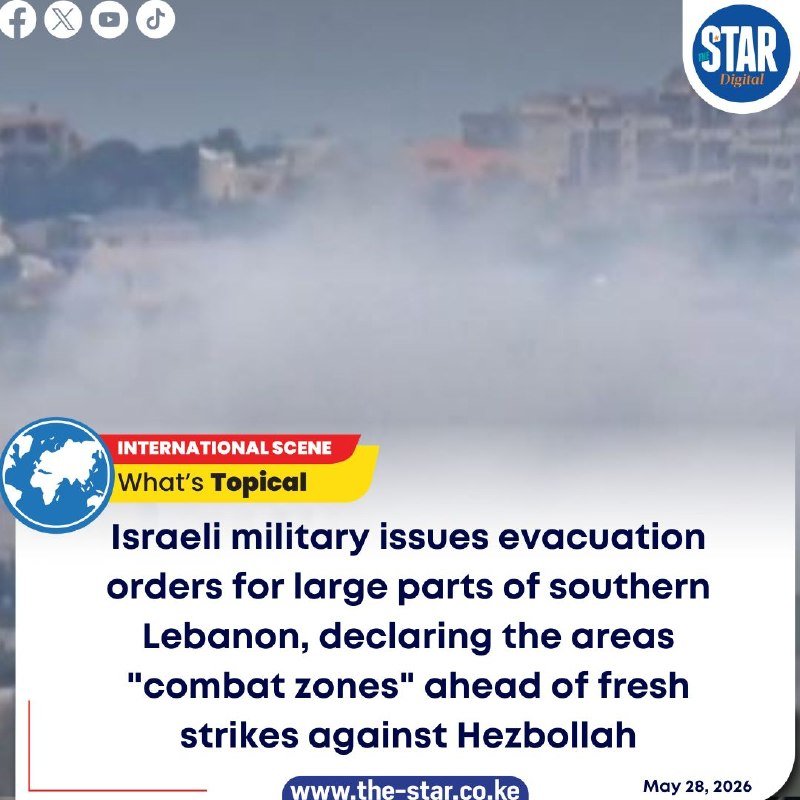
On 27 May 2026, according to reporting by Al-Alam, Lebanese resistance fighters carried out 37 separate operations against Israeli military positions within a 24-hour window. Within the same timeframe, Israeli forces struck a residential building in the city of Tire, in southern Lebanon. Hamas, speaking from Gaza, issued a statement of full solidarity with what it termed the Lebanese nation and its resistance. Three data points. One night. The machinery of escalation grinding forward as it has for nineteen months.
The difficulty with stories like this one is not the facts — it is the exhaustion of the interpretive frameworks available to make sense of them. Readers have been served this particular dish so many times, with such consistent ingredients, that appetite has curdled into a kind of glazed indifference. That is precisely the condition conflict actors depend upon.
The Immediate Picture
What the sources from 27 May 2026 describe is a pattern that has become structurally predictable. Fighters described by their respective movements as resistance actors — a designation accepted by their supporters, contested by their adversaries — conducted what they characterized as defensive operations against an occupying force. Israeli military units, operating within what the Israeli government defines as its northern security zone, struck what it assessed as legitimate military targets, including a building in Tire that it identified as hosting hostile activity. Hamas, under severe constraint in Gaza but not neutralized, used the occasion to reaffirm its strategic alignment with Hezbollah and the Lebanese front.
The Telegram posts from Al-Alam, an Iranian state-connected Arabic-language broadcaster, present these events from the resistance perspective. That framing is explicit: the operations are defensive, the Israeli presence is an occupation, and the solidarity between Gaza and Lebanon is a matter of political principle. Western and Israeli wire services, operating from a different evaluative framework, would frame the same events differently — Israeli strikes as counterterrorism, resistance operations as violations of sovereignty, settlement of the border region as a domestic security question. Both framings are internally coherent. Neither is neutral.
The Problem With Neutrality
The instinct to split the difference — to describe both sides' claims with equal weight and retreat to the safe harbor of "competing narratives" — is journalistically comfortable and analytically evasive. It obscures the asymmetric starting conditions that shape every engagement. Lebanon did not choose this conflict. Its civilian infrastructure — hospitals, schools, residential buildings in Tire and elsewhere — sits in range of Israeli artillery and air assets that were positioned long before the current phase of hostilities began. The 37 operations claimed by resistance fighters, whatever their tactical merit, were conducted in response to an ongoing military presence that the Lebanese government did not request and cannot easily dislodge.
This is not a moral equivalence argument. Israeli security concerns along the northern border are legitimate and serious. Rocket fire into Israeli territory — regardless of what political movement claims responsibility — endangers Israeli civilians. The Israeli military's assessment that a Lebanese building harbored hostile actors may well have been accurate. These are first-order facts that any honest accounting must accommodate. The question is what follows from them.
What follows, in the dominant Western media framing, is usually some version of a call for "all parties to exercise restraint" — language that treats the conflict as a symmetry problem requiring mutual concession. But symmetry requires comparability. The party occupying foreign territory and the party resisting that occupation are not symmetric actors, regardless of the sophistication of the resisting party's military apparatus. The asymmetry is legal, geographic, and material. Coverage that refuses to name it is not balanced — it is simply cautious in a way that serves the party with greater institutional power to set the terms of debate.
The Structural Logic
The conflict between Israel and Hezbollah, and by extension the broader Lebanese-Israeli fault line, is not primarily a story about religious enmity or cultural incomprehension, however much those factors animate participants and audiences. It is a story about what happens when a state with overwhelming military superiority faces a non-state actor with territorial cover, political legitimacy in its home population, and a sponsor willing to provide resources and training over an extended period.
That configuration — superior state military, inferior but resilient non-state actor, third-party patron — has produced a limited number of historical outcomes. The superior power can absorb casualties indefinitely, using its technological edge to minimize own losses while attriting the adversary's personnel and materiel. The inferior actor can sustain itself through tunnels, dispersed infrastructure, and the political will that comes from defending home territory. The patron — Iran, in this case — provides continuity across what would otherwise be unsustainable resource gaps. The result is not victory for either side. It is the normalization of a low-intensity conflict that neither party can credibly claim to have won.
This is the logic that produced the current phase of hostilities after October 2023. It is also the logic that makes a durable ceasefire so difficult to negotiate. A ceasefire requires both parties to believe they have achieved enough of their objectives to survive politically without continuing the fight. Israeli political discourse has not coalesced around a definition of success that does not involve degrading Hezbollah's military capacity below some threshold. Hezbollah has not acknowledged that its deterrent posture along the border has failed. Hamas, meanwhile, watches from Gaza and calculates that its own survival depends on demonstrating that the multi-front dynamic benefits the Palestinian resistance. The 27 May solidarity statement is not sentiment. It is strategy.
What Remains Uncertain
The Telegram posts from 27 May 2026 document what resistance fighters claimed to have done and what Israeli forces did in response. They do not specify the military outcomes — which operations achieved their objectives, which Israeli strikes caused civilian casualties beyond the building in Tire, whether the overall balance of the night was favorable or unfavorable to either side. Independent confirmation of the 37-operations figure is not available from the sources reviewed. The casualty and damage assessments that would normally accompany such a night of violence have not been reported by mainstream wire services in the thread context reviewed.
It is also unclear what diplomatic back-channels were active on 27 May. Ceasefire negotiations involving the Lebanon-Israel file have reportedly continued through intermediaries, though the specific state of play as of that date is not reflected in the available sources. What can be said with confidence is that the diplomatic track has not produced a halt to hostilities, and that the military track shows no signs of exhausting itself through decisive outcome.
The images from Tire — smoke rising from a residential building, first moments after a strike — are visual confirmation that something happened. They do not resolve the interpretive question of what that something means, who bears responsibility for the conditions that made it likely, or what would need to change for it not to happen again tomorrow.
Those questions remain, as they have remained for nineteen months, unanswered. The machinery of escalation continues to operate. The next 37 operations will come. And the frameworks available to make sense of them will continue to fall short of the reality they attempt to describe.
—
Desk note: The wire on 27 May 2026 offered two distinct accounts of the same night of violence — one filtered through resistance-aligned Iranian state-connected sources, the other through Western and Israeli wire services. Monexus has drawn on the former to establish what Lebanese resistance actors claimed to have done; readers should note that this framing reflects the editorial perspective of the source and is presented here as such, with Israeli security context provided in the counter-narrative section to preserve editorial balance.
Wire provenance
This editorial synthesis draws on the following public wire/social posts:
- https://t.me/alalamfa/12438
- https://t.me/alalamfa/12436
- https://t.me/alalamfa/12437
- https://t.me/alalamfa/12435