India's Cricket Call-Up Culture Has an Age Problem
That a 15-year-old has been named in India's cricket squad tells a familiar story: a system in love with its own shortcuts, and equally willing to spend the capital of young careers to protect them.
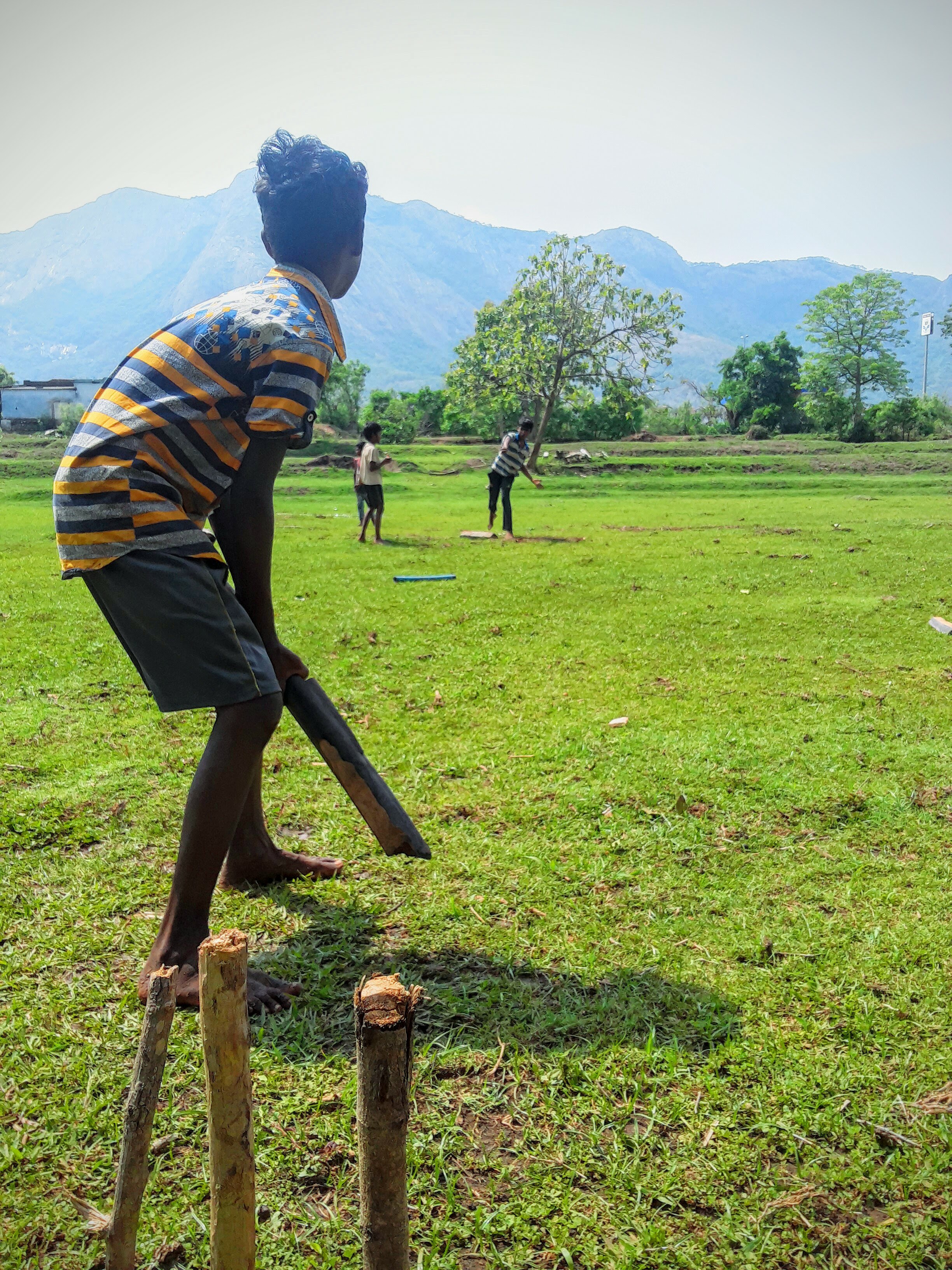
A 15-year-old called into India's senior cricket squad. The former Chief Minister of Karnataka resigned on 14 May 2026 after his government lost a trust vote in the state legislature. There is no obvious connection between these two events — except that both暴露了同一种冲动的逻辑。
When the Indian Express reported on 28 May 2026 that Aakash Chopra had publicly cautioned against the call-up of a 15-year-old nicknamed Sooryavanshi — "It can wait. He is only 15" — the former India batsman's objection landed inside a news cycle already crowded with a political drama in Karnataka. Siddaramaiah's resignation capped a tenure defined by the rhythms of legislative arithmetic rather than policy horizons. Neither headline was about patience. Neither story, read carefully, celebrated restraint.
The cricket call-up presents an easier outrage. Teenage cricketers pushed into international environments before their games are developed is not a new phenomenon in Indian cricket, but it remains a persistent one. Sooryavanshi, per the reporting, lacks what commentators call a "front-foot game" — the technique and positioning required to handle quality pace bowling on the front foot. That gap has not prevented his selection. The rationale, presumably, is that the young player possessessomething worth protecting: raw talent whose development is better served inside elite infrastructure than outside it.
That argument has just enough merit to be dangerous.
The Hoodwinking Logic
India's cricket selection architecture runs on a peculiar incentive structure. Senior team performance is the metric against which everything — selectors, coaches, state associations, broadcasting contracts — is measured. Age-group cricket, by contrast, is perpetually treated as a stepping stone rather than a destination. Young players are moved up not when their games are ready but when the system needs them, or when a rival nation has blooded a player of the same age cohort and the frame of reference shifts.
The result is a consistent pattern: talismanic teenagers enter international cricket before they've developed the technical foundations to survive sustained quality attack. Some adapt. Most do not. Those who do not — whose technique remains exposed, whose confidence erodes under scrutiny — often carry that scar through the remainder of their careers. The system absorbs their failure as a data point: the player wasn't good enough. The selection calculus that placed them in that position is rarely interrogated.
A Longer View From Karnataka
The Siddaramaiah episode offers an instructive counter-example—though not an encouraging one. The Karnataka Chief Minister resigned after losing a trust vote in the state legislative assembly on or around 14 May 2026, a sequence that the Indian Express's reporting describes as the culmination of internal coalition pressures and electoral timing calculations. The story of his departure is the story of political actors consumed by the_next electoral cycle rather than by the governance horizon beyond it.
Karnataka politics has history here. The Indian Express noted separately that the state has cycled through multiple Chief Ministers in recent cycles, with each transition tied to electoral calculations rather than policy mandates or performance evaluations. The pattern means that institutional continuity — the kind that allows a administration to see a multi-year project through — is structurally difficult to maintain.
The cricket call-up and the political resignation are not morally equivalent. But they share the same animating assumption: that the present moment's urgency justifies compressing timelines that should run longer. The selector with a young player in hand sees a slot that needs filling. The coalition manager sees a trust vote that needs winning. Both act rationally within the incentive structure they inhabit. Both leave something important unguarded.
What Slowing Down Actually Requires
It is straightforward to argue, in the abstract, that 15-year-old cricketers should be permitted to develop before facing international attack, or that political administrations should be given space to execute multi-year mandates. It is far harder to build an institutional arrangement that actually delivers that space.
In cricket, it would mean decoupling age-group selection from senior team pipeline pressure — treating Under-19 and Under-23 cricket as environments where players are allowed to fail and learn, rather than audition stages for the next elevation. The BCCI has the resources to build this. The incentive structure does not currently reward it.
In governance, the parallel is familiar: the separation of election cycles from policy timelines — which requires either different electoral structures or political coalitions capable of thinking long. Karnataka's recent history suggests neither condition is reliably present.
The uncomfortable truth is that correcting these pressures does not require new knowledge. It requires institutions willing to absorb short-term cost for long-term gain — and that willingness is precisely what the current arrangement discourages. Sooryavanshi is 15. Whatever talent he has will still be there in two years, if the system allows it to develop.
What Remains Uncertain
The Telegram-sourced reporting on Sooryavanshi does not specify the nature of his selection — whether it was a direct senior call-up, an India A placement, or a development pathway integration — and that distinction matters for evaluating the risk. The scope of Chopra's actual concern, and whether it extended to specific technical vulnerabilities or to age-selection policy more broadly, is not fully delineated in the items Monexus reviewed. Both gaps prevent a more precise assessment of whether this particular call-up represents a specific failure of process or a recurrence of a documented pattern.
The thread context does not include the reporting or statement from the BCCI or its selection panel. An official rationale — if one exists publicly — remains outside the current source set. Monexus will continue to monitor.
This publication's wire coverage of Sooryavanshi ran several days after the call-up story broke in the cricket press; the political coverage of Siddaramaiah's resignation followed the same lag. Neither story received treatment connecting it to a structural pattern, which is the gap this piece attempts to address.