Iran Condemns US Sanctions Threats Against Oman, Calls Move Illegal
Tehran issued a formal condemnation on 28 May 2026, accusing Washington of blackmail and violation of international law after the US Treasury Secretary issued sanction threats against Muscat.
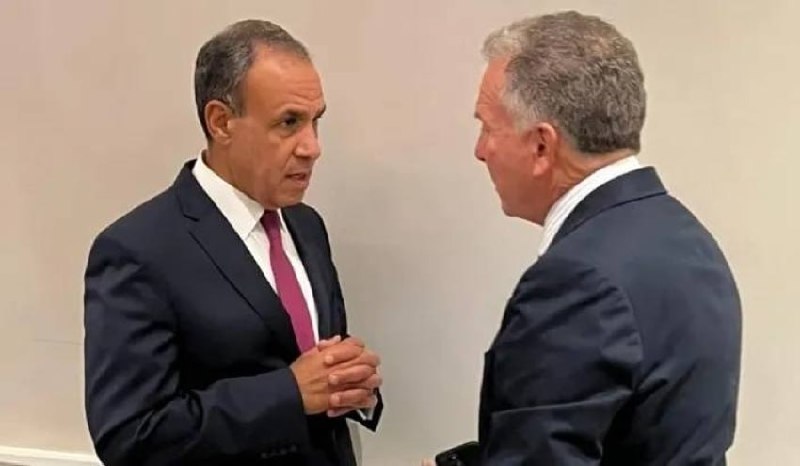
The Iranian Foreign Ministry formally condemned on 28 May 2026 what it described as a threatened sanctions move by Washington, calling the US Treasury Secretary's ultimatum an act of blackmail against an independent nation and a violation of the United Nations Charter.
The spokesperson for the Iranian Foreign Ministry issued the condemnation hours after the US warning became public, according to reports carried by multiple Iranian state media outlets [Farsna, 2026-05-28T21:19]. State-aligned news agency Fars News International separately reported the Ministry's stance, with its dispatch citing the spokesperson's characterisation of Washington's rhetoric as an attempt to coerce Muscat [FarsNewsInt, 2026-05-28T21:02].
Immediate Context
The exchange marks an unusually direct public defence by Tehran of a third-country government. Oman occupies a distinctive position in Gulf politics: it has maintained equidistance between Iran and the Gulf Cooperation Council states, declined to join the Saudi-led blockade of Qatar that began in 2017, and has functioned historically as a discreet diplomatic corridor for back-channel talks — including between Washington and Tehran during periods of acute nuclear standoff.
That intermediary role appears central to why the US threat drew a swift response from Iran's Foreign Ministry rather than the more muted reaction that sometimes follows American financial pressure on smaller states. The sources reviewed by this publication do not specify the stated reason for the US Treasury Secretary's threat, though Iranian state media characterisation of it as orchestrated under a "false pretext" suggests Tehran contests the legal basis [alalamarabic, 2026-05-28T20:53].
The Iranian Counter-Argument
Tehran's move to publicly champion Oman's sovereign standing reflects a deliberate framing strategy. By characterising Washington's move as a breach of international law — rather than a routine enforcement of existing sanction architecture — Iran is reposing the dispute in terms that resonate across a broader constituency of states with sensitivities about economic coercion from larger powers.
The language is deliberately expansive. "Blackmail" implies illegitimacy beyond mere disagreement; invoking the UN Charter transforms a bilateral sanctions dispute into a question of systemic legal norm. Neither outlet specifies what international law provision Tehran believes has been breached, and the sources reviewed do not include any written statement from the Foreign Ministry with that level of legal specificity. But the rhetorical framing carries a structural intent: to position this as a test case for how smaller nations navigate pressure from dominant economies.
Structural Dimension
The episode sits inside a larger pattern that has accelerated since 2022: the progressive weaponisation of dollar-based financial architecture as a first-order foreign-policy instrument. What began as targeted responses to nuclear programmes, military aggression, and sanctions evasion has expanded to cover an increasingly wide range of sovereign decisions — from what currency a country holds to which trade partner it prioritises.
States that once treated dollar exposure as a neutral feature of international commerce are reassessing. Oman is not a large economy; its leverage against American financial pressure is limited. But that very smallness is precisely what makes its resistance, and Iran's defence of it, noteworthy. The diplomatic signal — that individual states' decisions about trade routing, Gulf alignment, and sanctions compliance cannot be managed exclusively from Washington — is one the current sanctions regime is generating at scale.
Whether Tehran's public statement meaningfully alters the trajectory is a different question. Iran's own financial sector has been under comprehensive Western sanctions for decades. Tehran may be less interested in changing Washington's behaviour than in signalling to the Gulf, the wider Middle East, and the Global South that Washington's reach has limits that wider solidarity can test.
Stakes and Forward View
The immediate question is whether the American threat escalates. If actual sanctions are designated and implemented, the pressure on Oman's banking and energy sectors will be concrete and measurable. Gulf neighbours will face a quiet choice: extend quiet solidarity or comply with whatever secondary pressure Washington introduces to close circumvention routes.
Iran, for its part, has placed a diplomatic bet. Oman is one of the few Gulf venues where Iranian and American officials have been able to meet without the diplomatic frost that characterises bilateral relations elsewhere. If Washington's actions effectively neutralise that venue, both sides lose an channel neither can easily replicate elsewhere.
The sources reviewed do not indicate what Oman itself has said in response, nor what leverage Washington may be applying beyond the Treasury Secretary's headline threat. How Muscat navigates between Tehran's solidarity and Washington's demands — and whether the GCC as a unit offers any collective cover — will define whether this remains a diplomatic exchange or becomes the opening of a wider rift. What remains unclear from Iranian and Omani reporting is what precise US demand or filing occasioned the Treasury Secretary's threat, and whether the target is a specific sector, financial institution, or individual. Without that detail, the structural argument about sanctions-overreach depends on Tehran's framing rather than independently verified US administrative record.
Wire provenance
This editorial synthesis draws on the following public wire/social posts:
- https://t.me/farsna/87342
- https://t.me/FarsNewsInt/95218
- https://t.me/alalamarabic/78934
- https://x.com/sprinterpress/status/1928473619282345985