Iran demands unconditional release of frozen assets as Tehran and Moscow deepen strategic alignment
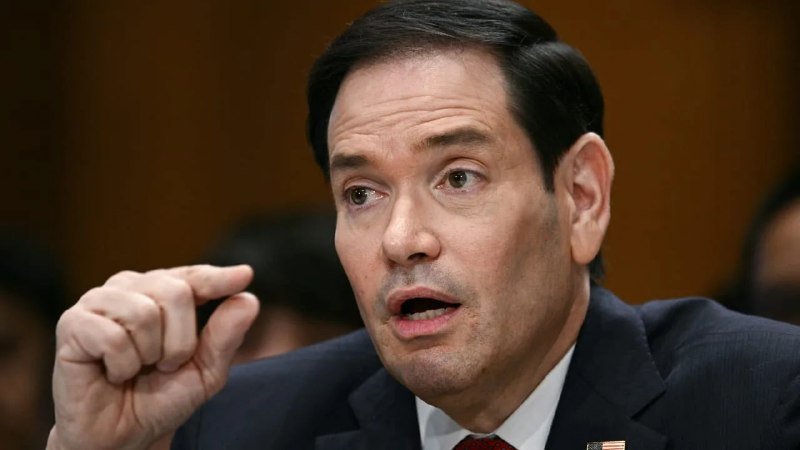
Ali Bagheri Keni, Deputy Secretary of Iran's Supreme National Security Council, met Georgy Borysenko, Russia's Deputy Foreign Minister, in Moscow on 28 May 2026, according to reporting by Iranian state media outlets Tasnim and Mehr News. The meeting produced no joint communiqué, but Bagheri used the occasion to restate Tehran's position in plain terms: Iran is seeking the unconditional release of all Iranian sovereign assets currently frozen under Western sanctions regimes. The framing matters. By insisting on unconditional release rather than a negotiated settlement, Iran is treating its frozen assets as legally its own — not a bargaining chip in broader negotiations over its nuclear programme or regional behaviour. The meeting with Russia's deputy foreign minister signals that Tehran is not making this case in isolation.
Frozen capital and the sanctions architecture
The assets in question are primarily oil-revenue reserves accumulated before the Trump administration's withdrawal from the Joint Comprehensive Plan of Action in May 2018. Under the Iran nuclear deal, Iran had been permitted to hold limited funds in accounts managed by foreign banks — funds that became targets once the United States reimposed and expanded sanctions. An estimated $7 billion in Iranian central bank assets held in correspondent accounts at US-cleared banks was moved to a frozen account at Qatar's Al-Mahfouz Bank following the 2018 withdrawal, according to Congressional Research Service documentation and subsequent Treasury disclosures. Additional Iranian state funds sit frozen in European clearing systems and in accounts linked to oil-sale proceeds held in escrow. The total remains disputed; Iranian officials have cited figures ranging from $7 billion to over $20 billion depending on how interlocked commercial disputes are counted, while Western analysts tend toward the lower end of that range.
The legal basis for the freeze has never been settled to Tehran's satisfaction. Iranian officials and their Russian counterparts argue that unilateral US sanctions imposed outside the framework of UN Security Council resolutions lack international legal standing. They cite a 2022 International Court of Justice ruling in the case Iran v. United States — which found against the US on certain asset-seizure measures — as supporting precedent, and have referenced WTO-consistent arguments about the illegality of extra-territorial sanctions in their formal submissions to international bodies. Western governments and their legal representatives dispute this characterisation, arguing that UN resolutions adopted under Chapter VII of the Charter authorized the original sanctions architecture and that subsequent unilateral measures by the United States and the European Union fall within each jurisdiction's sovereign legal authority.
The geopolitical texture of the demand
What makes Bagheri's statement significant is not merely its legal claim but its placement within a broader Iranian strategic posture. Tehran has been making variations of this argument — that frozen assets represent a form of economic coercion without legal legitimacy — for several years, typically through diplomatic channels and in the context of Vienna-based negotiations over JCPOA revival. But the 2025-2026 period has seen an escalation in tone. The change reflects both accumulated frustration and a calculation that Western governments, dealing with competing crises in Ukraine, inflation management, and nuclear non-proliferation, may be more susceptible to pressure when the alternative narrative is framed starkly. Russia, which has its own substantial reserves frozen — over $300 billion in central bank assets immobilised since February 2022 — has every structural incentive to amplify the Iranian position. A precedent that validates Tehran's claim would, by extension, complicate the legal basis for the Russian freeze as well.
The meeting between Bagheri and Borysenko fits a pattern of deepening Iran-Russia coordination on financial and diplomatic matters that has accelerated since 2022. Trade agreements denominated in non-dollar currencies, arrangements for bypassing SWIFT-based interbank messaging through bilateral clearing mechanisms, and mutual support in international forums where Western-led resolutions are contested — all have been documented in open-source reporting by the European Council on Foreign Relations, the Center for Strategic and International Studies, and regional outlets including Al Jazeera and the Tehran Bureau of Radio Free Europe/Radio Liberty. The question is whether this bilateral alignment constitutes a genuine coordinated challenge to the dollar-dominated settlement system, or a parallel complaint that happens to share rhetorical ground.
What structural shift would look like
The dollar's role as the world's primary reserve currency gives the United States and its allied clearing systems a form of structural power that is difficult to replicate quickly. The SWIFT interbank messaging network, in which dollar-denominated transactions pass through US-cleared correspondent banks, means Washington can impose costs on actors outside the formal sanctions regime without necessarily needing explicit secondary sanctions legislation. The EU's decision to freeze Russian central bank assets in 2022 — and the ongoing debate over whether those assets can be redirected to Ukraine — represents a precedent that Iran and Russia both have reason to contest: if the dominant Western powers can immobilise sovereign reserves on political grounds, the legal floor below which assets become effectively unrecoverable is lower than Western governments have historically acknowledged.
For Iran, the economic stakes are concrete. Access to its own funds would ease pressure on the rial, reduce the fiscal constraint on government spending, and alter the negotiating calculus in Vienna by removing one of the economic pressure levers the United States holds. For Russia, the incentive is different in scale but not in kind: the $300 billion frozen represents the single largest current dispute over sovereign asset rights, and Moscow has watched with interest as the Western legal position evolves. Neither Tehran nor Moscow is likely to succeed in shifting the dollar's structural role through bilateral diplomacy alone. But both have an interest in building the legal and rhetorical case for the proposition that sovereign asset freezes are a form of coercive measure, not a legal entitlement — and in creating enough pressure that the cost-benefit calculation for Western governments changes.
Unresolved questions and forward view
The sources do not specify what specific assets Bagheri was referring to in his public statement, nor what mechanism he proposed for their release. Negotiations over Iranian frozen assets have previously involved complex arrangements in which tranches of funds are released against verified nuclear compliance steps — a process that proved fragile even under the more cooperative atmosphere of the original JCPOA. The current US position, as articulated through State Department briefings and Treasury statements, is that no release is contemplated outside of verified, durable compliance with nuclear limitations — a position that puts the two sides fundamentally at odds over the sequence and preconditions for any settlement.
What is clear is that the alignment between Iran and Russia on this question is not incidental. The meeting in Moscow on 28 May was not the first of its kind, and Bagheri's public framing — unconditional, not conditional — suggests Tehran may be preparing to escalate its demand beyond what previous diplomatic communications contained. Whether that escalation is driven by a genuine calculation that Western governments are under pressure, or by internal economic necessity, or by a desire to test the resilience of the Western sanctions coalition, remains a matter of interpretation. The sources available do not provide a definitive answer. What they do establish is that the demand has been made publicly, with a senior Iranian official present, in a forum that includes a senior Russian official whose portfolio includes precisely the kind of international legal and diplomatic questions at stake. The conversation, whatever else it was, was not informal.
This publication's analysis differs from the wire framing principally in its emphasis on the structural dimension of the asset-freeze question. The Iranian state reporting in Tasnim and Mehr News presents Bagheri's position as a straightforward claim of rights; the Western wire framing, as characterised by Reuters and Bloomberg reporting on similar Iranian diplomatic communications, has typically framed the demand within the narrower context of JCPOA revival negotiations. The structural argument — that sovereign asset freezes represent a contested legal question with implications extending well beyond Iran — receives less coverage in the dominant English-language financial wire format, which tends to treat the issue as a bilateral US-Iran matter rather than a challenge to the architecture of financial containment itself. That framing gap is worth noting, because it shapes which aspects of the story are treated as central and which as peripheral.
Wire provenance
This editorial synthesis draws on the following public wire/social posts:
- https://t.me/tasnimplus/84738
- https://t.me/mehrnews/29847
- https://t.me/tasnimnews_en/84736
- https://t.me/JahanTasnim/84735
- https://t.me/JahanTasnim/84733