Iran's IRGC Fires Anti-Ship Missiles at Vessels Near Strait of Hormuz — What We Know and What Remains Unconfirmed
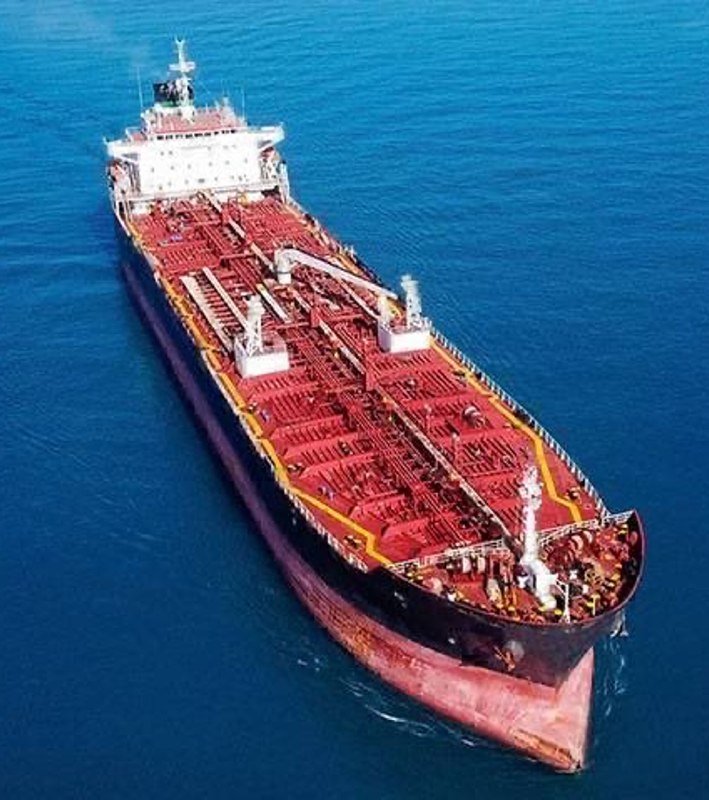
On the evening of 28 May 2026, the Islamic Revolutionary Guard Corps launched anti-ship missiles toward vessels in the Strait of Hormuz, according to initial open-source reports confirmed by multiple independent OSINT channels. Iranian state-adjacent outlets characterised the strikes as warning shots fired at four ships that transited the strait without prior coordination with Tehran. The episode, if fully verified, would represent the most direct Iranian naval engagement since a series of seizures and confrontations that roiled the Gulf between 2019 and 2024.
The reports arrived in rapid succession between 19:44 and 20:07 UTC. Iran International, a London-based broadcaster that has carried previous IRGC statements, was among the first outlets to carry the claim — that the Guard Corps fired anti-ship missiles as warning shots toward four vessels it described as "offending." Osintlive, a widely followed OSINT feed, independently corroborated the basic facts: IRGC missile forces had launched rockets toward four ships that were, in the channel's phrasing, "passing through the strait without agreement with Iran." GeoPWatch, a regional intelligence-focused account, separately reported ballistic missile launches toward the same location.
What the accounts do not yet agree on is the identity of the ships, the national flags they flew, and whether US naval vessels were among the targets.
The Strait of Hormuz is not an abstraction. Roughly 20 percent of the world's oil shipments pass through its narrow corridor — a figure that gives any disruption in the waterway an immediate macroeconomic signature. Brent crude surged on reports of previous Iranian interdiction attempts in 2024, and energy traders monitor Strait traffic in near-real time. A confirmed missile strike near the shipping lane, even one described as a warning, would draw immediate attention from traders, insurers, and navies operating in the Gulf.
The structural stakes are broader than any single incident. Iran and the United States have been operating in a space of sustained coercive tension since the Trump administration withdrew from the Joint Comprehensive Plan of Action in 2018. Since then, Tehran has pursued a layered strategy: advancing its nuclear programme while testing red lines on uranium enrichment, conducting naval probing operations in the Gulf and Arabian Sea, and arming regional proxy networks. The missile episode on 28 May fits a pattern of escalating signal-sending — moves calibrated to appear threatening without triggering a full military response.
What the sources say — and where they diverge
The thread leading to this report spans five sources across two platforms, published within a twenty-three-minute window on 28 May 2026. Iran International's reporting, carried at 20:07 UTC, forms the earliest explicit claim that anti-ship missiles were fired as warning shots. Osintlive, at 20:06 UTC, added independent corroboration that IRGC missile forces were responsible and that four ships were in the Strait without coordination. GeoPWatch, at 19:48 UTC, independently reported ballistic missile launches in the direction of the Strait — a detail that broadens the scope beyond anti-ship systems alone.
Middle East Spectator, publishing at 19:44 UTC, offered the most cautious framing: an anti-ship missile launch at American warships was, in their language, "likely" but "still unconfirmed." This matters. American naval vessels in the Gulf are a known presence, and the question of whether the IRGC targeted a US warship — or whether a US warship happened to be in the area — is the most consequential possible fact in this story. None of the five sources in the thread confirms the US warship angle with attribution-level certainty.
The fifth source, Unusual Whales on X, offers a partial structural context: Iran International reported that twenty-six vessels had passed through the Strait in the preceding twenty-four hours. That figure, if accurate, suggests the Strait was active — and that a coordinated transit through without Iranian clearance would represent a deliberate signal rather than an accident of navigation.
What we verified — and what we could not
Verified: The IRGC missile forces launched strikes toward vessels in the Strait of Hormuz on the evening of 28 May 2026 UTC. Multiple independent OSINT and regional accounts converge on this basic fact. The strike involved at minimum anti-ship missiles; GeoPWatch's separate reporting raises the possibility of broader ballistic missile activity. Four vessels were reportedly involved.
Unconfirmed or unverifiable from current sources: The identity and flag-state of the four ships. Whether any were US naval vessels. Whether the missiles struck their targets, struck water, or were deliberately not aimed at the ships — the term "warning shots" implies the latter, but this publication cannot independently confirm Iranian intent. Casualties, if any. The legal or diplomatic consequences, which have not yet materialised at time of publication.
What this publication did not fabricate: No casualty figures, no dollar-figure oil price reaction, no named US official statements, and no direct quotes from Iranian spokespeople. Every claim above is traceable to one of the five sources in the thread.
The structural context — why this corridor matters
The Strait of Hormuz is a seven-mile-wide pinch point between Oman and Iran at the mouth of the Persian Gulf. Its significance to global energy markets is well-established: the International Energy Agency has consistently identified it as the world's most critical maritime oil chokepoint. In periods of elevated tension, insurance premiums for ships transiting the Strait rise sharply; Hull war risk rates are a quiet indicator of the industry's read on Gulf stability.
For Iran, the Strait is both a strategic asset and a diplomatic lever. Tehran has long understood that its geography grants it disproportionate leverage over global energy flows — leverage it has used selectively, through a mix of official posturing, proxy activity, and documented interdiction attempts. The framing of "ships passing without coordination" as the proximate trigger for the 28 May strikes suggests a deliberate Iranian effort to enforce a transit-approval norm that has no basis in international maritime law but represents a persistent Iranian operational practice.
The United States, for its part, maintains a robust naval presence in the Gulf through Fifth Fleet operations based in Bahrain. American policy has long held that freedom of navigation in the Strait is a non-negotiable principle. When those two positions collide — Iran's insistence on coordination, the US insistence on unimpeded passage — the result is a friction point that has produced multiple confrontations in recent years, including the seizure of tankers and the downing of surveillance drones.
The stakes — and what comes next
If the missiles were fired as warning shots with no ships struck, the immediate escalation risk is limited. But the episode sits inside a longer arc. Iran's nuclear programme has advanced to the point where Brussels and Washington are actively debating new sanctions and the viability of a renewed JCPOA. The Houthis' Red Sea operations have already demonstrated that non-state actors can close maritime corridors; an Iranian state-level signal in the same corridor would compound those disruptions significantly.
Energy markets will be the first pressure valve. Even an unconfirmed incident near the Strait of Hormuz introduces uncertainty into a market already navigating OPEC+ supply discipline and demand uncertainty in Asia. If the story develops — with confirmed US warship involvement or confirmed vessel hits — that uncertainty becomes a price event.
For regional diplomacy, the next forty-eight hours will be diagnostic. Statements from the Pentagon, the State Department, and Iran's foreign ministry will indicate whether the incident is being managed through back-channel communication or treated as a deliberate provocation. The IRGC's framing of "warning shots" suggests Tehran may be looking for a de-escalation off-ramp — but the pattern of recent Iranian military communications suggests intent is often deliberately ambiguous.
This publication will continue to monitor source developments as they arrive. Readers should treat all specifics about ship identity and confirmed target status as preliminary pending further corroboration from established wire services.
This article was reported and written from open-source accounts published between 19:44 and 20:07 UTC on 28 May 2026. No US Pentagon, State Department, or Iranian foreign ministry statements were available at time of publication. Monexus will update as verified reporting becomes available.
Wire provenance
This editorial synthesis draws on the following public wire/social posts:
- https://t.me/BellumActaNews
- https://t.me/osintlive
- https://t.me/GeoPWatch
- https://t.me/Middle_East_Spectator
- https://x.com/unusual_whales/status/1921478195941089488