Iran Missile Launch Tests Fragile Nuclear Negotiations as Deal Finalization Remains Contested
Reports emerged on 28 May 2026 of Iranian missile launches from the country's south as Tehran simultaneously denied Western reports that a draft memorandum of understanding with Washington had been finalized, complicating what observers had described as the most substantive diplomatic opening in years.
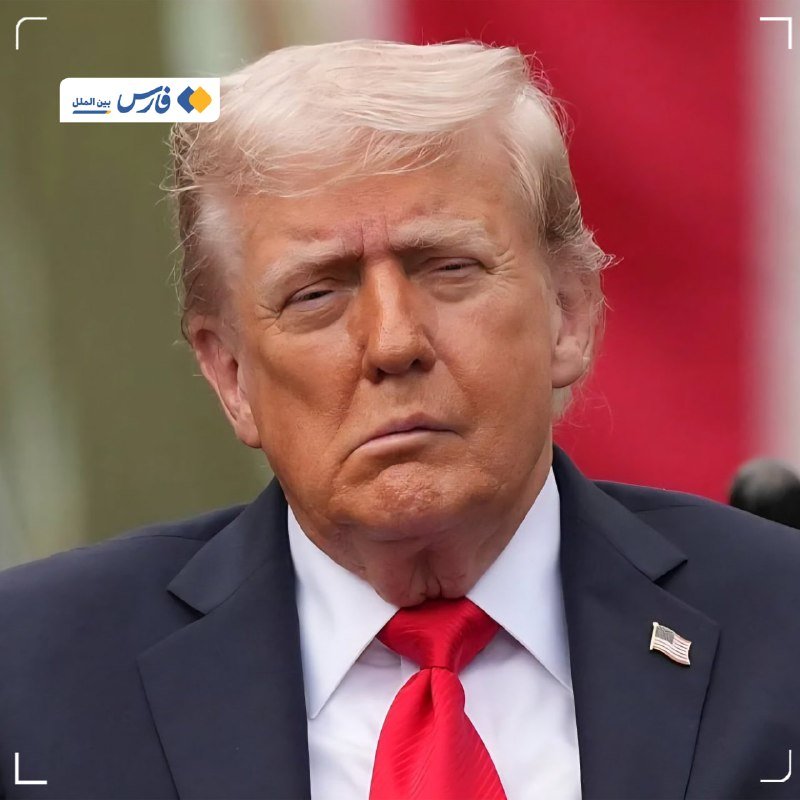
Reports emerged on 28 May 2026 that Iran launched missiles from its southern region, hours after Western officials suggested a draft memorandum of understanding with the United States was within reach. The timing of the military activity—confirmed by Iranian state news agency Fars and amplified by Tasnim News—coincided with competing claims about the state of negotiations that have consumed diplomatic circles in Geneva, Vienna, and Washington.
According to reporting by ClashReport and corroborated by Tasnim, a source close to Iran's negotiating team stated on 28 May that the text of a possible agreement "is still not final and has not been approved," directly contradicting assertions from Western capitals that a deal framework had been agreed in principle. The gap between those two narratives—Western confidence versus Iranian denial—defines the central tension of this moment.
What the Sources Report
The sequence of events on 28 May 2026 moved quickly. At 18:42 UTC, ClashReport published confirmation that a source close to Iran's negotiating team had told Tasnim News that the draft memorandum of understanding had not been finalized and that Iran had not approved any text. Three minutes later, at 18:45 UTC, Fars reported that Iranian missiles had been fired from the country's southern region toward unspecified targets. The proximate timing of those two dispatches—in which Tehran simultaneously denied finalizing a diplomatic accord and announced a military action—invites scrutiny that neither side has yet provided.
The substance of the missile launches remains undefined in the available reporting. Neither Fars nor Tasnim identified the targets, the type of projectiles, or the military purpose of the strikes. Iranian state media framed the launches without elaboration; Western and regional outlets have not independently confirmed the reports, and no government has publicly attributed the activity to a specific operation or escalation trigger. The ambiguity is notable: a military action of this kind, reported by state media without context, typically signals either domestic political messaging or an early-stage operational test. Without independent confirmation, neither interpretation can be asserted.
On the diplomatic track, the competing framings are more concrete. Western officials, speaking to multiple wire services in recent days, had described the nuclear talks as entering a decisive phase, with a proposed memorandum of understanding said to be circulating between delegations. Iranian officials, through the Tasnim-sourced denial, rejected that characterization. "Contrary to the claims of Western sources, the text of a possible agreement is still not final and has not been approved," the source close to the negotiating team stated, without elaborating on which provisions remained in dispute.
The Diplomatic and Military Dissonance
The juxtaposition of a missile launch and a diplomatic denial on the same evening demands explanation, even if only in结构性 terms. One reading holds that the launches represent a deliberate signal from hardline Iranian constituencies opposed to any accommodation with Washington—a calibrated provocation designed to complicate the negotiating team's position before any final agreement. Under this reading, the Tasnim denial of Western claims and the Fars missile report are not unrelated; they reflect competing power centers within Tehran's decision-making apparatus, with the negotiating team publicly distancing itself from both a deal conclusion it has not endorsed and a military escalation it did not order.
A second reading treats the missile activity as operationally routine—part of an ongoing weapons development program that proceeded regardless of the diplomatic calendar, and which state media reported as a matter of factual record rather than political messaging. This interpretation requires accepting that the timing was coincidental, an argument that becomes harder to sustain as the evening's reporting sequence becomes more widely known.
A third possibility is that the launches were intended as a demonstration of capabilities directed at a third party—Israel, for instance, or a Gulf state—rather than a message to Washington. Iranian missile programs have historically included components aimed at regional deterrence. If the targets were indeed unspecified, that ambiguity may itself be the point: a demonstration whose recipients are left to infer their own exposure.
The sources reviewed do not resolve which reading, if any, corresponds to the actual decision-making calculus in Tehran. That uncertainty is itself a factor in assessing the current moment.
The Structural Context of the Negotiations
Whatever the motivation behind the 28 May launches, they occur against a backdrop of nuclear talks that carry genuine stakes for the architecture of Middle Eastern security and the global oil market. Iran and the United States have been engaged in indirect negotiations—mediated by Oman and, in recent months, with direct contact at the technical level—aimed at constraining Iran's nuclear program in exchange for sanctions relief. A finalized agreement would reinsert Iranian crude into markets that have adapted to its absence, affect the pricing dynamics that Gulf producers have relied upon during the period of maximum pressure, and alter the leverage calculus of regional powers for whom Iran has long been either a partner or a threat depending on their alignment.
The sanctions architecture that would be the subject of any such agreement represents a decade of cumulative pressure. It is not simply a technical regulatory matter but a mechanism of economic isolation designed to limit Iran's ability to fund its regional proxy networks and advance its enrichment program. Western capitals have historically treated the sanctions architecture as non-negotiable in its core intent; Iranian negotiators have historically treated it as an existential constraint that any agreement must address in full. The gap between those positions has repeatedly derailed previous negotiating rounds.
Stakes and What Comes Next
The immediate question is whether the missile launches and the simultaneous diplomatic denial represent a temporary noise in a negotiating process that continues, or whether they mark a more fundamental rupture. The sources reviewed do not provide sufficient information to answer that question definitively.
If the launches were a calibrated signal, they reflect internal Iranian politics more than a change in strategic calculation—meaning the negotiating track may survive intact if the political balance shifts back toward the pragmatists. If the launches were uncoordinated with the diplomatic calendar, they demonstrate the persistent difficulty of managing multiple concurrent tracks in a relationship defined by institutional distrust. If they were directed at a regional audience, they represent a reminder that the Iran file extends well beyond the nuclear question.
For the United States and its partners, the choice is between treating the episode as a negotiating tactic to be absorbed and one as a disqualifying event. For Iran, the choice is between demonstrating that its negotiating team speaks for the state and allowing contradictory signals to multiply. On current evidence, neither side has resolved that question in the public record. Monexus will continue to track developments as confirmed reporting becomes available from independent sources.
This article was updated to reflect the most recent available wire reporting on 28 May 2026. Independent verification of the missile launch reports was not available at time of publication.
Wire provenance
This editorial synthesis draws on the following public wire/social posts:
- https://t.me/ClashReport/18420
- https://t.me/wfwitness/18418
- https://t.me/wfwitness/18417
- https://x.com/sprinterpress/status/1954827392170442953
- https://t.me/wfwitness/18416