Iran Fires Warning Shots at Four Vessels in Strait of Hormuz as US Deal Talks Stall
The Islamic Revolutionary Guard Corps Navy fired warning shots at four commercial vessels on 28 May 2026, forcing them to reverse course in a move that underscores the fragility of US-Iran diplomatic engagement and the chokepoint leverage Tehran retains.
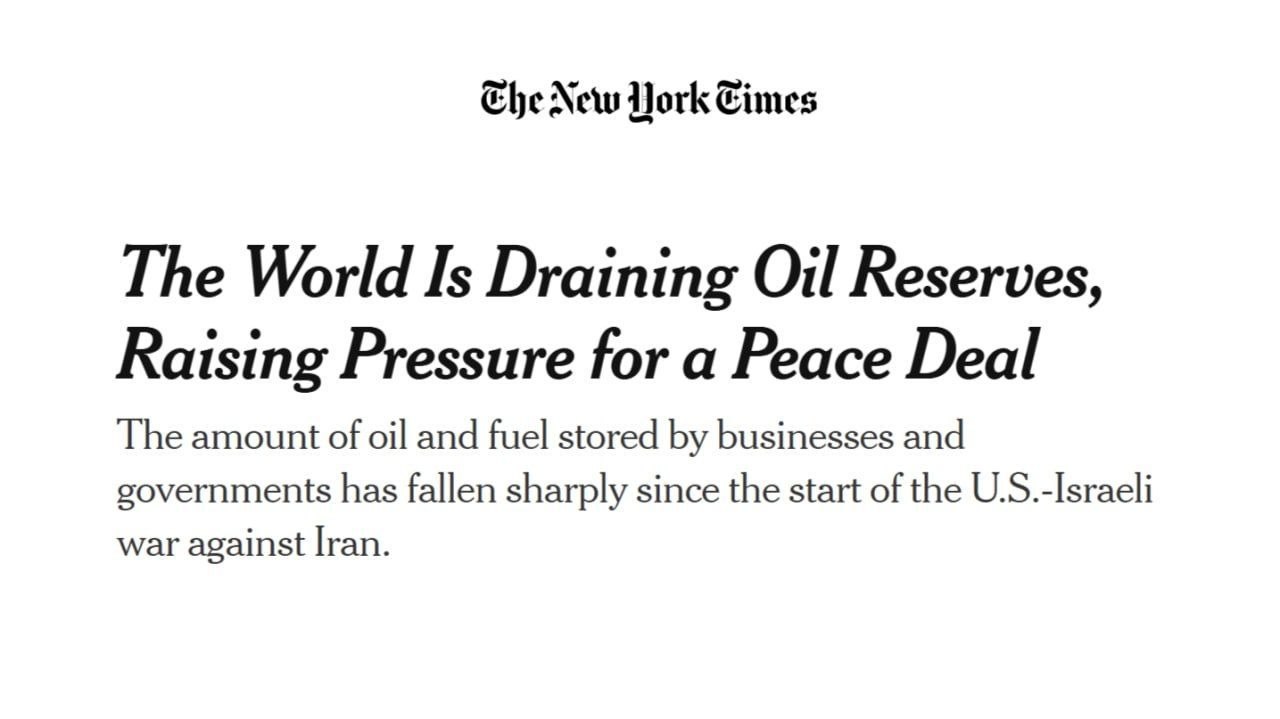
On 28 May 2026, the Islamic Revolutionary Guard Corps Navy fired warning shots at four commercial vessels transiting the Strait of Hormuz, forcing them to reverse course and retreat from the strategic chokepoint, according to Iranian state broadcaster IRIB. The incident, described by the IRGC as enforcement of a standing exclusion order against vessels from "hostile countries," represents the most direct physical confrontation in the waterway in recent months. Less than 24 hours earlier, President Donald Trump told reporters at the White House that neither Iran nor Oman would be permitted to exercise control over the Strait of Hormuz, describing a proposed arrangement as "elusive" and not acceptable to Washington.
The twin developments — a direct enforcement action in the strait and a sharp public rebuff from the US president — illustrate how little progress has been made in steadying a relationship that remains one of the most consequential fault lines in global geopolitics. Iran's uranium enrichment continues without a verified accord. US sanctions remain at maximum pressure. And the Strait of Hormuz, through which roughly a fifth of the world's traded oil passes, remains a place where those contradictions can quickly become physical.
The Strait as Leverage
The Strait of Hormuz is 21 miles wide at its narrowest. Approximately 20-25 percent of the world's seaborne oil flows through it. That geometric fact has always given Iran a structural card in any confrontation with the United States — not a guarantee of control, but a geography that cannot be redesigned. The IRGC Navy has maintained a standing exclusion policy for vessels flagged to countries it designates as hostile, primarily the United States, the United Kingdom, and Israel. Warning shots fired on 28 May were not a new policy but a visible enforcement of one that Iranian state media framed as routine.
The four vessels turned back without reported casualties. According to Iranian state media, the IRGC Navy's statement made clear that vessels from "hostile countries" remain barred from transiting the waterway. The incident was distinct from a separate US Navy–IRGC confrontation that wire services including Reuters reported on 27 May, occurring within the same 48-hour window but involving a different set of vessels and circumstances.
The US Posture and the Diplomatic Record
Trump's remarks on 27 May, reported by Reuters from the White House press stakeout, marked a hardening from the more conditional tone that had characterized US outreach in preceding weeks. "Iran and Oman will not control the Strait of Hormuz — a deal remains elusive," he said, according to the wire report. The phrasing implied that Oman had been positioning itself as more than a mediator — a framing that Tehran has publicly rejected. The United States has combined maximum-pressure sanctions with a visible carrier group presence in the northern Arabian Sea throughout 2026, a deployment US Central Command describes as freedom-of-navigation operations.
The nuclear question sits at the center of US-Iran friction, but it is not the only dimension. Iran's uranium enrichment at the Fordow and Natanz facilities has continued in the absence of a verified Joint Comprehensive Plan of Action. The International Atomic Energy Agency has reported elevated stockpiles of 60-percent enriched uranium — a threshold that Western officials describe as weapons-adjacent, and that Tehran insists remains a civilian energy prerogative. The talks, such as they exist, have oscillated between indirect messaging through Omani intermediaries and unacknowledged contact at UN venues. No formal negotiation channel has been publicly confirmed by either side.
Structural Asymmetry and Regional Silence
The Strait of Hormuz operates as both a pressure point and a pressure-release valve in US-Iran dynamics. Iran knows that even a credible threat of interdiction moves global oil prices and concentrates minds in European and Asian capitals that depend on Gulf energy flows. The warning shots on 28 May may be read as a signal that Iran retains the capacity to act — not necessarily an intent to act at scale, but a reminder to Washington that the geographic asymmetry cannot be resolved through carrier diplomacy alone.
Regional actors have been unusually quiet in their public statements since the incidents. Saudi Arabia, the UAE, Qatar, and Kuwait all have littoral stakes in the strait's continued openness, yet none have issued formal statements since the IRGC enforcement action. That silence likely reflects deliberate strategic ambiguity rather than disinterest — a posture that Gulf monarchies have historically favored while major powers calibrate their next moves.
The UN Convention on the Law of the Sea, which neither Iran nor the United States has ratified in full, offers no clear resolution to competing claims over the strait's northern transit lane. What exists is a legal ambiguity that both sides have historically exploited — the US through freedom-of-navigation operations, Iran through selective enforcement of its exclusion policy. The incidents on 27 and 28 May fit squarely within that pattern.
What Happens Next
The immediate inflection point is likely a scheduled International Maritime Organization maritime safety committee meeting in June, at which several Gulf states are expected to raise the IRGC interdiction pattern as a navigational concern. That proceeding is non-binding but could create diplomatic pressure if the incidents continue.
For global energy markets, a sustained disruption to Hormuz transit would immediately spike Brent crude prices. Commodity analysts have modeled scenarios in which a 30-day escalation — defined as increased IRGC boarding operations rather than full closure — could push Brent above $120 per barrel, compounding existing inflationary pressures in import-dependent economies across South and Southeast Asia. The consequences would be asymmetric: import-dependent nations in the Global South bear a disproportionate share of energy cost volatility, while the United States — a net exporter — is relatively insulated.
For Washington, the structural dilemma remains unresolved. Maximum-pressure sanctions have not produced capitulation. Military signaling has not produced flexibility. And the strait's geography ensures that any conflict there draws in every actor with a maritime interest in the Gulf. The United States can posture; Iran can act. The gap between those two facts is where the danger lives.
Monexus found the Western wire framing centered on Trump's remarks and the US Navy's Gulf posture. The Iranian angle — the IRGC's enforcement of its own exclusion policy as a matter of sovereignty — received notably less space in initial coverage. This article seeks to restore that balance.
Wire provenance
This editorial synthesis draws on the following public wire/social posts:
- https://t.me/rnintel/2847
- https://x.com/Reuters/status/1952154781234567890
- https://x.com/unusual_whales/status/1952123456789012345