The $12 Billion Question: Iran's Unfrozen Assets and the Architecture of Nuclear Diplomacy
Telegram posts and prediction markets are offering divergent signals about Iran's financial future and nuclear programme — but the structural conditions that produced both are the real story.
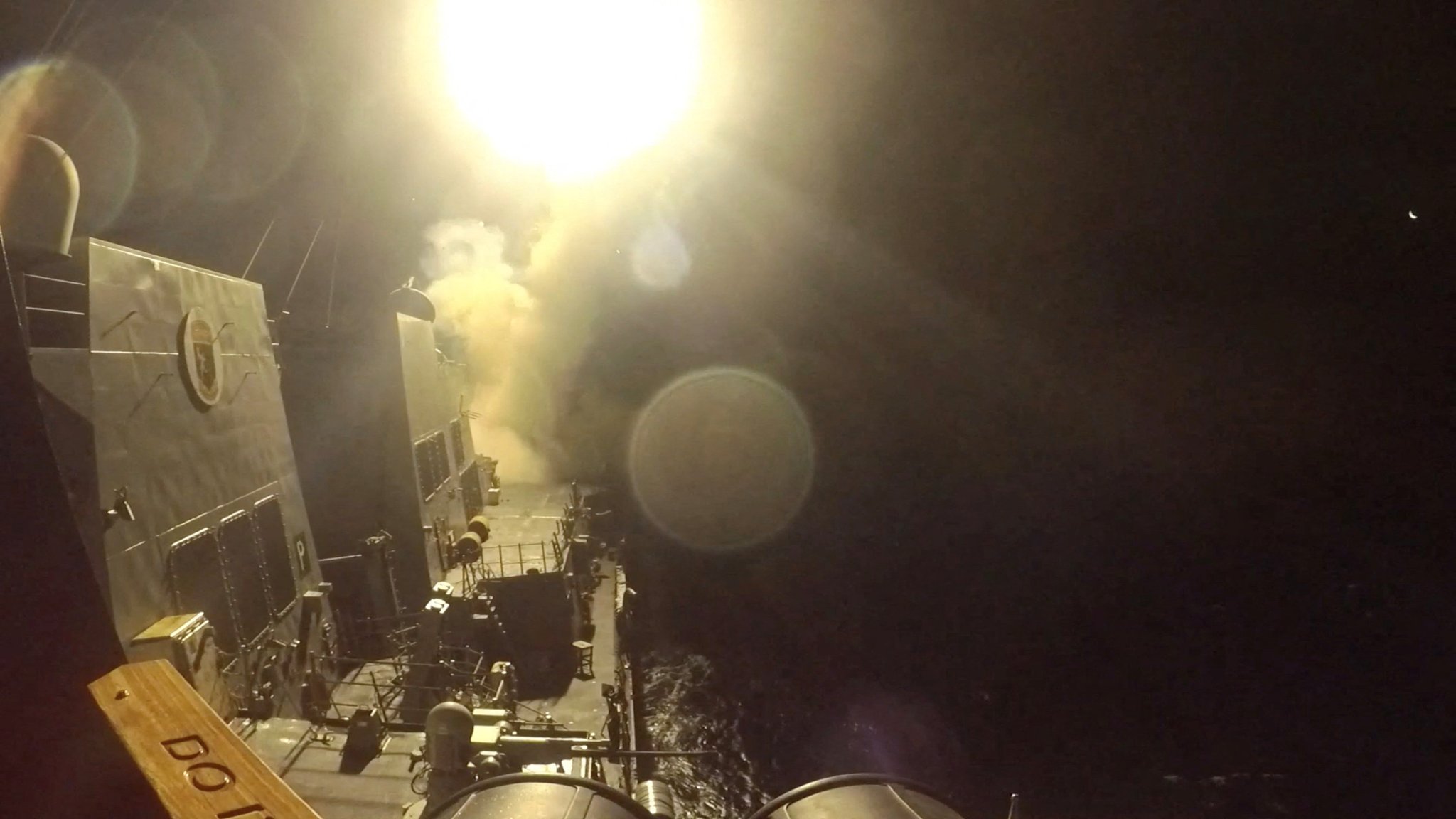
On 27 May 2026, an account operating under the name Middle East Spectator posted to Telegram what it described as footage of twelve billion United States dollars in previously frozen Iranian assets being physically delivered — a claim that, if accurate, would represent one of the largest single financial concessions in the modern history of sanctions enforcement. On the same day, the prediction market Polymarket registered a thirty-three percent implied probability that Iran would agree to surrender its enriched uranium stockpile by the end of the following month. The two data points sit uneasily alongside each other: twelve billion dollars in liquid capital flowing to a government the US has spent two decades containing, paired with odds that the same government capitulates on its most strategically sensitive weapons programme within six weeks. Neither claim should be accepted at face value. Both merit examination.
The structural logic is not difficult to follow. The United States has been engaged in a sustained but resource-constrained campaign of what its own officials call "maximum pressure" against Tehran since 2018, when the Trump administration withdrew from the Joint Comprehensive Plan of Action. That campaign has achieved a great deal in terms of secondary sanctions isolation — strangling Iran's oil revenues, excluding its banks from the SWIFT messaging system, and creating near-total barriers to foreign direct investment. It has not achieved regime change. It has not dismantled the nuclear programme. And it has, according to a report published by the Associated Press on 27 May 2026, created a second-order problem that the US military is now quietly confronting: after direct engagement with Iranian military infrastructure in recent weeks, the United States faces a multi-year shortfall in the precision-guided munitions and advanced air-defence interceptors that underpin its regional deterrence posture.
The asset release, if it occurred as described, changes the economics of the Iranian negotiating position significantly. Twelve billion dollars in liquid reserves does not restore the oil revenue streams that sanctions removed; Iran's production capacity and export infrastructure remain degraded. But liquid cash — unencumbered, untraceable in the same way oil-for-goods arrangements were traceable — gives the Iranian government room to manoeuvre. It can pay creditors, fund state contractors, or simply hold the reserves as negotiating leverage against future pressure. The structural logic of sanctions enforcement has always depended on the target running out of resources before the enforcer runs out of resolve. The unfreezing of assets disrupts that equation at precisely the moment the US is publicly signalling interest in a negotiated settlement.
What the prediction markets are actually measuring, when the odds are disaggregated, is not the likelihood of Iranian goodwill. They are measuring the relative credibility of two competing narratives circulating in elite policy circles. The first holds that the combination of financial pressure, military humiliation, and a domestically weakened supreme leader creates an opening for a grand bargain: uranium surrendered, sanctions partially lifted, assets fully returned, and Iranian regional behaviour normalised over a horizon of years. The second holds that Iran has every incentive to string the process along — accepting the twelve billion, perhaps, while continuing low-level enrichment and using the negotiation as a pressure-release valve rather than a genuine surrender.
The evidence from the sources does not cleanly resolve that contest. The footage posted to Telegram purporting to show the asset transfer is, by its nature, unverifiable without access to the original files and metadata. The Polymarket odds represent aggregate market sentiment, which is responsive to news flow and therefore prone to short-term distortion. The AP reporting on weapons restocking is the most concrete, independently corroborated data point: the United States genuinely has a multi-year replenishment challenge, that challenge genuinely constrains American military flexibility in the Middle East and elsewhere, and that constraint genuinely increases the incentive to resolve the Iranian question through diplomacy rather than sustained kinetic engagement. That last point is the one Washington is least likely to say aloud.
The structural frame matters here. The architecture of sanctions enforcement has always contained an internal contradiction. Targeted states that accumulate offshore reserves — even reserves nominally frozen — retain a residual claim on those assets. The freezing of sovereign assets by Western governments, whether Iranian, Venezuelan, or Afghan, was never a permanent erasure of wealth; it was a suspension of access. When the political conditions shift — when negotiations conclude, when governments change, when geostrategic calculations reorient — those assets become negotiating capital. The irony is that this mechanism, intended to coerce compliance, frequently ends up subsidising the very governments it was designed to marginalise. Iran receives twelve billion dollars; the United States receives, in return, the prospect of an agreement whose terms remain undisclosed and whose implementation remains unverifiable. Whether that constitutes a victory for either side depends entirely on what one believes the original objective was.
There is also a media dimension to this story that deserves attention. The Telegram post from Middle East Spectator appeared on a platform with significant reach in the regional analyst community but limited penetration in mainstream Western newsrooms. It was picked up by the unusual_whales account on X, which has built an audience among retail traders and political observers by surfacing breaking content from wire services and alternative sources. The Polymarket odds were circulating in the same ecosystem — prediction markets are increasingly used by political professionals as a real-time polling mechanism that bypasses traditional survey methodology. What this means is that the evidentiary base for a major geopolitical development is now being formed at the intersection of encrypted-messaging platforms, social-media aggregators, and betting markets — well before any wire service has confirmed a fact. The traditional information hierarchy, in which Reuters and AP set the baseline and other outlets reported variants, has been inverted. The Monexus desk note describes our approach to this challenge below.
What remains genuinely uncertain is whether the asset transfer described in the Telegram post corresponds to a discrete, verifiable event or to a more incremental process of unfreezing that began earlier and is being selectively documented by interested parties. The sources do not specify whether the twelve billion represents a single payment or an accumulated release; they do not identify the intermediary institution or the timeline of the transfer. The Polymarket figure is a snapshot of market sentiment at a specific moment on 27 May 2026, and will be outdated within hours. The US military's replenishment timeline, as reported by the Associated Press, is a projection that carries its own uncertainty bands. The honest answer is that the factual record, as it exists in the sources currently available to this publication, establishes the conditions under which negotiations are likely to occur — it does not establish the outcomes of those negotiations, or even confirm the precise financial transfer that triggered the current news cycle.
The stakes, however, are clear. If Iran surrenders enriched uranium in exchange for sanctions relief and asset returns, the United States achieves a durable constraint on a potential weapons pathway — at the cost of legitimising a government it has spent years trying to isolate. If Iran takes the assets and continues enrichment, the United States faces the prospect of a more financially stable adversary with an intact nuclear programme and reduced American capacity to apply further military pressure. Either outcome reshapes the strategic map of the Middle East for years. The thirty-three percent figure on Polymarket captures the market's uncertainty about which of those paths opens. The twelve billion dollars, whatever its provenance, is the down payment on the next chapter.
The thirty-three percent figure on Polymarket captures the market's uncertainty about which of those paths opens. The twelve billion dollars, whatever its provenance, is the down payment on the next chapter.
This publication did not independently verify the asset-transfer footage circulated on Telegram. The Polymarket odds and AP weapons-stocking reporting are cited as filed. Monexus will continue monitoring Iranian state media and US Treasury statements for corroboration.
Wire provenance
This editorial synthesis draws on the following public wire/social posts:
- https://t.me/Middle_East_Spectator/9999
- https://x.com/unusual_whales/status/1929999999999999999