Iran announces retaliatory strike on US base as diplomatic backchannel frays
The Islamic Revolution Guards Corps announced a retaliatory strike against a US military installation on Wednesday, hours after Iranian officials condemned what they called a repeated violation of ceasefire terms — a sharp escalation as indirect nuclear talks face renewed strain.
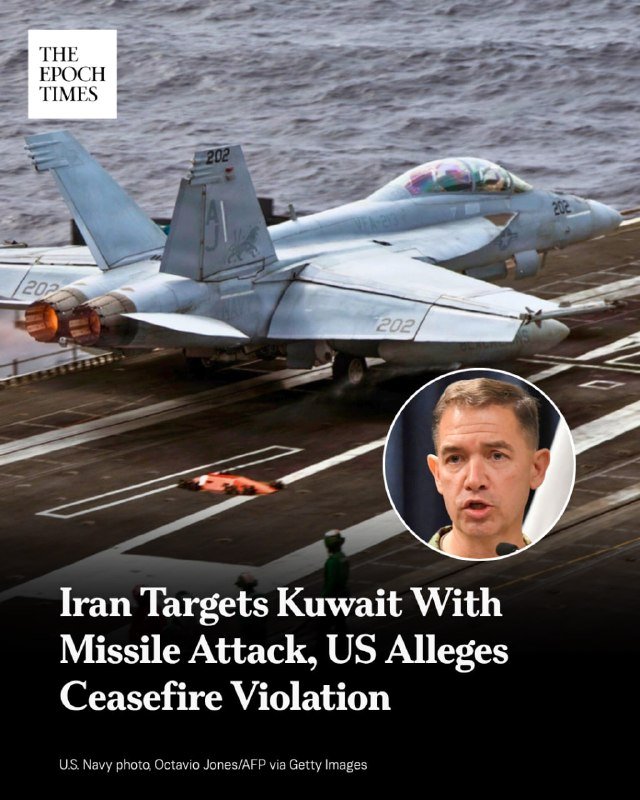
The Islamic Revolution Guards Corps announced on Wednesday that it had carried out a retaliatory strike against a US military installation, citing what it described as repeated American aggression against Iranian positions. The announcement came hours after Ismail Baqaei, the spokesman for Iran's Ministry of Foreign Affairs, issued a sharp condemnation of what he termed systematic violations of ceasefire terms by the United States, including an attack on areas near Bandar Abbas on the Gulf coast.
The timing of the announcement — confirmed by multiple Iranian state-affiliated outlets including Tasnim News and Mehr News on the morning of 28 May 2026 — places the strike within an already tense window. The US and Iran have been conducting indirect negotiations through Omani mediation, and the talks have repeatedly stalled over the sequencing of sanctions relief and nuclear programme constraints. Any military incident risks undermining the channel that both sides have, until now, maintained as a pressure-release valve.
What the IRGC announced
According to the IRGC statement carried by PressTV, the Corps issued what it described as a "stern warning" to the United States before launching the attack. The statement said the action was a direct response to what Iranian officials characterised as an escalation pattern rather than an isolated incident. The statement did not specify the name or precise location of the targeted base, and no independent confirmation of the strike's impact was immediately available from Western or regional wire services. Iranian state media described the operation as limited and proportionate — language designed to frame the action as calibrated rather than a step toward broader hostilities.
The Foreign Ministry's statement, delivered by Baqaei, said the United States had "repeatedly violated the ceasefire" and described the American action near Bandar Abbas as a military aggression that Tehran would not leave unanswered. The specificity of the location — a city home to a major commercial port and a significant Iranian naval presence — suggests the incident touched interests that the Iranian military establishment was prepared to defend with visible force.
The ceasefire context
The term "ceasefire" requires context that the available Iranian sources do not fully supply. The US-Iran relationship has no formal ceasefire agreement in the conventional sense, but both sides have, at various points, maintained unwritten rules of engagement designed to prevent escalation — particularly in the Gulf, where US naval presence is continuous. It is not yet clear from the available sources whether this refers to an understood but unannounced arrangement related to the Oman-mediated talks, or whether Iranian officials are characterising the broader diplomatic atmosphere as having an implicit ceasefire character that the US has now breached.
Western wire reporting on the indirect negotiations has noted that the talks are approaching a critical juncture. The US has insisted on a lengthy suspension of uranium enrichment above 60 percent purity; Iran has demanded immediate removal of designations on banks and oil-export revenue streams that were imposed under the maximum-pressure campaign. Neither side has publicly described the talks as having collapsed, but the language emerging from Tehran on Wednesday suggested that the patience of the Iranian Foreign Ministry — and by extension the military — is narrowing.
The diplomatic backchannel under strain
Oman has served as the primary intermediary between Washington and Tehran since the collapse of the 2015 nuclear agreement and the subsequent reimposition of sanctions. The Sultanate's quiet-diplomacy model is designed to keep communication channels open without the visibility that either side might interpret as concession. That model depends on both sides choosing restraint over demonstration — a calculation that is disrupted when either side conducts visible military action against the other.
Iranian officials have, in recent months, signaled that they view the Trump administration's approach to the negotiations as两手棋 — simultaneous public pressure and private signaling designed to extract maximum concession with minimum cost. The IRGC statement on Wednesday fits a pattern in which Tehran responds to perceived American provocations with proportional military force rather than diplomatic escalation alone. Whether that proportionality holds — and whether the US responds with further military positioning or returns to the Omani channel — will determine whether this remains a contained incident or marks a shift in the negotiating posture of both governments.
Stakes and what comes next
If the ceasefire framing Iranian officials are applying reflects a genuine, if informal, understanding between the two governments, then Wednesday's events represent a significant rupture. The nuclear talks are the only structured mechanism preventing a further buildup of Iranian uranium enrichment beyond the thresholds that the US and its allies consider red lines. A breakdown in that channel does not automatically produce a military confrontation, but it removes the primary pressure-release valve that has kept the relationship from spiraling into direct exchanges.
The immediate stakes are threefold. First, whether the US confirms or denies the strike and how it characterises the incident will signal whether Washington intends to respond militarily or to attempt to pull back to the Omani channel. Second, whether the strike causes casualties — American or otherwise — will determine the domestic political pressure that constrains any US administration's choices. Third, the response of the broader Gulf states, who have a direct interest in the stability of the Strait of Hormuz, will shape whether the incident remains a bilateral matter or draws in regional actors.
The available sources do not yet provide confirmation of the strike's outcome, the US response, or the specific ceasefire terms that Iranian officials say were violated. Monexus will continue to track reporting from both Western and Iranian-affiliated outlets as the situation develops. The gap between the two narratives — what Tehran says happened and what the US acknowledges — will, for now, remain the central unresolved question.
This publication notes that the available Iranian state-media sources describe the incident from a single institutional perspective. Readers should note that the characterization of a "ceasefire" and the framing of the US action as "aggression" reflect Tehran's legal and diplomatic position and have not been corroborated by independent reporting or US government statements as of the time of publication.
Wire provenance
This editorial synthesis draws on the following public wire/social posts:
- https://t.me/presstv/38492
- https://t.me/tasnimnews_en/41871
- https://t.me/mehrnews/52719
- https://t.me/JahanTasnim/29403
- https://t.me/presstv/38490