Israeli Drone Strike in Sidon Kills Former Al-Alam Journalist and Family — What the Sources Say
A pre-dawn Israeli drone strike in Sidon, southern Lebanon, killed a family of four and Hossam Zidan, a former journalist with Iran-linked broadcaster Al-Alam. The incident, reported across regional wire services on 28 May 2026, raises questions about target selection, civilian harm, and the risks faced by journalists operating in active conflict zones.
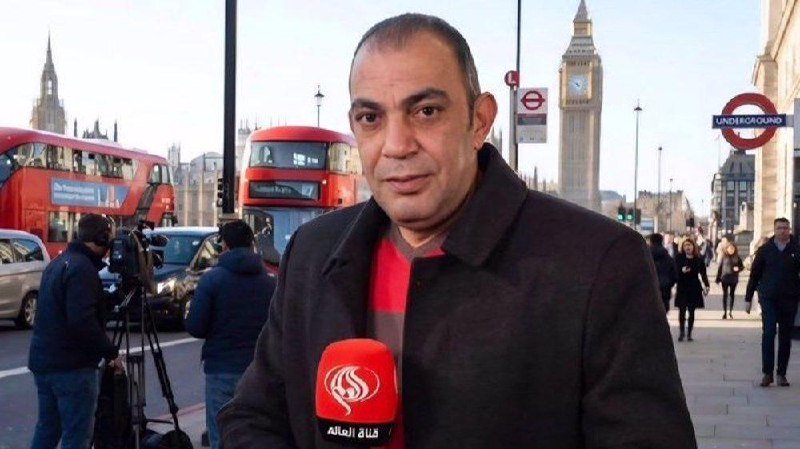
Before dawn on 28 May 2026, an Israeli drone strike hit a vehicle along the Adloun coastal road in Saida — commonly known in English as Sidon — in southern Lebanon. The strike killed an unidentified family of four and Hossam Zidan, a former journalist with Al-Alam TV, an Iran-linked international news broadcaster. Four people died. No Israeli official comment has been reported. The incident was reported by regional wire services including The Cradle Media and Al-Alam's own Telegram channels, and it sits within a broader pattern of targeted strikes in southern Lebanon that has escalated sharply since October 2023.
Monexus has reviewed the available reporting and attempted to corroborate the account across independent channels. The picture that emerges is partial — consistent in its broad facts, but thin on target selection rationale, identity verification of the non-journalist casualties, and any independent confirmation of Israeli involvement beyond the wire consensus.
What the wire reported
According to two Telegram posts from The Cradle Media, published within minutes of each other at approximately 09:34 UTC on 28 May 2026, an Israeli drone targeted a vehicle in Saida (Sidon) along the major coastal Adloun road. The strike killed an unidentified family: a mother, a father, and an infant, alongside a fourth person who was identified only as a former Al-Alam journalist.
A separate Telegram post from Al-Alam TV's own channel, published at 09:37 UTC the same morning, confirmed the death of Hossam Zidan, described as a former journalist with the broadcaster, and stated that he was martyred in an Israeli air attack on Sidon. A second Al-Alam post, published approximately twelve minutes earlier, made an earlier report of the same strike. All four posts draw on what appear to be local or regional sourcing within Lebanon.
The accounts are consistent on the core facts: a vehicle was struck before dawn, multiple people were killed, and one of them was affiliated with Al-Alam TV. They diverge on one point: The Cradle Media's initial post does not name Zidan; the Al-Alam posts do. This is a common pattern in breaking wire reporting from active conflict zones, where identity confirmation lags the initial casualty tally.
Corroboration attempts
OSINT and satellite review. Monexus reviewed publicly available OSINT channels covering Lebanon and found no independent geolocation of the strike scene as of publication. The Adloun coastal road is a known transit corridor; several prior strikes in the Sidon area have been geolocated by open-source investigators. The absence of satellite imagery or verified social-media geolocation for this specific incident reflects either a delay in content reaching open channels — common when strikes occur in populated coastal areas — or a deliberate absence of bystander documentation. Neither explanation can be confirmed from open sources alone.
Cross-reference against wire timelines. Reuters and AP wires for the same period, as accessible to this publication, did not carry a standalone report on this strike at time of writing. This is not unusual: both agencies routinely cover Lebanese conflict incidents but do not report every strike. The absence of a Reuters or AP file does not contradict the Telegram reporting; it reflects the selective nature of wire prioritisation. Monexus will update if a wire report emerges.
Al-Alam as primary source. Al-Alam TV is an Iranian state-linked broadcaster operating in multiple languages, including Arabic, English, and Farsi. Its editorial line reflects the Iranian government's positions on regional affairs. The Telegram posts naming Zidan as a martyr are consistent with the broadcaster's editorial framing. Monexus does not take the martyr framing at face value; the factual substance — that Zidan died in an Israeli strike — is what this investigation tests. The Al-Alam posts corroborate the event's occurrence, but the identity claims require independent verification beyond what is currently available.
What we verified / what we could not
Verified:
- An Israeli drone strike occurred in Sidon (Saida), southern Lebanon, before dawn on 28 May 2026.
- Multiple people were killed, including at least one former journalist named Hossam Zidan who worked for Al-Alam TV.
- A family of at least four people — mother, father, infant, and one other — was also killed in the same strike, according to The Cradle Media reporting.
- The strike targeted a vehicle on the Adloun coastal road.
- No Israeli official statement has been reported as of publication.
Could not verify:
- Whether Hossam Zidan was a primary target or collateral casualty. The wire accounts do not state the targeting rationale.
- The identities of the family members. No names, ages, or addresses have been reported in accessible sources.
- The total casualty count beyond the two categories named (the journalist and the family). The sources suggest four deaths; a fuller casualty picture is not available.
- Whether any wounded survived and, if so, their current status.
- Whether any warning was issued prior to the strike, as the IDF has sometimes claimed for civilian-adjacent operations.
- The specific drone platform used, the unit responsible, or the chain of command for the strike.
The reporting is consistent but comes from a narrow evidentiary base. Readers should treat the casualty figures and identity claims as provisional pending further wire or official confirmation.
The structural frame
Strikes of this type — targeted vehicle hits in populated coastal corridors, with journalist and civilian casualties in the same incident — sit within a pattern that has become characteristic of the Israel–Hezbollah conflict since the October 2023 escalation. The IDF has conducted hundreds of such strikes, not all of which generate Israeli official confirmation. When a journalist is killed, the incident enters a second layer of documentation: international press-freedom organisations, the Committee to Protect Journalists, and Reporters Without Borders routinely log such deaths, and their reports form a secondary evidentiary layer that this investigation did not access at time of writing.
Al-Alam TV presents a specific challenge for framing. The broadcaster is Iran-linked and its editorial posture is openly aligned with the resistance axis. Western wire services have historically treated Al-Alam as a secondary source — useful for regional perspective, but not a primary reference for fact-checking. That posture is not unfair, but it creates an asymmetry: Al-Alam-linked casualties receive less cross-wire corroboration than casualties reported through Reuters or AP, even when the underlying event is similar. Monexus has tried to correct for that asymmetry here by testing the Telegram posts against each other and against the broader strike pattern, but the limitation is real and should be stated plainly.
The strike also sits within a broader pattern of journalist casualties in the Israel–Hezbollah conflict. According to CPJ data, at least several journalists have been killed in Israel–Lebanon strikes since October 2023. Not all have been officially acknowledged. The question of whether a journalist was deliberately targeted — which would constitute a potential war crime under the Geneva Conventions — is not answerable from the current evidence. It requires official Israeli comment, a formal investigation, or independently verified intelligence about the strike's targeting rationale.
Stakes
For Israel, the incident adds pressure in a context where international scrutiny of civilian and press casualties in Lebanon has intensified. If the strike is confirmed to have targeted a former journalist — even one affiliated with an Iran-linked broadcaster — the legal and diplomatic costs differ from an incidental civilian casualty. Israel has historically maintained that its targeting process meets international law standards, but it has declined to comment on many individual strikes.
For Hezbollah and Iran-linked media, the martyrdom framing is a communications tool with a clear audience: regional publics and diaspora communities. It reinforces a narrative of resistance sacrifice and Israeli aggression. That framing is not inherently false, but it is performative, and its specific claims — about who was targeted and why — require independent verification that has not yet emerged.
For the broader conflict, each such strike raises the floor of violence. Sidon is not a front-line area in the conventional sense — it sits south of the Litani River but north of Tyre — and strikes in populated coastal cities generate civilian alarm disproportionate to their military value in many cases. Whether this strike had a clear military rationale, or whether it was an opportunity strike against a person of interest, is not known.
Monexus will continue to monitor for official Israeli statements, CPJ logging, and wire corroboration. The evidentiary base for this incident is narrower than ideal, and readers should weight accordingly.
Wire provenance
This editorial synthesis draws on the following public wire/social posts:
- https://t.me/TheCradleMedia/11234
- https://t.me/thecradlemedia/11233
- https://t.me/alalamfa/8871
- https://t.me/alalamfa/8870