JPMorgan's AI Pivot: Dimon Warns of Workforce Shift and Rising Costs
Jamie Dimon's latest pronouncements at JPMorgan's annual shareholder gathering signal a significant restructuring of the bank's talent pipeline and technology ambitions, with implications reaching well beyond the institution itself.
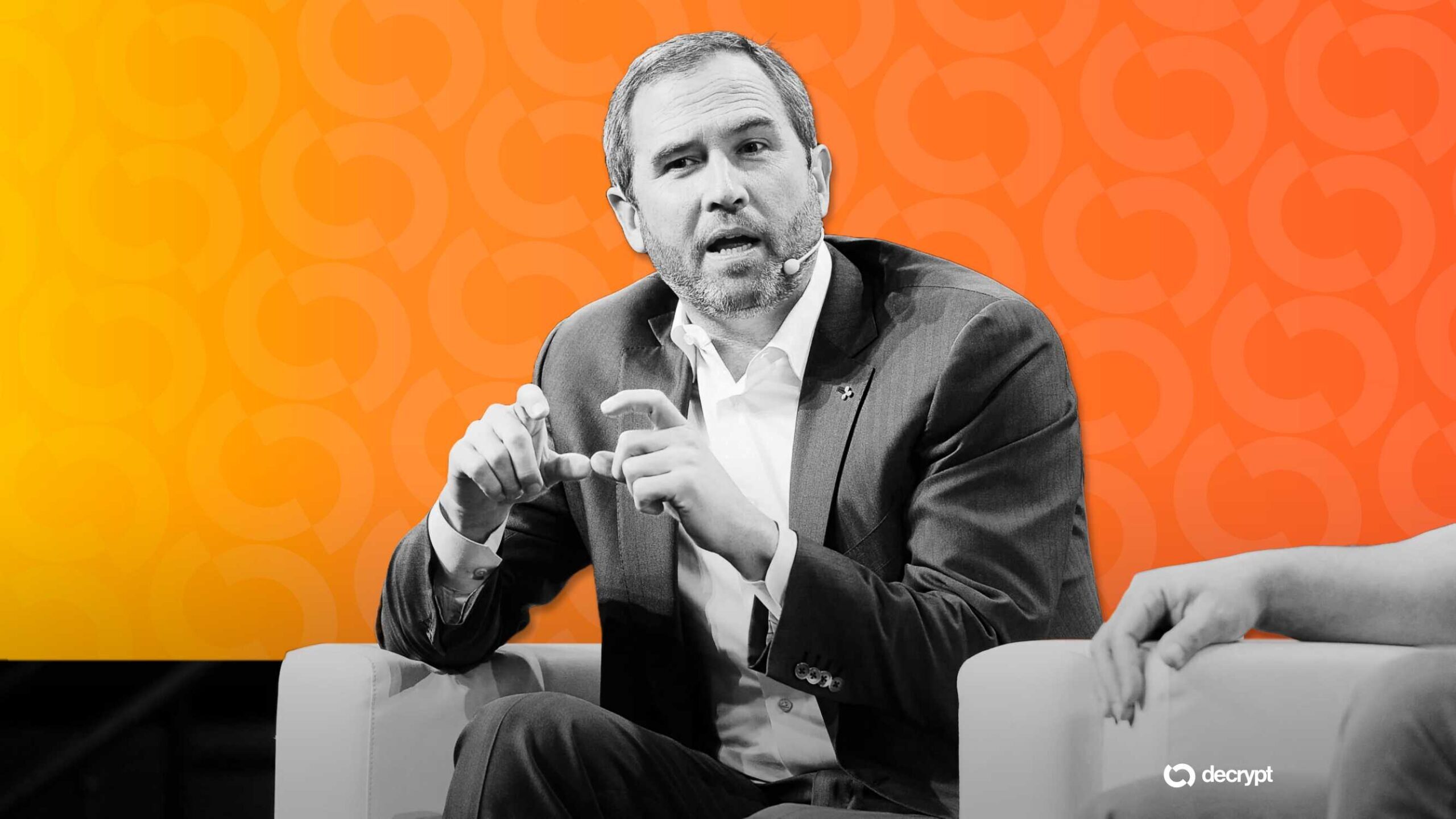
Jamie Dimon has spent decades mastering the art of the unambiguous pronouncement. So when JPMorgan's chief executive said the bank would recruit more workers with artificial intelligence expertise and "fewer" conventional bankers, the industry listened. The remarks, delivered ahead of the bank's 2026 shareholder cycle and confirmed by Bloomberg reporting on 28 May 2026, represent the sharpest official acknowledgment yet from a sitting Wall Street chief that automation will not merely augment banking work — it will displace significant portions of it.
The timing is deliberate. JPMorgan posted record revenues in the preceding quarter, yet Dimon's guidance on expenses and strategic direction signalled that the bank is not content to rest on current earnings. The $1 billion additional cost projection for 2026 — layered on top of an already substantial operating budget — tells investors that the transition the industry has spoken about in abstracts for half a decade is now a concrete line item.
The Talent Equation Is Inverting
For years, the standard trajectory at major banks ran in one direction: grow the workforce as the business grows, pad compliance teams with each new regulatory requirement, and add relationship managers where client deposits and loan volumes warranted. Dimon's remarks suggest that cycle has ended for JPMorgan — not with a layoff announcement, but with an acquisition of a different kind. The bank will buy human capital with a different profile.
AI expertise — machine learning engineers, prompt engineers, systems architects fluent in large language model deployment — commands salaries that dwarf those of the relationship banker or operations staff. Dimon's projection that expenses will rise by $1 billion in 2026 implies that the transition costs are front-loaded: the new hires do not come cheap, and the old roles will not disappear overnight. The bank is simultaneously paying for two workforces during a transition period that could last three to five years.
What remains unclear from the available sourcing is whether Dimon has set a target ratio — how many AI roles relative to displaced conventional positions, and on what timeline. The absence of a specific number is notable. It suggests the bank is still calibrating its automation road map internally and is not yet prepared to commit to a public metric that might constrain future workforce planning decisions.
Acquisitions as a Shortcut to Capability
The other headline from Dimon's briefing — a hint at potential acquisition activity in the $10 billion to $20 billion range — sits in productive tension with the talent strategy. JPMorgan could spend those acquisition dollars in two directions. It could acquire AI-native financial technology firms that bring ready-made engineering teams, proprietary models, and customer interfaces. Or it could acquire the kind of scale that justifies the expense base it is building.
Cointelegraph reported on 27 May 2026 that Dimon framed the acquisition hint in general terms, without specifying sector or target. That deliberate ambiguity is characteristic. Announcing acquisition appetites publicly before having a target identified is a signal to the market — it puts potential sellers on notice and potentially accelerates deal flow. For a bank with JPMorgan's balance sheet, $10-20 billion in M&A is substantial but not transformative. It is the kind of move that reshapes competitive positioning rather than creates new business lines.
The implication is that Dimon does not believe JPMorgan can build everything it needs organically. AI capability — particularly the kind trained on financial services data at the scale JPMorgan operates — is not something a bank can simply hire its way into. The acquisition of talent-dense firms, or of the data infrastructure those firms have built, may be the faster path.
A Structural Shift, Not a Cyclical Adjustment
The easy reading of Dimon's remarks is that they reflect the normal competitive pressures facing any large financial institution: automate where possible, invest where necessary, manage headcount as a residual. That reading is not wrong, but it understates what is happening.
Banking has historically been a people-intensive industry. The core product — credit, risk transfer, payment facilitation — required human judgment at multiple points in the value chain. AI does not eliminate the judgment; it changes who or what exercises it. When a model can underwrite a small business loan in seconds, the underwriter's function is not merely displaced — the unit economics of the business change fundamentally. Margins that were acceptable when human capital was the binding constraint become targets for compression.
Dimon's pivot is therefore not a strategic nuance — it is an acknowledgment that the underlying cost structure of commercial and investment banking is being renegotiated. The institutions that navigate this well will share a common characteristic: they will have converted their data assets into proprietary AI capabilities before their competitors do.
What Rivals Are Doing — and What Remains Uncertain
JPMorgan is not alone in this trajectory. Goldman Sachs has signalled comparable ambitions around AI-driven trading and underwriting. Bank of America has deployed its Erica virtual assistant at scale. The difference with Dimon's statement is one of candour. Rather than framing automation as a customer-facing enhancement or a risk-management tool, he described it explicitly as a workforce replacement event. Fewer conventional bankers. More AI specialists.
What the sources do not yet establish is how this plays out across the industry. If JPMorgan reduces conventional banking headcount by 10 or 15 percent over five years, what happens to the displaced talent? The financial services sector has historically absorbed such workers in adjacent industries — insurance, asset management, fintech — but the pace of AI adoption may outrun the absorption capacity of those markets. The broader economic implications of large-scale deskilling at major banks remain unaddressed in official projections.
The stakes for JPMorgan itself are clear: the bank that masters AI integration first gains a structural cost advantage that compounds over time. The stakes for the industry are less certain but no less significant — Dimon's move may force competitors to accelerate their own automation timelines, potentially before their operational and regulatory readiness is confirmed.
This publication covered JPMorgan's AI strategy as a technology-driven business transformation rather than a conventional cost-cutting narrative, reflecting the structural rather than cyclical character of what Dimon described.
Wire provenance
This editorial synthesis draws on the following public wire/social posts:
- https://x.com/unusual_whales/status/1953245671824126034
- https://t.me/Cointelegraph/184392
- https://t.me/Cointelegraph/184391
- https://t.me/Cointelegraph/184392
- https://x.com/unusual_whales/status/1953245671824126034