Macron Demands End to Southern Lebanon Strikes as Regional Tensions Mount
French President Emmanuel Macron called on all parties on 28 May 2026 to halt strikes in southern Lebanon, as cross-border exchanges between Israeli forces and Hezbollah-aligned fighters escalated to their highest intensity in months.
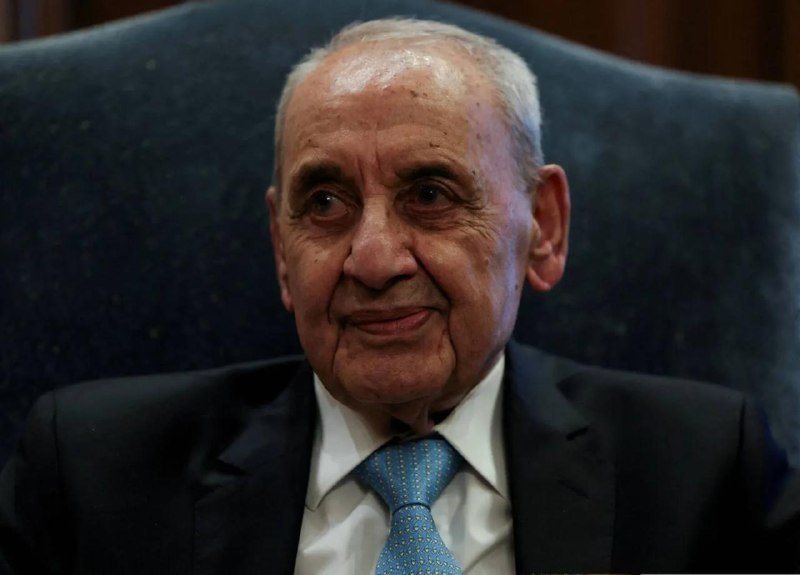
French President Emmanuel Macron issued a direct call on 28 May 2026 for all parties to cease attacks in southern Lebanon, declaring that nothing could justify the strikes then underway. "Nothing justifies the attacks being carried out today in southern Lebanon," Macron said, urging a return to dialogue and the construction of a lasting solution. The statement, delivered as cross-border exchanges between Israeli forces and Hezbollah-aligned fighters intensified, placed France at the centre of a diplomatic push that Western and regional capitals are watching closely.
The statement was reported across multiple channels including Mehr News, Al Arabiya's English wire service, and open-source intelligence monitors tracking Lebanese-Israeli border activity, all citing the same remarks Macron made on 28 May. The French President's office did not specify which party or parties he held responsible for the strikes, framing the appeal as a general demand for de-escalation applicable to all combatants. That deliberate ambiguity itself signals something about the difficulty of the moment — France, which has historically maintained direct channels to Beirut and, through back-channels, to Tehran-aligned actors, is reaching for diplomatic levers that have grown rusty.
Immediate Escalation on the Lebanon Border
The strikes Macron referenced came after a period of sustained but contained cross-border exchanges that observers of the Israel-Lebanon frontier say had been trending toward serious escalation since late April 2026. Lebanese security sources, cited by regional wire services, described artillery and drone activity in the Nabatieh and Marjaheen districts — both areas with documented Hezbollah infrastructure — as the most intense since the ceasefire architecture partially holding since late 2024 began fraying. Israeli military briefings, carried by military-affiliated Hebrew-language accounts, described the strikes as defensive responses to what the Israel Defense Forces characterised as weapons-preparation facilities being moved closer to the demarcation line. The IDF has not provided independent verification of those claims, and Lebanese officials have denied that any civilian or military installations in the targeted areas violated the terms of existing understandings.
The human consequences of the strikes were not fully confirmed at the time of Macron's statement. Local media in southern Lebanon reported civilian casualties in at least two villages, a claim that could not be independently corroborated before publication. International Committee of the Red Cross officials in Beirut said they were in contact with both sides' liaison mechanisms but declined to confirm specific incidents pending verification. The gap between what each party claims happened and what independent observers can confirm is, in the judgement of several analysts tracking the frontier, itself part of the pattern that makes de-escalation difficult — each side operates with a slightly different factual baseline, and diplomatic interventions require navigating those competing accounts simultaneously.
France's Diplomatic Calculus
Macron's intervention is not without context. France retains a distinctive position in Lebanon that predates the current crisis by more than a century of Francophone cultural and economic ties, a残留 French naval and commercial presence in the eastern Mediterranean, and a diaspora Lebanese community in France with strong connections to both Beirut and the Shi'a communities of southern Lebanon. That combination gives Paris a degree of access that the United States, Britain, or Germany — each of which has leverage over one or another party — does not fully enjoy. Macron has used this position before, most recently during the 2023-2024 period when French envoys shuttled between Beirut and Tel Aviv during an earlier round of border tensions.
The French President's statement on 28 May stops short of naming Israel explicitly, a diplomatic choice that has drawn both criticism from some quarters that Paris is being too soft on its NATO ally and praise from those who argue that naming either party would have ended whatever quiet back-channel engagement France may already have underway. The Elysée palace has not confirmed whether Macron spoke directly to Israeli Prime Minister Benjamin Netanyahu or Lebanese Prime Minister Najib Mikati before or after making the public statement. Neither Jerusalem nor Beirut has publicly responded to Macron's remarks as of this article's filing. That silence is itself a form of data — both capitals are calculating whether engaging with the French initiative serves their interests or concedes ground to a power they would prefer to keep at arm's length.
European Union foreign policy chief Kaja Kallas issued a separate but complementary statement on 28 May calling for restraint, underscoring that Macron's intervention is part of a broader Western diplomatic effort rather than a solo French initiative. The United States, whose Secretary of State had engaged separately with both sides in the preceding seventy-two hours according to State Department pool reports, did not endorse Macron's specific framing but did not contradict it either. That quiet US-French alignment, analysts in Brussels and Beirut both noted, is itself a signal that the transatlantic alliance remains coordinated even as domestic political pressures in Washington make a visible US-led push difficult in an election-adjacent period.
The Regional Architecture Under Strain
What is happening on the Lebanon-Israel border does not exist in isolation. It sits inside a broader deterioration of what mediators once called the "calibration architecture" — the set of informal understandings, direct communication channels, and deterrent mechanisms that have kept the Israel-Hezbollah frontier from becoming a second front in the wider Middle Eastern conflict. That architecture was already under pressure from the Gaza Strip conflict that resumed in early 2026, which Hezbollah-aligned groups in Lebanon cited repeatedly as justification for increased operational activity along the demarcation line. Iran's calculus, complicated by ongoing nuclear negotiations with Washington that entered a sensitive phase in May 2026, adds a further layer of uncertainty: Tehran has shown restraint in publicly endorsing escalation, but its Revolutionary Guard Corps Quds Force has not publicly withdrawn the conditional support it signalled for Hezbollah operations in late 2025.
The structural pattern here — a secondary front destabilising because a primary conflict remains unresolved — is familiar from other contested corridors where de-escalation depends on simultaneous progress in multiple theatres. What is less familiar is the specific diplomatic configuration France is now attempting to assemble. Unlike the US-led mediation of 2023-2024, which was explicitly transactional and bilateral, Macron's approach as expressed on 28 May gestures toward something more structural: "the building of a lasting solution." That language implies not merely a ceasefire but a renegotiation of the rules governing the frontier itself — a taller order, and one that requires buy-in from actors whose interests in the current arrangement diverge sharply.
Stakes and What Comes Next
If the strikes Macron referenced on 28 May continue or expand, the most immediate losers are the civilian populations of southern Lebanon and northern Israel, both of which have endured displacement and economic disruption from the frontier tensions. A broader conflict would impose costs on Beirut, which is managing an acute fiscal crisis with minimal sovereign borrowing capacity, and on Tel Aviv, which faces sustained domestic pressure over the northern border situation from residents of communities within rocket range. France, which has significant economic interests in Lebanese reconstruction and in eastern Mediterranean gas cooperation, also has something to lose from instability.
The counter-argument, advanced by analysts who argue that deterrence requires a credible threat of escalation to be effective, holds that continued pressure on Hezbollah-aligned infrastructure is precisely what prevents a larger conflict by demonstrating the costs of boundary-testing. Whether that logic holds depends on calculations that the available sources do not fully illuminate — specifically, how Hezbollah and its Iranian backers are interpreting the current escalation and whether they see it as a signal to withdraw, to match, or to escalate further.
Macron's public call is one instrument in a wider diplomatic toolkit that French envoys are almost certainly deploying through channels not visible in open-source reporting. Whether it moves the needle depends on factors outside the scope of this article: the private reactions of Beirut and Jerusalem, the state of the US-Iran nuclear talks, and whether the military dynamics on the ground create political space for diplomacy or foreclose it.
This article represents Monexus's independent editorial framing based on open-source reporting. The wire services led with Macron's call for dialogue without naming parties; this article contextualises that statement within the deteriorating calibration architecture on the Lebanon-Israel frontier and France's distinctive diplomatic position.
Wire provenance
This editorial synthesis draws on the following public wire/social posts:
- https://t.me/mehrnews/128451
- https://t.me/englishabuali/77321
- https://t.me/osintlive/44832