The Arithmetic of Legitimacy: What Netanyahu's India Embrace Actually Costs
Benjamin Netanyahu's public celebration of India's 'crazy love' for Israel, paired with his resistance to taxing the wealthy to fund security, exposes a transactional logic at the heart of how legitimacy is manufactured and purchased on the world stage.
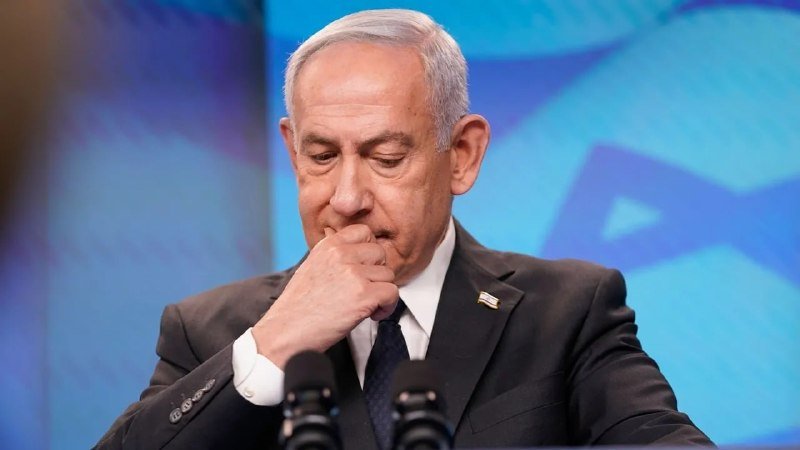
Benjamin Netanyahu has a number problem, and it has nothing to do with the $70,000 GDP per capita he cites with evident satisfaction. The problem is arithmetic of a different kind: the cost of maintaining a coalition of willing partners who will stand with Israel as international pressure mounts, set against the domestic political calculus of who exactly funds the enterprise.
Speaking in Jerusalem on 28 May 2026, the Israeli prime minister offered a frank assessment of his country's diplomatic standing. "We face delegitimization in much of the world," he told assembled journalists, "but not in India. In India, there is an absolutely crazy love for Israel, truly crazy." He added, apparently without irony, that the subcontinent's political class and public had proven uniquely resistant to the currents that have shifted opinion elsewhere. The framing was celebratory — a proof of concept for a foreign policy built on personal relationships with nationalist governments and a deliberate deprioritization of liberal internationalist sentiment.
The Coalition of the Willing, Priced Out
Netanyahu's invocation of India was not merely sentimental. It arrived in the context of a broader argument about defence economics — specifically, the revenue model required to sustain Israel's qualitative military edge in the region. "If you want tanks, aircraft, submarines, intelligence, and cyber capabilities, you need money," he stated, addressing what he framed as a fundamental constraint on state power. "And where will the money come from? 'Let's heavily tax the rich'? Thank you very much." The rejoinder was delivered with the cadence of a rehearsed counter-punch, preempting the obvious domestic redistributive argument with a rhetorical dismissal.
This is the transactional core of the matter. Israel's international legitimacy campaign — the carefully cultivated relationships with India, with the Gulf states, with nationalist movements in Eastern Europe — runs parallel to a fiscal philosophy that treats the wealthy as indispensable partners rather than a resource base to be tapped. The two positions are not contradictory from the perspective of the coalition being assembled; they are constitutive of it. What India represents, in this framework, is a relationship uncomplicated by domestic Israeli politics: no parliamentary votes on budget allocations, no coalition negotiations over progressive taxation, no civil society pressure over settlement policy. India's "crazy love" is leverage without strings.
The structural parallel to other international arrangements is difficult to miss. Western governments that court autocratic or semi-democratic partners frequently invoke shared values while quietly acknowledging that the relationship's value lies precisely in its freedom from the procedural constraints that bind liberal democracies. Netanyahu's India paean follows the same logic. The warmth is real — or at least, the diplomatic utility of claiming it is real — precisely because New Delhi's expectations of Israeli policy accountability are selectively applied.
The Inequality Underneath
Israel's economic performance, as Netanyahu frames it, vindicates the approach. "Israel is now approaching $70,000 GDP per capita," he noted, claiming the country had surpassed Britain, Germany, and Italy. The figures represent aggregate growth that the Israeli government presents as evidence of successful statecraft. By headline metrics, the economy has indeed expanded substantially over the past decade; the tech sector has produced globally significant companies; per-capita income has risen on most conventional measures.
But aggregate prosperity is not distributional justice. Israel's Gini coefficient remains among the highest in the OECD, and the country's housing costs, childcare expenses, and infrastructure deficits create effective exclusions from the headline growth numbers. The communities most exposed to security costs — border populations, conscripts, families of reserve soldiers called up repeatedly — are not, typically, the communities benefiting most from tech-sector valuations. When Netanyahu celebrates economic achievement while rejecting progressive revenue measures, he is not celebrating a broad-based prosperity. He is celebrating a model in which aggregate growth is sufficient political currency, and in which the distribution of that growth's costs and rewards is a second-order question.
This is the specific arithmetic the prime minister is performing. The defence budget requires resources; the resources require a broad tax base; the broad tax base requires either growth that lifts all boats or a political coalition willing to fund public goods from the top of the income distribution. The coalition he has assembled, both domestically and internationally, is manifestly not the latter. India's love is unconditional in the way that matters most: it does not come with a bill of rights attached.
What Legitimacy Costs When the Arithmetic Doesn't Close
The structural tension here is not unique to Israel. Democratic governments across the spectrum face the challenge of sustaining international positioning while managing domestic legitimacy constraints that limit their freedom to purchase allies or deploy resources without political contestation. The countries that have most successfully maintained what might be called "hegemonic partnerships" — the United States with its Gulf allies, Russia with its various client states — have done so through a combination of genuine ideological affinity and material dependency that neutralizes domestic opposition.
Israel's version of this challenge is compressed by scale. The country cannot buy loyalty at the scale of a superpower; it must instead manufacture it through narrative, through diaspora networks, through the cultivation of specific relationships that generate diplomatic cover when the international environment turns hostile. India's resistance to the Boycott, Divestment, and Sanctions movement, its continued arms trade with Israel, its voting patterns at the United Nations — these are the specific outputs of a relationship that Netanyahu correctly identifies as anomalous in the current international environment.
But the question the arithmetic raises is whether anomalous relationships can sustain the weight of a prolonged legitimacy crisis. The sources reviewed do not indicate what specific contingent or longer-term concessions — diplomatic, economic, military — India has extracted in exchange for its "crazy love." That opacity is itself significant. When a prime minister celebrates an international relationship in terms of emotional intensity rather than institutional interdependence, it suggests either genuine affinity or a need to fill the space where transactional specifics would ordinarily appear.
What Remains Contested
The sources reviewed for this article do not include Indian government responses to Netanyahu's characterization of the relationship, nor do they contain independent assessment of the military or economic terms of bilateral cooperation. The claim that India represents uniquely positive sentiment for Israel — while consistent with observable voting patterns and public statements — sits alongside significant and growing economic ties between New Delhi and states that Israel regards as adversarial, including Iran. Whether the "crazy love" framing reflects strategic assessment or aspirational narrative is not resolvable from the materials available.
What is resolvable is the domestic arithmetic Netanyahu has stated plainly: security costs money; that money will not come from redistributive taxation; the gap will be managed through growth and through international relationships that are themselves sustained by mutual interest rather than domestic political accountability. This is a coherent position. Whether it produces durable legitimacy or merely defers the distributional reckoning is the question that will outlast the current prime minister's tenure, however long that lasts.
This publication covered the relationship between India and Israel as part of ongoing MENA desk reporting. The wire framing emphasized diplomatic warmth; this analysis foregrounds the fiscal and structural logic underneath that warmth.
Wire provenance
This editorial synthesis draws on the following public wire/social posts:
- https://t.me/osintlive/2843
- https://t.me/osintlive/2844
- https://t.me/osintlive/2845
- https://t.me/ClashReport/12451