Nvidia's Taiwan Bet and the AI Industry's Convenient Recalibration
Nvidia's pledge to spend $150 billion annually in Taiwan exposes a structural dependency the AI industry has spent years downplaying—and a simultaneous pivot in executive messaging that warrants scrutiny.
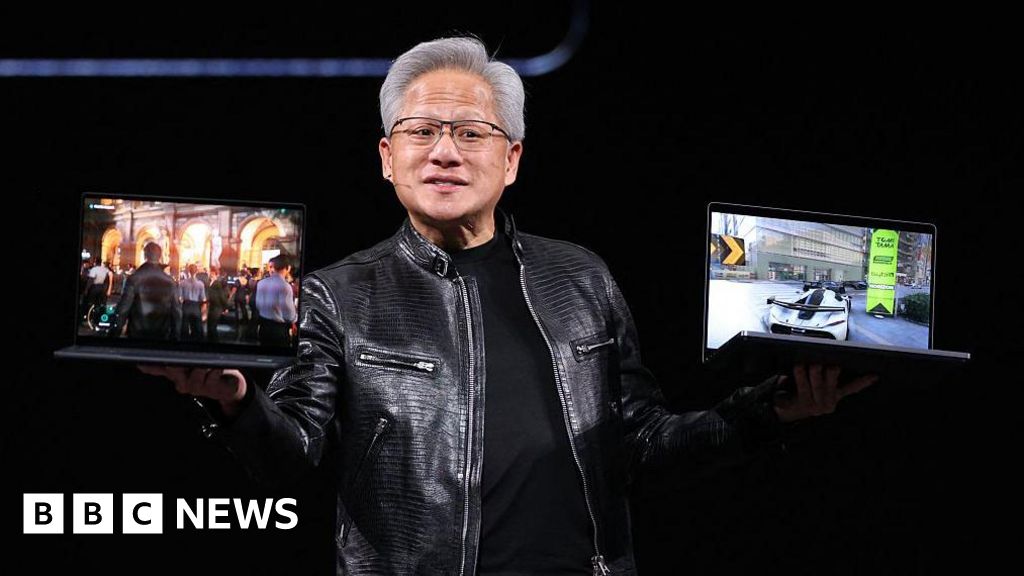
Nvidia will spend approximately $150 billion per year in Taiwan, chief executive Jensen Huang told investors and officials, a commitment that places the chip designer squarely at the center of the island's semiconductor ecosystem—and at the intersection of a geopolitical fault line the AI industry has spent years treating as someone else's problem.
The announcement, reported on 27 May 2026, landed alongside a quieter but notable shift in the industry's public messaging. Huang and OpenAI chief Sam Altman, two figures who once deployed apocalyptic framing about artificial intelligence displacing human workers at scale, have moderated those warnings substantially in recent weeks. The industry that once competed to sound most alarmed about AI's economic disruption now speaks of augmentation, opportunity, and transition—language calibrated to a different audience and a different moment.
That pivot invites a question the industry is not eager to answer: whether the recalibration reflects genuine learning about AI's actual effects, or whether it tracks conveniently with a commercial agenda that requires regulators, legislators, and the public to see the technology as an asset rather than a disruption.
The Taiwan Dependency Nobody Wanted to Map
The scale of Nvidia's planned investment is staggering in isolation and revealing in context. Taiwan produces virtually all of the world's most advanced logic chips—components without which no major AI training cluster can operate. TSMC, the contract manufacturer that sits at the heart of that production, manufactures chips designed by Nvidia, Apple, AMD, and dozens of other firms whose products depend on a single island with a complex geopolitical status.
Huang's commitment to spend $150 billion annually in Taiwan does not merely represent a business decision. It is an implicit acknowledgment that the supply chain bottleneck the industry has spent years papering over with talk of "fab diversification" has proven far more durable than the optimistic timelines originally offered. New fabrication facilities in Arizona and elsewhere are coming online, but they are years behind the frontier of what Taiwan produces, and the technical knowledge embedded in TSMC's workforce is not exportable on the same timeline as a press release.
The investment also places Nvidia inside the political economy of the Taiwan Strait in a more direct sense than any previous commitment. A company spending that magnitude of capital annually in a single location has interests that extend well beyond semiconductor yields. It has interests in port access, power infrastructure, immigration policy for specialized engineers, and—however indirectly—in the stability of the broader region those facilities sit inside.
The Messaging Architecture
France 24 reported on 28 May 2026 that AI executives are softening their earlier warnings about mass job displacement, with Huang and Altman among those moderating previous "doomsday" framing. The report noted that earlier predictions about near-term AI-driven unemployment had been overstated.
The timing is not accidental. The original wave of existential and economic warnings about AI served a purpose: it established the technology as consequential enough to warrant investment, regulatory attention, and—crucially—latitude from governments concerned about competition with China. An industry that positioned its product as world-altering was an industry that attracted world-altering capital.
That positioning had costs, however. Legislators in the United States, the European Union, and elsewhere began treating AI as a sufficiently grave matter to warrant mandatory disclosures, safety reviews, and eventual enforcement frameworks. The regulatory apparatus that followed was slower than the industry's initial projections, but it arrived with enough force to generate genuine compliance costs and, more importantly, genuine political risk.
The recalibration toward augmentation language and away from displacement warnings tracks with a change in that political environment. Having secured the investment commitments and the regulatory breathing room the alarming framing helped generate, the industry now requires a different kind of public story—one that does not provide ammunition to legislators considering mandatory AI workforce impact assessments or tax treatments for automation-displaced workers.
This is not to say the earlier warnings were cynical theater. The technology does generate genuine productivity effects, some of which redound to workers and some of which do not. But the confidence with which executives now speak of "AI as copilot" rather than "AI as replacement" reflects an evolution in commercial strategy as much as an evolution in empirical understanding.
Structural Fragility and the Diversification Myth
The $150 billion commitment exposes the gap between what the industry says about supply chain resilience and what it does. Every major chip designer has announced diversification plans. Every major经济体 has funded semiconductor independence initiatives. The announcement landscape is full of commitments to new fabrication capacity outside Taiwan.
The implementation record is considerably thinner. TSMC's Arizona facilities are producing chips, but at process nodes that remain generations behind the island's most advanced capabilities. The equipment, the specialized chemicals, the process knowledge, and—critically—the trained workforce remain concentrated. Building a semiconductor ecosystem from scratch in a new geography requires not just capital but time measured in decades, not fiscal quarters.
Nvidia's investment in Taiwan is rational precisely because diversification at the frontier level has not materialized. The company is buying access to the most reliable advanced manufacturing at scale—choosing the proven asset over the projected one. That choice, made at $150 billion annually, tells the real story about where the industry believes its supply chain actually lives.
For policymakers in Washington, Brussels, and Tokyo, the message is uncomfortable: the dependency that sanctions or conflict could weaponize is deeper and less substitutable than the diversification rhetoric implies. The Taiwan Semiconductor Manufacturing Company is not merely a supplier. It is the floor of the global AI industry, and the industry's own investment decisions confirm that characterization more honestly than its public communications typically allow.
Stakes and the Question Nobody Is Asking
The stakes of this concentration are not abstract. A disruption to Taiwanese semiconductor production—through conflict, embargo, or natural disaster—would not slow the AI industry. It would stop it, full stop, across every major deployment on earth. The compute layer that underlies modern AI inference and training does not have a substitute production network ready to scale.
That reality makes the $150 billion figure not just a business commitment but a form of political statement. Nvidia is, in effect, betting that the geopolitical risks associated with concentrated production in Taiwan are manageable—or that the returns from that concentration outweigh them regardless. The same calculation applies, in different currencies, to every firm that designs chips and outsources their fabrication to TSMC.
The simultaneous pivot in job-loss messaging adds a layer of irony to the investment announcement. The industry that spent years warning the public about AI's economic disruption now needs that same public to see the technology as net-positive, to vote for politicians who will not restrict AI deployment, and to accept that the productivity gains flowing to shareholders will eventually reach workers through channels that remain unspecified.
The earlier warnings were useful for establishing stakes and securing regulatory latitude. The current messaging is useful for managing expectations and forestalling the redistributive policy responses that concentrated productivity gains naturally provoke. The empirical basis for both positions may be identical. The commercial incentives behind each framing are not.
This publication's review of the available sourcing finds the $150 billion investment figure anchored in Huang's direct statement as reported, and the executive recalibration on job losses corroborated by France 24's reporting on industry-wide positioning. What remains underspecified in both sources is the concrete mechanism by which either commitment translates into outcomes for workers, governments, or the stability of supply chains that the industry has spent a decade telling everyone were less fragile than they are.
The industry is recalibrating. The dependency it is recalibrating around has not changed.
Wire provenance
This editorial synthesis draws on the following public wire/social posts:
- https://x.com/unusual_whales/status/1924478017288917093