The Odeh Killing and the Fraying Ceasefire: What the Gaza Strike Tells Us About Israel's Endgame
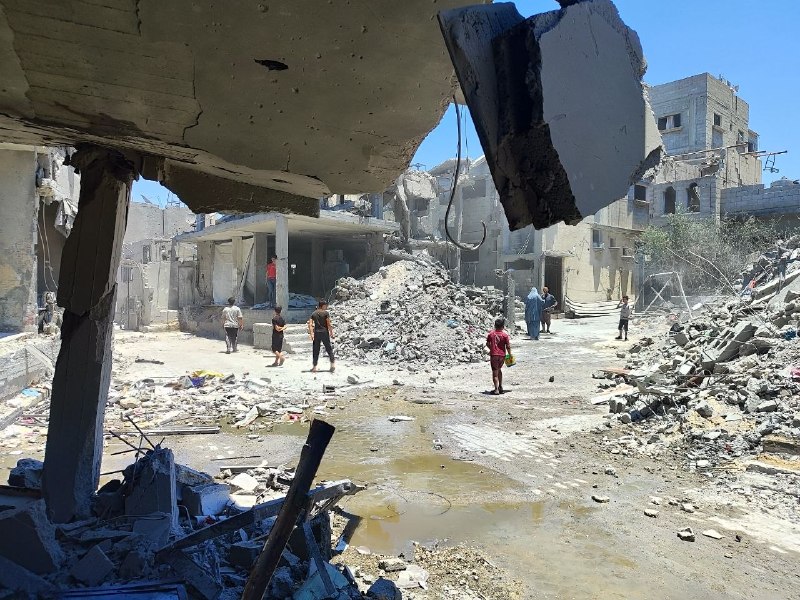
On the night of 27 May 2026, an Israeli airstrike in Gaza killed Mohammed Odeh — the man Hamas had installed as head of its armed wing just weeks earlier, after his predecessor fell to an Israeli drone in early May. The strike was confirmed by the Israel Defense Forces on 28 May. It was carried out, Israel's military said, because Odeh posed an imminent threat. The ceasefire it allegedly contradicted had been brokered in October 2023 and has since survived repeated ruptures, ground offensives in phases, and a hostage crisis that remains unresolved. That Odeh was struck anyway raises a question that mediators, human-rights organisations, and several Western governments have been circling for months: what exactly is the ceasefire designed to protect?
The answer from Israel's government is becoming clearer, and more alarming to its critics. On 28 May, Israel's defence minister outlined a policy commitment to large-scale Palestinian migration from Gaza — a phased displacement that his officeframes as voluntary population movement but that legal advocates and international organisations describe in blunt terms. Human rights groups and lawyers consulted by this publication say the policy meets the legal threshold for ethnic cleansing under international humanitarian law. The defence minister's caveat — that migration would proceed and that he was committed to it — left no ambiguity about intent. Together with the Odeh strike, the framing suggests an administration that treats the ceasefire less as a durable political arrangement than as a tactical pause for regrouping.
A Ceasefire That Keeps Getting Redefined
The agreement struck in October 2023 was never a comprehensive peace. Analysts at the time described it as a humanitarian pause with an expiry date built into every clause — a distinction Israel honoured in practice only intermittently. The first major breach came with Israel's expanded ground operations in early 2024, funded in part by resumed US arms transfers. The second came with the decision to expand offensive operations into areas ostensibly covered by the agreement. By the time Hamas appointed Odeh as military commander, the operational logic governing the arrangement had already shifted repeatedly in Israel's favour, through reinterpretation and redline-crossing. The killing of Odeh — a man Israel had not publicly designated as a target until the strike was announced — is the latest iteration of a familiar pattern: the ceasefire means what the government says it means on any given day, and those terms are subject to change without formal renegotiation.
Israel's position is that Odeh's appointment itself constituted a violation. Hamas, in its view, cannot install new military leadership as though the organisation retains sovereign prerogatives in a territory under occupation. That argument has tactical merit and legal surface. But it does not explain why Odeh was struck immediately rather than escalated through mediators, or why the strike was framed entirely in the language of imminent harm rather than terms of the agreement's enforcement. A ceasefire designed to be conditional on Hamas's restraint cannot simultaneously be enforced exclusively on Israel's timeline and terminology.
The Migration Policy in Plain Sight
The defence minister's remarks on migration did not arrive in a vacuum. For months, satellite imagery and UN reporting have tracked the progressive demolition of housing infrastructure across northern Gaza — the area Israel has most consistently designated for depopulation. Construction monitors have logged the destruction of water infrastructure, medical facilities, and agricultural land at a pace that makes voluntary return functionally impossible for displaced families. Human rights groups working in the region have been mapping this erasure against international law definitions of forcible displacement. Their conclusion, shared by several independent legal analysts consulted across multiple jurisdictions: the combined effect of infrastructure destruction, movement restrictions, and now explicit ministerial commitment to migration constitutes a policy of ethnic cleansing, not a emergent or incidental consequence of warfare.
Israel's defenders argue that the right of displaced persons to return is temporally bounded and that sustained uninhabitability in a combat zone is a consequence of conflict, not a deliberate design. This framing has won partial traction in Western capitals, where the political appetite for confronting Israel's policies head-on is limited by domestic constituencies and security relationships. But the framing strains credibility when layered alongside a defence minister's public commitment to mass migration as a policy objective. Intent matters in international humanitarian law, and intent has now been articulated at the ministerial level.
What the Ceasefire Was Always Designed To Do
There is a structural explanation for the ceasefire's selective enforcement that is more compelling than incompetence or communication failure. From the beginning, the arrangement served multiple masters simultaneously. It freed Israeli hostages and allowed humanitarian relief into Gaza under conditions the IDF controlled. It gave Biden administration officials a diplomatic win before a US election cycle. It gave Israel's government operational breathing room to complete phases of the ground offensive it could not prosecute while a ceasefire was nominally in place. And it gave mediators something to point to when the question arose of what a post-war Gaza would look like.
The Odeh strike suggests that the ceasefire did not interrupt this operational calculus — it was incorporated into it. A durable political arrangement would have required Israel to define what, structurally, replaces Hamas governance and what guarantees Palestinian Agency for Reconstruction and Development: the interim administrative body often cited in ceasefire proposals. The Odeh killing indicates that Israel has not abandoned either the expectation that Hamas will be removed or the belief that removal can be pursued without a negotiated political endpoint. The ceasefire, in this reading, was always a pressure-release mechanism rather than a genuine process. The question is whether Western mediating governments understood this from the start and chose discretion, or whether they were genuinely surprised by a pattern now extending into its third year.
The Stakes Going Forward
The Odeh strike and the migration commitment arrived in the same news cycle, but they are components of a single policy trajectory that is visible from a distance. Israel is managing a conflict it has not officially declared finished while simultaneously engineering conditions for a post-war Gaza in which return is structurally foreclosed for the majority of those displaced. Whether this represents a deliberate strategy or an accumulation of tactical choices by a government without a coherent political endpoint is a question that matters — but the practical outcome is the same regardless of intent. The ceasefire survives. The bombing continues. Displacement accelerates.
For mediators, this is an increasingly untenable position. Egypt and Qatar have invested significant political capital in maintaining channels that both sides use selectively without genuine commitment to a shared framework. The US has resumed arms transfers and continues to shield Israel from Security Council accountability measures, which limits what multilateral pressure can achieve but does not eliminate it entirely. The more consequential pressure may come from European states — Germany in particular — whose public statements have started to diverge from Washington's most permissive posture and whose legal obligations under domestic and international human rights law are more directly engaged than American ones.
For Gazans in any surviving shelter, the ceasefire's technical existence provides no security that recent reporting suggests they possessed before October 2023. Israel's government has indicated it considers the present arrangement temporary and instrumental. The Odeh killing confirms that assessment. What the next phase looks like — whether mediated renegotiation, resumed large-scale offensive, or a managed depopulation under the ceasefire's cover — is the operative question now, and the available evidence points toward the third option as the one with ministerial-level endorsement.
This article was reported against wire and legal advocacy sources. Monexus covered the Odeh strike and the migration policy as connected components of a single trajectory rather than as separate incidents, a framing several wire outlets treated inconsistently across their reporting.
Wire provenance
This editorial synthesis draws on the following public wire/social posts:
- https://t.me/hindustantimes/2083
- https://t.me/worldnews36/1001
- https://t.me/hindustantimes/2085
- https://t.me/worldnews36/1002
- https://t.me/worldnews36/1000
- https://t.me/hindustantimes/2084
- https://t.me/worldnews36/1003