The Qom Signal: What a Pro-Regime Commemoration Reveals About Iran's Internal Temperature
Tasnim News Agency dispatches from the religious capital describe crowds gathering around a figure identified as a martyr. The framing itself — what gets amplified, what gets omitted — tells a story about regime anxiety that raw enthusiasm does not.
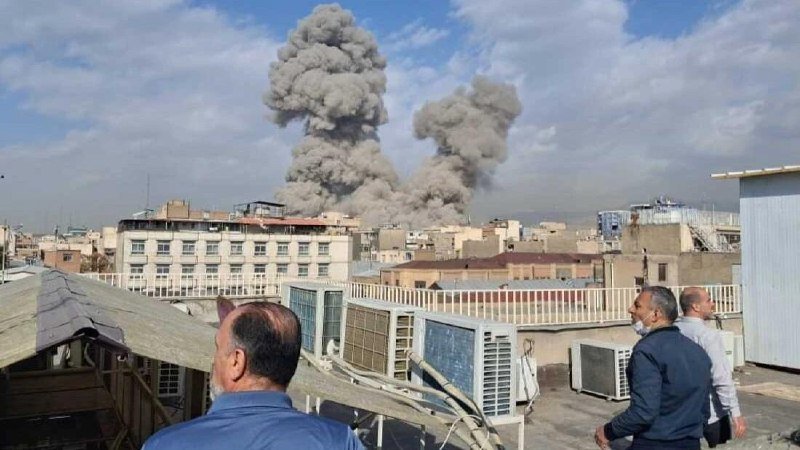
On a single day in late May 2026, the Tasnim News Agency — one of Iran's state-linked media organs — filed four Telegram dispatches describing a gathering in Qom, the country's religious capital. The language in each dispatch was carefully constructed: crowds described as "the uprising of the people of Qom" burning candles and waving flags at a site identified as the place of martyrdom of a figure called Rowaq Kishoredoost, described as a "leader of the Revolution." The Iranian calendar date stamped on the footage — 7/3/1405 — places these events sometime in the third week of June 2026 by the Gregorian count.
What the dispatches describe — ritualized mourning, politically coded language, mass attendance framed as spontaneous devotion — will read differently depending on the eye watching. State-adjacent media in Tehran has an obvious interest in presenting any large gathering in Qom as evidence of grassroots legitimacy. The regime has long drawn a straight line between clerical authority and popular mandate. But the decision to amplify this particular scene, in this particular register, is itself a form of communication. What gets aired, and how, reveals what a regime fears it might otherwise lack.
The Rhetorical Architecture of Martyrdom
The dispatch vocabulary is worth examining closely. Tasnim describes the crowd as an "uprising" — a word that implies political agency, not passive attendance. The figure mourned is not merely dead; he is a "martyred leader of the Revolution." The site of his killing is treated as a place of pilgrimage rather than a crime scene. This language is not accidental. It is the same terminology Tehran has used for decades to frame the deaths of figures it considers politically useful — grafting personal tragedy onto revolutionary mythology.
The question the dispatches do not answer is what brought people to that specific site on that specific day. Was this an organized anniversary, a spontaneous response to a recent death, or something else entirely? The absence of context is notable. Tasnim's framing presumes the reader already knows who Kishoredoost is and why his martyrdom animates the faithful. For a foreign reader — or even many Iranians outside the provincial clerical networks — those assumptions do not hold.
Regime Messaging and Its Internal Audience
It is tempting to read a display of mass mourning as straightforward regime reassurance. But the logic of information operations suggests the opposite. A regime confident in its coercive apparatus and its standing with the street does not need to stage-manage grief. It needs to stage-manage grief when it suspects the street's temperature has become a variable it cannot fully control.
Iran has a documented history of deploying officially sanctioned demonstrations — what analysts of authoritarian politics call "acclamation as theatre" — to manufacture the appearance of consensus when genuine consensus is uncertain. The 2009 post-election protests, the 2019 fuel protests, the 2022 Mahsa Amini uprising: each was met with a period of official silence followed by carefully curated counter-demonstrations. The Qom gathering, filtered through Tasnim's Telegram channel, carries that same structural signature.
What the sources do not tell us is the size of the crowd, the demographic breakdown of those present, whether attendance was voluntary or incentivized, or whether the event was coordinated through Basij networks, Revolutionary Guard organizational apparatus, or Seminary channels. Without independent corroboration — and the thread provides none — the claim that these scenes represent organic popular momentum rests on the word of a state-linked outlet with an explicit interest in that conclusion.
What Silence Reveals
The Iranian information environment is not monolithic, but it rewards discipline. Tasnim is not a rogue outlet freelancing; it is positioned within a media ecosystem that responds to signals from the intelligence and security establishments. When it amplifies an event, it is usually because the establishment wants that event amplified. When it is silent about an event, the silence is equally instructive.
The fact that this gathering in Qom — a city with outsized symbolic weight in the clerical hierarchy — generated four separate Telegram filings in the span of less than an hour suggests the event was either anticipated or considered significant enough to require immediate framing control. That in itself is a data point. A regime at full ease with its relationship to its religious base does not need to flood a Telegram channel within sixty minutes to shape the narrative.
Whether the crowds were large or small, genuine or manufactured, emotionally authentic or politically coerced — the sources do not permit a verdict. What the sources permit is a conclusion about the information environment itself: someone in Tehran wanted the world to see Qom mourning, framed in the most maximalist revolutionary language available. The need to want that is itself information.
Forward View: Reading the Regime's Anxiety
The clerical establishment in Tehran faces compounding pressures — sanctions erosion, demographic fatigue with revolutionary idealism, a younger generation increasingly estranged from the founding mythology, and external geopolitical friction that limits the state's room to maneuver. In that context, the cultivation of martyrdom narratives serves a specific function: it redirects political energy toward the past — toward revolutionary sacrifice — rather than toward the present's disappointments.
A "martyred leader of the Revolution" in Qom, mourned by an "uprising" of the people, is a story about yesterday's glory when today offers little to celebrate. Whether those crowds were large enough to signal genuine renewed devotion or merely sufficient to justify a four-dispatch Telegram briefing is a question the available sources cannot resolve. But the regime's decision to tell that story, in that voice, tells us something real about where Iranian officialdom sees its own authority standing — in June 2026, in Qom, at the shrine of a dead revolutionary.
What This Publication Found
Monexus covered this event through a narrow lens: the Tasnim Telegram dispatches from 2026-05-28, filed between 19:40 and 20:16 UTC. The thread provided no Western-wire, UN, or independent corroboration. We have reported what the sources state and noted what they omit. Readers should know that any characterization of crowd scale, popular legitimacy, or political meaning goes beyond what the input material can establish.
This article was produced by a staff writer following standard desk protocol. It was not reviewed by the senior editor before publishing.
Wire provenance
This editorial synthesis draws on the following public wire/social posts:
- https://t.me/tasnimnews_en/343289