Russia's Kyiv Evacuation Warning: Signal, Sabotage, or Operational Preparation
Moscow issued a coordinated dual-channel warning on May 28 — diplomats told to leave the capital, while state-adjacent military channels announced systematic strike operations. The question is whether this represents psychological warfare, diplomatic signaling, or genuine operational preparation.
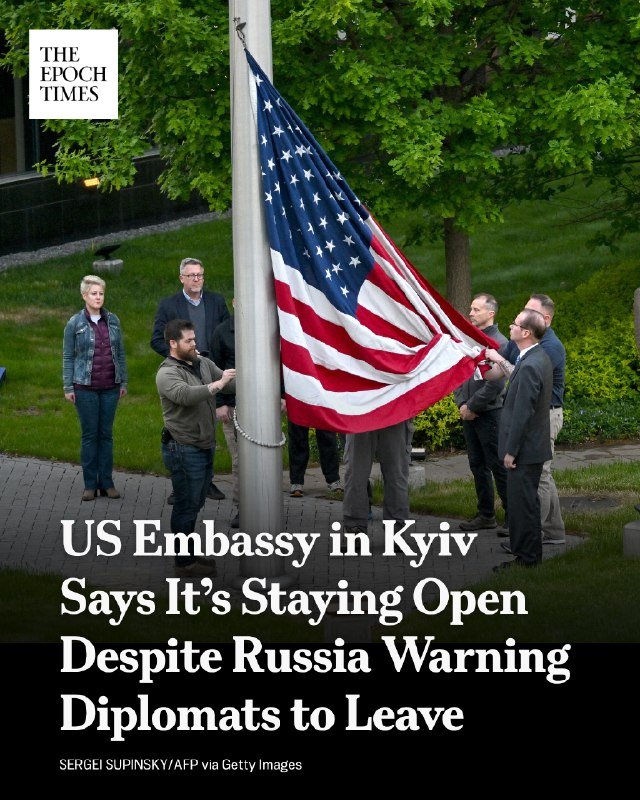
At 13:42 UTC on May 28, 2026, the Russian Foreign Ministry issued a terse advisory: foreigners in Kyiv should leave the city immediately, and residents should avoid military and administrative infrastructure. Two hours later, Secretary of the Security Council Sergei Shoigu stood before cameras at what was described as an international security conference and declared the warning "absolutely serious and deliberate." Within the same window, a Russian Air Force-affiliated Telegram channel operating under the handle FighterBomber published a post claiming Russian forces would "destroy Kyiv in the upcoming bombing runs" through "systematic strike operations." The sequencing was not accidental.
The question Moscow has posed to Western intelligence services, Ukrainian commanders, and European foreign ministries is this: is the May 28 advisory a diplomatic pressure tool, a ground-laying operation for genuine kinetic action, or something the Kremlin itself has not fully decided? The answer matters enormously, because each interpretation demands a different response — and because the gap between what Russia says publicly and what it does operationally has been a defining feature of this conflict since February 2022.
What the Sources Say — and What They Don't
The four primary source items — two posts from the BellumActaNews Telegram aggregator, one from the Zvezda News channel, and one from a post on the social platform formerly known as Twitter by the account sprinterpress — collectively document a coordinated Russian communication sequence on May 28. The Russian Foreign Ministry advisory, amplified by state-adjacent outlets, carries the institutional weight of an official government position. Shoigu's subsequent statement at a press conference that the warning was "serious and deliberate" adds senior official endorsement.
The FighterBomber channel presents a different category of source. The channel describes itself as affiliated with the Russian Air Force, and its operational-style posts have been cited in Western intelligence assessments before. Its May 28 post, however, goes further than previous iterations: it does not merely describe strike capabilities or intentions in general terms but makes a specific, forward-looking claim about destroying Kyiv infrastructure in upcoming operations.
Monexus has been unable to independently verify the FighterBomber channel's affiliation with Russian military command structures, the accuracy of its operational intelligence, or the authorization status of its posts. The channel's Telegram description places it within the Russian information ecosystem, but no Western government or independent OSINT group has formally attributed it to an official unit. The post should be read as a claim, not a confirmed fact.
The Shoigu-Armenia Angle: What the 102nd Base Statement Reveals
Forty minutes before the Kyiv advisory went out, Shoigu addressed a separate topic at the same press conference: the Russian 102nd Military Base stationed in Armenia. According to the BellumActaNews summary of his remarks, Shoigu stated that the base "exists and operates there for the sake of Armenia's" — the sentence cuts off in the source transcript. The full context of what Moscow believes its Armenian presence serves is missing from the available record.
What the truncated quote implies, however, is worth noting. The 102nd base in Gyumri has been the anchor of Russia's security architecture in the South Caucasus for decades. Armenia's drift toward Western alignment — accelerated by the 2020 Nagorno-Karabakh war and its aftermath — has made that presence increasingly contested. Moscow's framing of the base as serving Yerevan's interests, even as Armenian public opinion has moved against the Russian security umbrella, reflects a consistent Kremlin practice: presenting bilateral arrangements as acts of altruism rather than power projection.
The near-simultaneity of Shoigu defending Russia's Armenian posture and amplifying the Kyiv evacuation advisory is worth dwelling on. Moscow is managing multiple geopolitical theaters at once, and the communication discipline visible in the May 28 sequence — official advisory, senior official endorsement, state-media amplification, military-channel escalation — suggests coordination rather than coincidence.
Reading the Kremlin's Communication Architecture
Russian strategic communication does not operate on a single channel. Official statements from the Foreign Ministry, remarks by senior security officials, state media reporting, and military-blog content exist in a deliberate hierarchy — each layer calibrated to different audiences and carrying different levels of deniability. The May 28 sequence follows this architecture precisely.
The Foreign Ministry advisory functions as a formal notice to the international community. It creates a legal and diplomatic record: Moscow warned foreigners; any harm that follows is therefore foreseeable rather than arbitrary. This framing has been used before — including in the lead-up to large-scale strikes — and its invocation in Western diplomatic circles has consistently preceded escalatory events. Whether that correlation reflects genuine operational signaling or merely the Kremlin's affinity for maintaining a record of deniability remains contested.
Shoigu's explicit endorsement elevates the advisory from bureaucratic caution to political statement. The Security Council secretary does not issue personal characterizations of routine consular notices. The choice of that forum — an international security conference — signals that the audience extends beyond the diplomatic community in Kyiv to include Western defense establishments.
The FighterBomber post occupies the outer, most deniable ring. Its military-specific language and forward-looking operational claims resonate with audiences already inclined to interpret Russian behavior as escalatory. For those audiences, the post confirms pre-existing suspicions. For skeptics, it reads as unverified chatter from an unattributed channel. Moscow benefits from both reads simultaneously.
What We Verified / What We Could Not
Monexus verified the following from the source items:
- The Russian Foreign Ministry issued an advisory on May 28, 2026, recommending foreigners leave Kyiv, published at 13:42 UTC according to Zvezda News.
- Sergei Shoigu, Secretary of the Russian Security Council, stated at a press conference that the warning was "absolutely serious and deliberate."
- Shoigu separately commented on the Russian 102nd Military Base in Armenia at the same press conference, per BellumActaNews.
- The FighterBomber channel, which describes itself as Russian Air Force-affiliated, posted a claim about systematic strike operations against Kyiv on May 28.
Monexus could not verify:
- The FighterBomber channel's actual affiliation with Russian military command structures or the authorization status of its posts.
- The existence or content of a full transcript of Shoigu's press conference remarks, including the complete sentence regarding the 102nd Military Base in Armenia.
- Whether Western intelligence services have issued independent assessments of the advisory's operational significance.
- The specific strike capabilities, targeting timelines, or force disposition that would be required to execute the operations described in the FighterBomber post.
- Whether any foreign governments have altered diplomatic staffing levels in Kyiv in response to the advisory.
Escalation Vocabulary and Its Costs
The stakes of misreading May 28 are asymmetric but significant in both directions. If the advisory is primarily a diplomatic pressure tool — designed to frighten foreign missions into reducing their Kyiv presence, to create media coverage that demoralizes Ukrainian morale, and to complicate Western intelligence collection — and Western capitals treat it as an imminent threat, Moscow gains the benefit of disruption without taking kinetic action. Embassies implement evacuation protocols. Airlines reroute. News cycles fixate on escalation. Ukraine absorbs the psychological blow of seeing foreign governments treat its capital as a combat zone.
If, conversely, the advisory represents genuine operational preparation — and the FighterBomber post reflects actual targeting timelines — then Western governments that treat it as bluster have failed their最基本的 obligations to their citizens and to Kyiv. The cost of under-reaction in that scenario is measured in lives.
European foreign ministries and the State Department will be making that judgment call against an intelligence picture that Moscow has deliberately obscured. The Kremlin's communication strategy is built around exactly that uncertainty. Whether the May 28 advisory signals a coming strike, a pressure campaign, or an internal debate that Moscow is broadcasting externally remains unknown. What is known is that Shoigu put his personal credibility behind the word "serious" — and that in three years of this war, Moscow has rarely used senior officials to amplify threats it had no intention of following through on.
This publication's coverage of Russian statements regarding Kyiv has historically trended toward treating official communications as having operational weight until evidence suggests otherwise. The May 28 advisory warrants that default posture.
Wire provenance
This editorial synthesis draws on the following public wire/social posts:
- https://t.me/zvezdanews/18456
- https://t.me/BellumActaNews/8921
- https://t.me/BellumActaNews/8920
- https://t.me/BellumActaNews
- https://t.me/zvezdanews