The Strait Deal and the Myth of Maximum Pressure
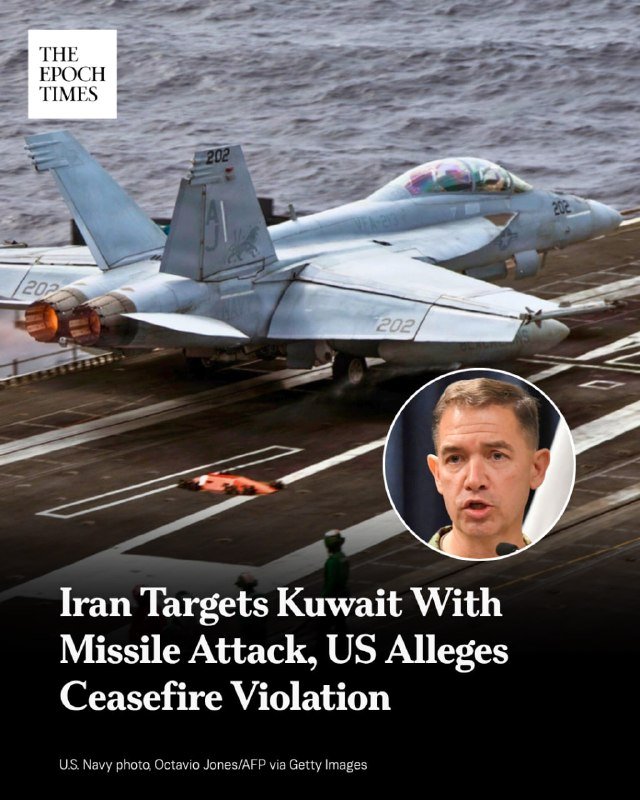
The Straits of Hormuz carry roughly one-fifth of the world's oil on any given day. That geographical fact has made the waterway the single most potent card Iran holds in any confrontation with the United States — and it is also, apparently, the card Washington was most eager to get off the table.
According to Axios reporting by Barak Ravid, the United States and Iran have reached a 60-day memorandum of ceasefire that would extend an existing pause in hostilities and launch formal negotiations on Iran's nuclear programme. The terms reportedly include unrestricted shipping passage through the Strait of Hormuz — effectively lifting the naval pressure campaign that has defined the Trump administration's approach since its return to office. Iran, in turn, is said to have pledged not to pursue nuclear weapons during the negotiation window. President Trump has not yet given final approval.
That last detail matters. But so does everything that preceded it.
What the Maximum Pressure Campaign Actually Delivered
The original maximum pressure strategy against Iran was never primarily about the nuclear file. That negotiation — the JCPOA — had been largely working, with Tehran reducing its enriched uranium stockpile and mothballing advanced centrifuges in exchange for sanctions relief. What the Trump administration objected to was not the nuclear outcome but the architecture: a deal that let Iran keep exporting oil, keep accessing global financial networks, and keep behaving like a normal regional power rather than a pariah.
Maximum pressure, then, was less a nuclear non-proliferation strategy than a dollar hegemony maintenance programme. The aim was to strangulate Iranian oil exports, cut off its banking channels, and force regime behaviour change through economic asphyxiation. It failed on its own terms by 2019, when Iran responded to maximum pressure by walking away from JCPOA enrichment limits entirely. The nuclear programme that now concerns Western intelligence agencies — Iran's expanded enrichment capacity, its stock of 60-percent uranium, its advanced centrifuge fleet — is substantially a product of the two years following the maximum pressure reimposition.
The ceasefire memorandum Axios reported on 28 May does not reverse that history. It does something more clarifying: it admits, implicitly, that the pressure campaign was not sustainable at the level required to force capitulation. The Strait of Hormuz guarantee — free passage, no tolls — is not a concession Iran needed to make. It is a concession Iran needed Washington to make, because a naval encirclement that blocks Hormuz is an act of economic warfare that no third party tolerates indefinitely.
The Nuclear Pledge: Substance or Placeholder?
The framing of the deal — Iran pledges not to pursue nuclear weapons — deserves scrutiny. Iran has consistently maintained that its nuclear programme is entirely peaceful, a position it has held since the programme's inception under the Shah. Western intelligence agencies dispute this characterization, pointing to enrichment levels, weapons-relevant research, and the programme's opaqueness as evidence of weapons intent.
A 60-day pledge of non-weapons pursuit during negotiations is, structurally, the minimum Iran could offer to keep talks alive without conceding anything substantive. It does not address the existing stockpile. It does not touch the installed centrifuge capacity. It does not grant International Atomic Energy Agency inspectors the expanded access that the non-proliferation framework requires. It says: we will not do the thing we say we were never doing, for sixty days, while we talk.
That is not a criticism of the deal. It may be the best available outcome when both parties are acting from positions neither fully controls. But editorial coverage treating this as a major concession by Tehran — or as a breakthrough validated by the ceasefire extension — should note what the pledge does not contain.
Dollar Politics and the Quiet Renunciation
Here is the structural fact that deserves more attention than it is getting: the original maximum pressure campaign was, above all, an assertion of dollar-system dominance. Secondary sanctions targeting any bank or company that processed Iranian oil transactions were designed to make the global financial system enforce American foreign policy. The message to European allies, Asian customers, and Gulf intermediaries was unambiguous — do business with Tehran and lose access to New York, SWIFT, and dollar clearing.
Lifting the naval dimension of that campaign does not formally dismantle the sanctions architecture. But it signals something functionally equivalent: that the United States is no longer willing to sustain the friction costs of enforcement when the primary victim of that friction is global energy markets and, ultimately, American consumers. The Hormuz guarantee is a ceasefire clause written in oil futures and shipping rates.
This is the pattern that has defined the Trump administration's transactional foreign policy across theatres. Tariffs are leverage until they aren't. Sanctions are leverage until they destabilize markets or hand geopolitical advantages to third parties. The deal reported by Axios is not an outlier — it is the template. Negotiate loudly, manufacture a crisis, then accept terms that preserve the appearance of victory while quietly normalising the behaviour that was originally defined as intolerable.
What Remains Unresolved — and Why It Matters
The sources do not specify what happens after the 60-day window closes without a final agreement. They do not detail what verification mechanisms — IAEA inspections, monitoring of enrichment facilities, financial transparency requirements — Iran has agreed to in exchange for the ceasefire extension. They do not indicate whether the existing sanctions architecture remains formally in place while negotiations continue, or whether the naval de-escalation is accompanied by sanctions relief of the kind that made the original JCPOA politically viable for Tehran.
These gaps matter because they determine whether this memorandum is a genuine framework for resolution or a diplomatic pause that leaves all fundamental tensions intact. The latter is not uncommon in great-power negotiations — it is, in many ways, the historical norm. But it should be named honestly. A ceasefire extension is not a peace agreement. A pledge during negotiations is not a verified commitment. And a lifted naval blockade is not, by itself, a resolution of the Iranian nuclear question.
The test of this deal is not whether it was reported by Axios on a Thursday afternoon. It is whether, sixty days from now, the world has fewer reasons to fear an Iranian bomb than it did before the memorandum was signed. The evidence for that conclusion does not yet exist.
This publication's Iran coverage prioritises reporting from Axios, Euronews, and wire services covering the nuclear file directly. Our framing here reflects the structural asymmetry between stated objectives and negotiated outcomes — a pattern we apply consistently across coverage of great-power negotiation, regardless of the counterparties involved.
Wire provenance
This editorial synthesis draws on the following public wire/social posts:
- https://t.me/osintlive/28471
- https://t.me/BellumActaNews/13984
- https://t.me/euronews/89234
- https://t.me/osintlive/28469