Three Fronts of Accountability: From Manila to Canberra to Manhattan
Across three continents this week, powerful institutions faced consequences: the ICC sets a trial date for Rodrigo Duterte, Canberra sues 3M for A$2bn over forever chemicals at defence sites, and a Google employee faces criminal charges for alleged insider trading. The cases share no legal thread, but together they illustrate the breadth of accountability mechanisms now operating — unevenly, imperfectly, but operating nonetheless.
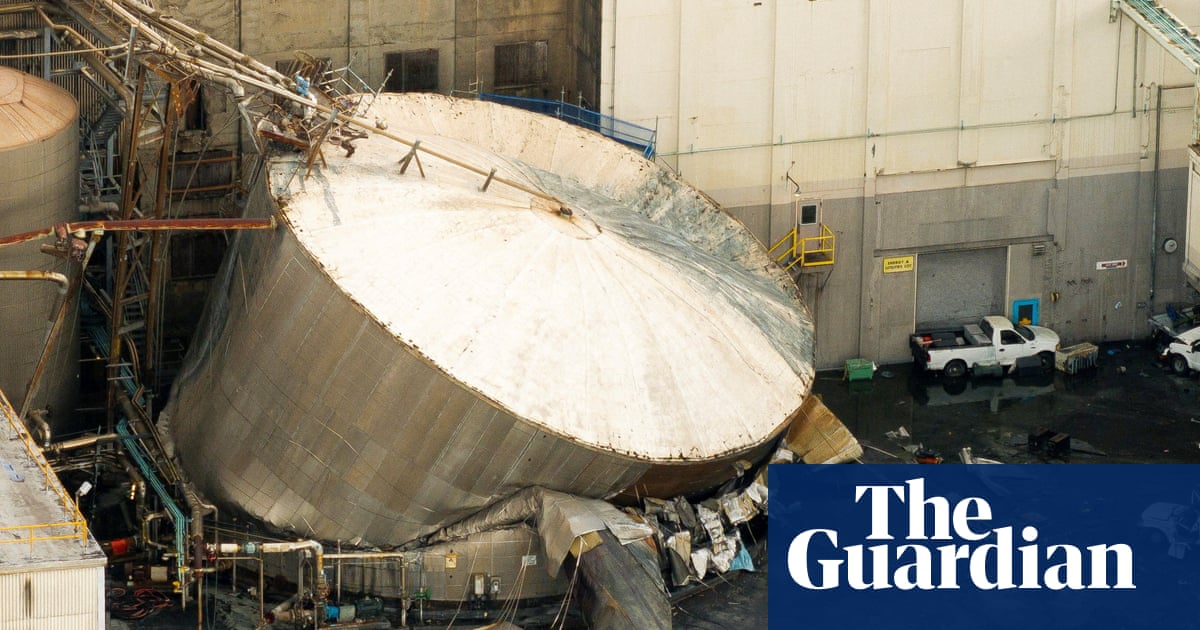
On the same week that Rodrigo Duterte learned his International Criminal Court trial would begin on 30 November 2026, two other accountability proceedings unfolded on opposite sides of the Pacific. In Canberra, the Australian government filed a A$2bn lawsuit against the American conglomerate 3M over contamination of defence sites with per- and polyfluoroalkyl substances — the so-called forever chemicals used in firefighting foam. In New York, a longtime Google employee was charged with using internal data to make approximately $1.2m on bets, an alleged breach of insider trading laws that underscores how the financial rewards of corporate access can curdle into criminal liability.
The three cases share no jurisdiction, no legal framework, and no plaintiffs in common. But taken together they illustrate something the institutional accountability literature rarely captures in the aggregate: accountability mechanisms are proliferating — not uniformly, not predictably, but persistently enough that powerful actors across the spectrum, from former heads of state to multinational chemical firms to individual tech employees, can no longer assume that scale insulates them from consequence.
The Hague Arrives in Manila
Duterte, who governed the Philippines from 2016 to 2022, faces charges at the ICC relating to his signature policy: a sustained campaign against illegal drugs that resulted in thousands of deaths, many of them extrajudicial. The ICC's jurisdiction over the Philippines is contested — Manila withdrew from the court's treaty in 2019, before rejoining under President Ferdinand Marcos Jr. in November 2023 — but the court has asserted that it retains authority over alleged crimes committed during the period of Philippines membership.
The trial date, set for 30 November 2026, arrives after years of procedural wrangling over whether the ICC had jurisdiction and whether Duterte could be arrested by Philippine authorities or would need to be apprehended abroad. He was arrested in March 2025 upon returning from an official visit to Vietnam — a fact of geography, not of Philippine policy, that ended years of speculation about whether Manila would cooperate. That cooperation, partial and politically costly for the Marcos administration, represents a notable data point in the question of whether states will hand over their own former leaders to international tribunals.
The counter-argument — that the ICC is a tool of Western cultural imperialism selectively applied to Global South leaders — has not abated. It surfaces in Manila political discourse and in wider international legal scholarship. But the fact that the trial proceeds, and that Duterte sits in a cell in The Hague pending proceedings, suggests that the institutional logic of the ICC has not collapsed under that pressure. Whether it survives the political pressures that will intensify as the trial date approaches is a different question.
Forever Chemicals, National Litigation
The Australian government's lawsuit against 3M, filed in the Federal Court and announced in May 2026, is the largest ever brought by the Commonwealth in a commercial matter. The case centres on PFAS compounds — used extensively in aqueous film-forming foam once standard at military and civilian airfields — that have leached into soil and groundwater at defence sites including RAAF Base Williamtown in New South Wales and Army Aviation Base Oakey in Queensland. The contamination has affected surrounding agricultural land and residential areas; studies have linked PFAS exposure to immune system disruption, certain cancers, and developmental effects in children.
Australia is not alone in pursuing chemical manufacturers over PFAS. The United States Environmental Protection Agency has pursued its own litigation, and several state governments have separately sued manufacturers including DuPont, Chemours, and 3M. The Australian case is distinguished by its scale — A$2bn represents a substantial claim against remediation costs and public health externalities that the government has estimated across affected sites — and by the fact that it targets a single defendant for the totality of the alleged harm.
3M has denied liability and indicated it will contest the proceedings. The company's position, articulated through its Australian subsidiary, is that the chemicals were used in compliance with regulatory standards prevailing at the time and that responsibility for contamination at government-owned defence sites rests in part with the Defence Force's own handling of the substances. That argument, familiar from US PFAS litigation, has not succeeded in dismissing cases but has slowed proceedings and increased settlement costs for manufacturers. The Canberra case will test whether Australian courts, operating under different evidentiary standards and procedural rules, reach a different equilibrium.
Inside the Algorithm, Outside the Law
The Google employee charged in New York is described by federal prosecutors as a longtime worker who allegedly used access to internal data — the sources do not specify which systems — to make bets that returned approximately $1.2m. The case is not yet adjudicated; the charges are allegations, and the defendant's identity and legal team's response are not yet in the public record from the available sources.
The charges rest on a familiar mechanism: access to non-public material information that could influence market prices, used to inform trading decisions. What distinguishes this case is the institutional setting — a major technology company where employees routinely have access to proprietary data, usage metrics, and product roadmaps that are commercially sensitive — and the specific financial instrument involved, which the available sources describe only as "bets." Whether those were options trades, cryptocurrency positions, or something else is material to the case's precedent value for Silicon Valley and its regional workforce.
The broader structural point is not that Google's internal governance failed — a single employee's alleged misconduct does not demonstrate systemic deficiency — but that the combination of financial incentive structures and information asymmetry that characterise large technology companies creates persistent exposure to insider trading risk. The company's own compliance programmes and the Securities and Exchange Commission's oversight capabilities are both in play. How this case resolves will signal whether the enforcement posture toward technology-sector insider trading has sharpened.
The Pattern Beneath
These three proceedings — a former president's trial, a government's environmental suit, a criminal insider trading charge — are not connected in any legal or institutional sense. But they share an underlying dynamic: the expansion of accountability mechanisms across jurisdictions and scales. The ICC's persistence in pursuing Duterte reflects twenty-five years of institutional investment in establishing that heads of state are not categorically immune from international criminal law. The Australian litigation reflects growing political willingness to treat corporate remediation liabilities as matters of national enforcement rather than private settlement. The insider trading charge reflects sustained regulatory attention to the financial misconduct vectors that technology employment creates.
None of these mechanisms operates consistently. The ICC has declined to pursue actions involving more powerful states; Australian litigation against chemical manufacturers has produced mixed results; insider trading charges against technology employees are rarely prosecuted at this scale. But the cases proceed. That, in itself, is a data point about institutional capacity that is easy to underestimate when the headlines are dominated by failures.
Desk note: The wire framed these as three separate stories. This article links them around the theme of institutional accountability — a structural commonality that the Reuters/AP/BBC original copy did not draw out, given the stories' different desk assignments and geographic origins.
Wire provenance
This editorial synthesis draws on the following public wire/social posts:
- https://t.me/BBCWorldoffl/3842
- https://t.me/BBCWorldoffl/3841
- https://t.me/BBCWorldoffl/3840