Trump's Ceasefire Dilemma: Inside the US-Iran Deal and the Limits of Military Pressure
A reported deal to extend the US-Iran ceasefire reveals a president constrained by the very military realities he once wielded as leverage — and by the personal symbolism he insists on inserting into high-stakes negotiations.
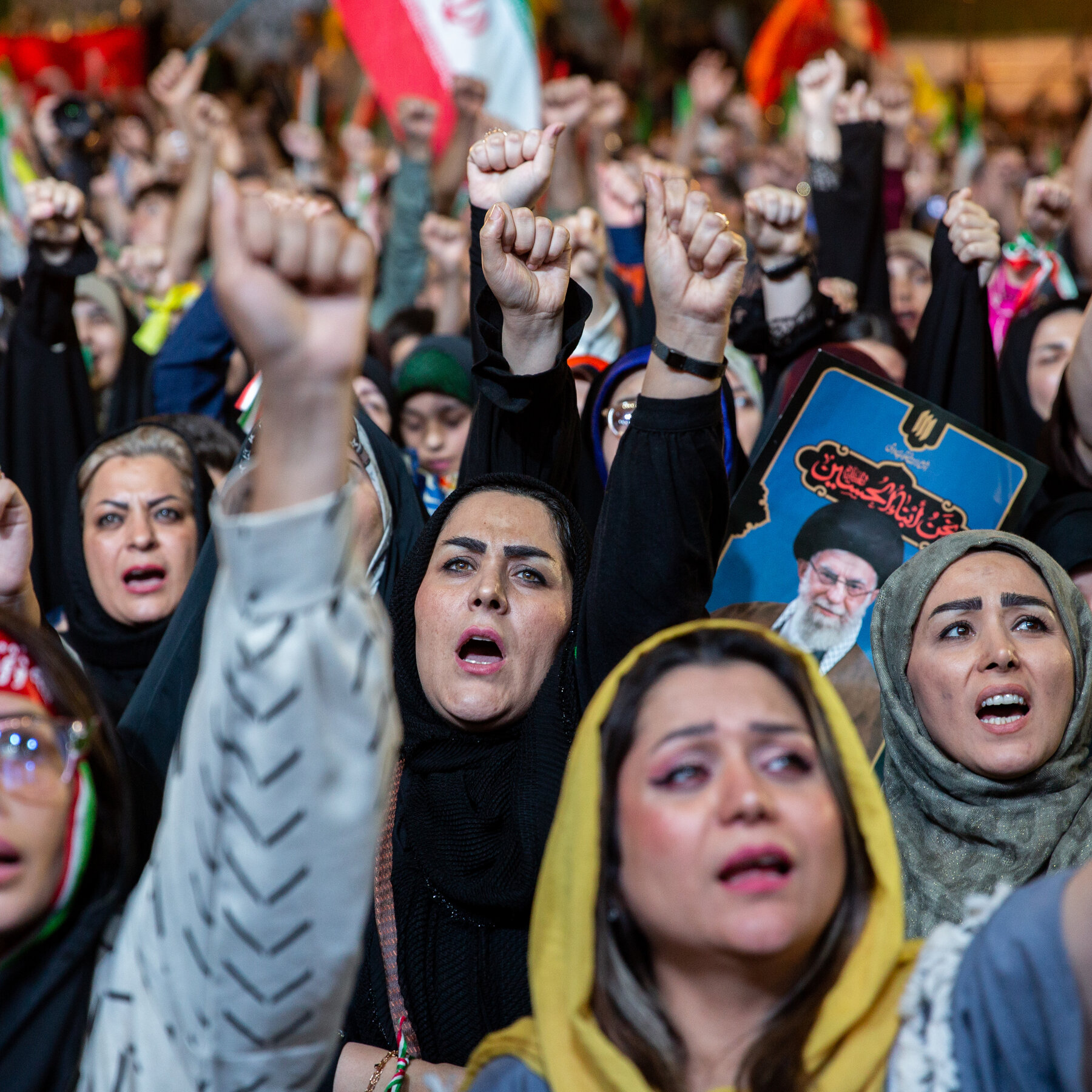
The announcement arrived on 28 May 2026 with the quiet confidence of a deal already done: the United States and Iran had reportedly agreed on terms to extend their fragile ceasefire, pending one final signature. According to sources tracking the negotiations, the agreement would prolong a suspension of hostilities that began under separate cover weeks earlier — and would keep alive a diplomatic track that, until recently, many in Washington had privately written off.
The news drew immediate attention from markets and regional capitals alike. But the announcement also surfaced a complication that the White House has been reluctant to acknowledge publicly: the military option the administration once presented as inevitable has quietly become structurally untenable. And in its place, a different kind of American leverage — transactional, personal, occasionally surreal — has moved to centre stage.
The deal, first reported via the informal prediction market Polymarket and corroborated by wire reports citing diplomatic contacts, would extend the ceasefire for an unspecified duration contingent on Iranian concessions around uranium enrichment monitoring and the release of American detainees. Qatar's Emir Sheikh Tamim bin Hamad Al Thani, whose small Gulf state has played quiet back-channel broker throughout the standoff, met with President Trump at the White House that same day to discuss the diplomatic landscape. The Emir's presence was itself a signal: Doha has maintained open lines to Tehran throughout the sanctions era, making it one of the few interlocutors both sides trust enough to carry messages.
What the announcement did not contain was any reference to military strikes. That absence, more than any clause in the agreement itself, tells the story of where this negotiation actually sits.
The Target Problem the Pentagon Couldn't Solve
The challenge confronting any strike operation against Iran has never been willingness — it has been geometry. NBC News, citing unnamed US officials with knowledge of operational planning, reported on 28 May that the remaining military targets inside Iran are either buried deep underground or in constant motion. Facilities associated with the nuclear programme and the Revolutionary Guard Corps's missile infrastructure are distributed across a geography that includes hardened tunnels in the Zagros Mountains, mobile launch units operating from civilian-adjacent locations, and command centres colocated with hospitals and schools in urban areas.
This is not new information. The US military has known for years that Iran's counterforce capabilities are designed specifically to complicate the targeting problem. What changed in recent months is the political calculus around acting on that knowledge. Several current and former officials, speaking on background to wire services, noted that the administration had reviewed strike options in late 2025 and early 2026 and concluded that the intelligence picture was insufficient to guarantee degradation of the programme — while the retaliation risk, both from Iranian proxies across the region and from the ballistic missile arsenal that could reach US bases in Iraq and the Gulf, was considered unacceptably high.
The result is a ceasefire less born of strategic choice than of operational reality. Iran did not sue for peace; it was simply the case that war, at this moment, was not deliverable. That distinction matters for how the agreement will be read in Tehran, in Jerusalem, and in the capitals of America's European allies, each of which is calculating its own exposure to a collapse of the arrangement.
The Symbolism Layer: From War Threats to a $250 Bill
The geopolitical texture of the moment becomes stranger when set against a secondary disclosure from the same period. The Trump administration, according to multiple reports citing administration sources, has actively pushed the Bureau of Engraving and Printing to produce a new $250 bill featuring the President's portrait. The proposal, which would require congressional authorisation and faces significant constitutional questions around the depiction of sitting presidents on currency, has been described by sources familiar with the discussions as a reflection of the President's personal interest in legacy optics.
The timing is notable. A White House that months ago threatened "maximum pressure" and hinted at imminent strikes on Iranian nuclear sites is now simultaneously exploring the legal mechanics of placing its own face on a denomination of currency that has not been produced in regular circulation since the 1930s. Neither proposal — the ceasefire extension nor the currency initiative — is consistent with the other in tonal register. One reads as concession; the other as coronation.
One reading is that this reflects a president who governs through personal relationship and symbolic assertion rather than through coherent strategic doctrine. The same man who imposed sweeping tariffs to signal strength can also negotiate a ceasefire to avoid a war he cannot win cleanly. The $250 bill is not a contradiction of that posture — it is its logical extension. Strength, in this framework, is expressed through acts of personalisation: tariffs, currency, summit handshakes, naming rights.
Iran's negotiators, by contrast, have operated from a position of institutional discipline grounded in decades of sanctions survival. Tehran's calculus has been consistent: delay, dilute, extract partial sanctions relief, preserve the programme's scientific base. The ceasefire buys time for that base to remain intact. Whether Iran's leadership views this as a tactical pause or a strategic opportunity depends on what they read into Washington's ambivalence — and the sources do not yet settle that question.
Regional Realignment: The Gulf States and the Old Architecture
The ceasefire does not exist in isolation. It sits within a pattern of regional repositioning that has accelerated since the opening of back-channel talks in late 2025. Qatar's mediating role reflects a broader Gulf state recalculation: Riyadh, Abu Dhabi, and Doha have each concluded that sustained US-Iran hostility is no longer the reliable order-preserving arrangement it once appeared to be. The Abraham Accords, the earlier normalisation deals between Israel and several Gulf states, were premised on a shared concern about Iran — but that shared concern has not translated into a unified appetite for military confrontation.
The UAE in particular has moved aggressively to establish economic ties with Tehran since the sanctions regime's cracks became visible. Saudi Arabia, still recovering from the reputational and financial costs of the Yemen war, has signalled a preference for diplomatic off-ramps over escalation. Qatar's hosting of Taliban negotiators during the US withdrawal from Afghanistan gave Doha its own track record as a go-between — and its own interest in being seen as the indispensable diplomatic venue when great-power conflicts require quiet resolution.
What the ceasefire risks, however, is the undoing of the containment architecture that Gulf states spent two decades building with American support. A normalised US-Iran relationship — even a partial one — would reduce the strategic premium those states enjoy from their proximity to US military infrastructure. The bases in Qatar (Al Udeid), Bahrain, and the UAE are not purely defensive arrangements; they are leverage, and leverage diminishes when the threat they were designed to counter recedes.
The Stakes: What Failure Looks Like
The ceasefire extension, if it holds, gives Iran time and gives the Trump administration a narrative win — a deal, an agreement, a moment of apparent diplomatic competence. But the agreement's durability depends on three variables that the sources do not fully resolve.
First: verification. Iran's nuclear programme will continue during the ceasefire period. The uranium enrichment facilities at Natanz and Fordow remain operational. International Atomic Energy Agency inspectors have access, but that access has historically been contested and occasionally suspended. If Iran restricts monitoring to a degree that Washington or its partners consider unacceptable, the ceasefire's technical foundations erode.
Second: Israeli patience. Israel's security establishment has been explicit that a prolonged ceasefire, absent a credible military backup option, is not a tolerable outcome. Jerusalem has its own intelligence capabilities and its own strike assets. The ceasefire buys time; it does not resolve the underlying tension between Israel's stated red lines and Iran's stated determination to maintain a full fuel cycle. If Israel strikes independently — as it did against Iraqi and Syrian facilities in previous decades — the ceasefire collapses, and the US finds itself supporting an ally it cannot control.
Third: the domestic US political dynamic. The President who negotiated the ceasefire is the same one who threatened to restart strikes. The political coalition that supports confrontation with Iran is not the same as the coalition that rewards diplomatic de-escalation. If polls move unfavourably, if the President's base signals impatience, the ceasefire could be sacrificed to a political calculation that prioritises the appearance of strength over the substance of restraint.
What the sources do not settle is which of these three pressures will prove decisive — or whether they will converge in a way that collapses the agreement before the year's end.
The Unresolved Question
What remains unclear from the available reporting is whether the ceasefire represents a genuine paradigm shift in US-Iran relations or a transactional pause — a hold on conflict while both sides assess the costs of the alternative. The reported deal is a ceasefire extension, not a peace agreement. It does not address sanctions relief, Iran's regional posture, or the status of the Revolutionary Guard's extraterritorial operations. It is an agreement to continue not fighting, while the arguments that caused the fighting remain live.
The Qatar meeting was described by the Emir's office as productive. The White House has not publicly confirmed the deal's specific terms. Iran, through its own diplomatic channels, has signalled willingness to extend — but has not acknowledged the concession on enrichment monitoring that sources say was part of the package. Each side is holding the narrative that allows it to describe the arrangement as a success.
The $250 bill, meanwhile, sits in a different column altogether. It is not diplomacy. It is the President's own calculation of how this moment should be remembered. And it suggests that the gap between the transactional and the performative — in this White House — is narrower than either critics or supporters might assume. The ceasefire buys time. The bill buys legacy. Whether either purchase holds its value is the question that the months ahead will answer.
This publication covered the ceasefire extension reporting from a different angle than the wire services, which focused primarily on the diplomatic mechanics and timelines. Our analysis foregrounds the operational constraints on military action as a structural explanation for why the ceasefire emerged — a factor that received limited attention in the initial wire framing.