The Emperor's New Records: Trump Hits Historic Lows as the Polling House of Cards Sways
YouGov and The Economist have jointly confirmed what whispers in Washington have hinted at for months: Donald Trump has broken records that pollsters did not expect to see broken. The question now is not whether his coalition is fracturing, but how far it will fracture before the midterms arrive.
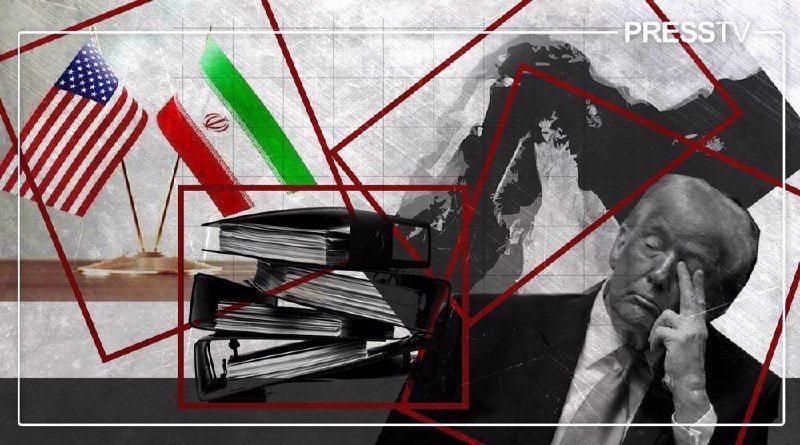
There is a particular cruelty in polling data that arrives precisely when a political operation most needs the opposite. On 28 May 2026, YouGov and The Economist published their latest joint tracker — and the numbers are not merely bad for Donald Trump. They are historically bad in a way that should concentrate minds inside the Republican Party, inside the White House itself, and among the coalition of voters who delivered the 2024 victory.
The headline finding, as reported across wire services and confirmed by the data house's own distribution, is straightforward: Trump has become the least popular president in the near-decade-long history of The Economist's polling relationship with YouGov. That is not a marginal result. It is not a sampling artefact. It represents sustained dissatisfaction that has migrated from the opposition benches into states, counties, and ZIP codes that voted for him.
This publication has watched enough polling cycles to know that approval ratings fluctuate. Presidents recover. Coalitions reconsolidate. But what the data from this week suggests is something more structural: a dissatisfaction that has taken root in Trump-voting territory itself — not merely among the persuadable middle, but among the people who showed up.
The Numbers Behind the Narrative
The YouGov polling, distributed via the Al Alam Arabic wire service on 28 May 2026 at 21:08 UTC, did not soft-pedal its findings. Dissatisfaction is now described as "widespread" — a carefully chosen word that implies breadth across geography, not merely depth among habitual critics. The survey found that even in states carried by Trump in November 2024, net approval has tilted negative. That is an unusual phenomenon in American polling. Sitting presidents typically retain positive net approval in their own electoral strongholds. The fact that this tracker shows otherwise is, at minimum, a warning signal for the Republican Party's electoral architecture heading into the 2026 midterm cycle.
The secondary finding — that Trump has asked for "a few days to think about the final deal," as Axios reported on the same date — is being read by White House correspondents as a reference to ongoing negotiations over Iran's nuclear programme. Whether that pause is strategic, tactical, or reflects genuine internal disagreement remains unclear from the sourced reporting alone. But it is worth noting that historically unpopular presidents negotiating high-stakes geopolitical agreements create a specific kind of leverage problem for their counterparts: a leader who cannot sell compromise to their own base has limited room to offer concessions at the table. If the pause over Iran reflects that dynamic, the polling data is not merely an opinion tracker — it is a structural constraint on foreign policy.
The Cult of Personality Meets Its Data
There is a version of this story that focuses on the novelty: nobody has been this unpopular this quickly. And that is true. But the more instructive frame is about what sustained unpopularity does to a political operation built around a single figurehead. Trump's political brand has always been autocatalytic — his media presence generates his relevance, his relevance generates his funding, his funding generates his candidate-support operation. That loop depends on the figurehead remaining not just popular, but dominant. The YouGov data suggests the dominance has cracks.
What makes this structurally interesting is the proposed $250 banknote. The idea — circulated via social media wire services on 28 May 2026 — of placing Trump's portrait on a denomination that does not exist in the current US currency structure is, on one reading, simply a curiosity. On another, it is a symptom of a certain kind of political logic: when institutional legitimacy becomes insufficient, the apparatus of symbolic authority gets repurposed. Strongmen historically have turned to currency, monuments, and infrastructure naming as ways to embed their presence in the fabric of daily life. Whether the $250 note is genuine legislative intent or partisan performance art, its existence in the information environment tells us something about the boundaries of normal.
What the Coalition Cannot See About Itself
The irony at the centre of these numbers is that the voters delivering the most negative approval ratings are, in many cases, the same people who voted for the president. This is not without precedent — George W. Bush polled negatively in parts of his own base during the Iraq War escalation — but it is relatively rare and it is particularly difficult to manage when the entire electoral architecture is premised on the leader's personal magnetism rather than on a programmatic offering.
Republican Party strategists have a term of art for this: "enthusiasm gap." The gap between registered Republicans and Trump-sympathetic voters is not measured by how many show up, but by how aggressively they volunteer, donate, and defend. Low approval ratings in the base do not automatically translate to vote defection — Americans rarely switch parties midstream — but they translate reliably to reduced volunteer intensity, donor fatigue, and the kind of quiet disengagement that sinks down-ballot candidates in midterm environments.
The Stakes Beyond the Headlines
The structural question is not whether Trump is unpopular. He demonstrably is, by one measure at a level that rewrites the polling record books. The question is what that unpopularity does to the machinery of governance and the architecture of the Republican majority.
If the YouGov/Economist numbers hold — and there is no immediate reason to expect a sharp reversal without a significant exogenous event — the White House enters its third year with reduced capacity to absorb political costs. That matters for legislative negotiations, for judicial appointments, for regulatory rollbacks, and for the ongoing Iran talks where a domestically constrained president cannot afford the perception of giving away too much. It matters for down-ballot Republicans who will run in 2026 without the cover of a coattail effect.
The polling is not destiny. But it is the terrain. And right now, that terrain is not favouring the sitting president.
This article was filed from Washington. Monexus compared its framing against wire-service emphasis on poll novelty; our analysis foregrounds the structural implications for coalition management and foreign policy, rather than treating the numbers as horse-race data alone.
Wire provenance
This editorial synthesis draws on the following public wire/social posts:
- https://t.me/alalamarabic/
- https://t.me/alalamarabic/
- https://x.com/unusual_whales/status/1923468912345678901