Trump's Nobel Tantrum Reveals the Prize's Shrinking Geopolitical Weight
When the world's most powerful office-holder publicly seethes over a Scandinavian award committee, the incident tells us less about the president and more about what international recognition has become in an era of transactional diplomacy.
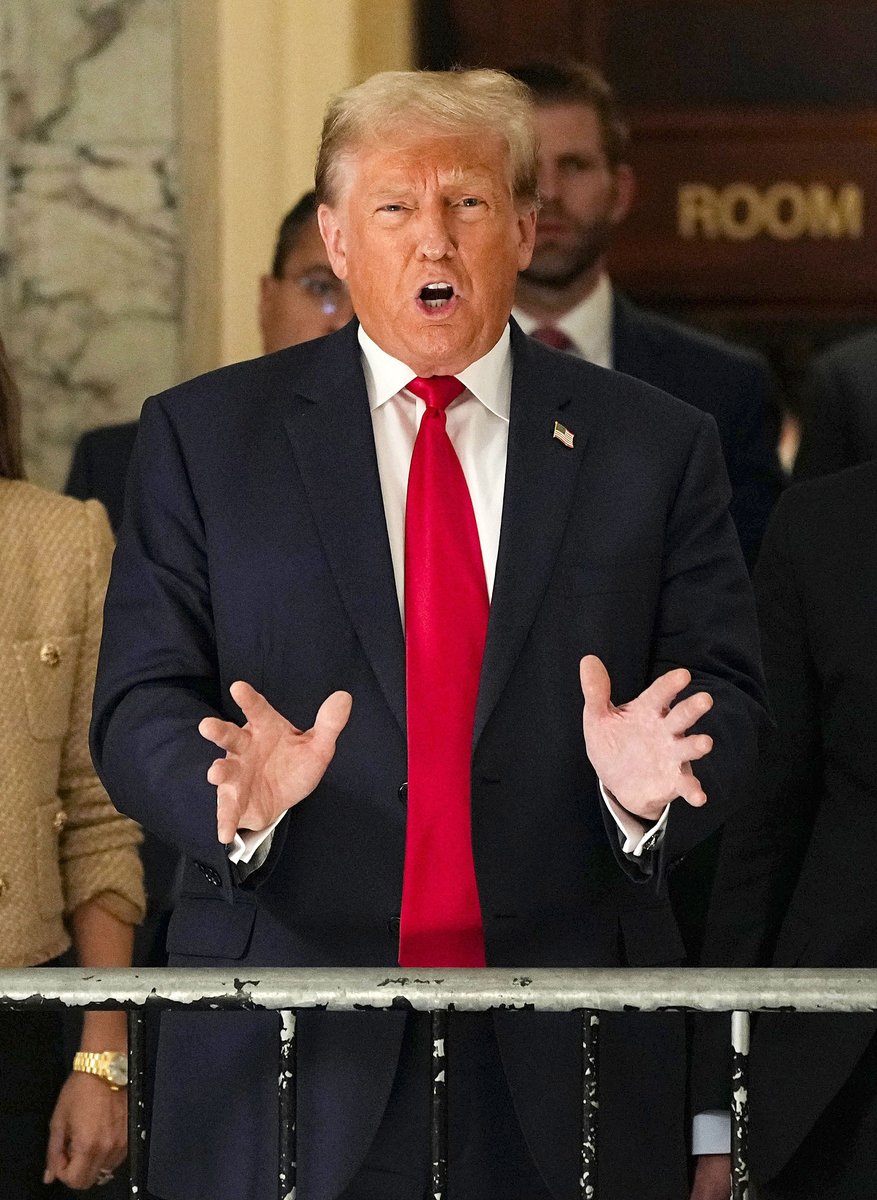
The White House has a complicated relationship with international accolades. On 28 May 2026, that relationship turned openly hostile. According to reports carried by Iranian state-affiliated outlets, President Donald Trump responded to his exclusion from Nobel Peace Prize consideration with a now-infamous epithet directed at Norway — the Nordic nation that hosts the five-member committee responsible for awarding the prize. "Stupid Norway did not give me the Nobel Peace Prize," the president reportedly declared, according to Tasnim News and Fars News International. The remark, if accurately reported, represents a remarkable moment: the sitting president of the United States publicly berating a democratic NATO ally over a prize he never received.
Senator Lindsey Graham, a Republican from South Carolina and one of the administration's most consistent congressional allies, went a step further. Graham reportedly demanded that the Nobel Peace Prize be renamed in Trump's honor — specifically, the "Trump Prize" — in the event that Saudi Arabia, one of the United States' closest Middle Eastern partners, were to become the prizewinner. The demand was framed as a quid pro quo: Saudi recognition, in Graham's apparent calculus, would justify repurposing an award named after a Swedish industrialist who left his fortune to the world in 1895.
Taken at face value, the episode is political theatre. Presidents regularly nurse grievances over awards they believe they deserve, and Trump's dissatisfaction with the Nobel committee is not new. What is new is the brazenness: the direct insult to a sovereign democratic state, the explicit linkage of an international prize to a bilateral relationship, and the congressional ally cosigning the tantrum as if it were a legitimate policy position.
The Prize as Political Currency
The Nobel Peace Prize was established to honor individuals or organizations that have "done the most or the best work for fraternity between the nations." For much of the twentieth century, the award functioned as a soft-power mechanism — a way for the international community to signal which conflicts, causes, and leaders it considered worthy of moral endorsement. Winners ranged from the International Committee of the Red Cross to Nelson Mandela and Barack Obama. The prize carried genuine reputational weight because it was administered by an independent Norwegian committee whose deliberations were private and whose criteria were consistently applied.
That consistency has frayed. The 2019 award to Abiy Ahmed, Ethiopia's prime minister, was revoked in 2021 after he failed to end the Tigray conflict he was initially credited with helping to resolve. The 2020 award to the World Food Programme was uncontroversial but revealed a committee increasingly倾向于 awarding institutions rather than individuals — a safe harbor in an era of contentious leadership. The 2024 award to the Venezuelan opposition leader, María Corina Machado and Edmundo González Urrutia, remains disputed, with the Maduro government disputing the legitimacy of their claimed mandate. The committee, in other words, has made choices that have pleased some governments and enraged others — which is perhaps inevitable, but which has diminished the prize's claim to neutral moral authority.
This is the context in which Trump's grievance lands. The committee's decisions have become politically contested, which means the prize is no longer simply awarded — it is awarded against someone, or in defiance of someone. That transactional framing is precisely what Trump and Graham are now making explicit. If the prize is to be treated as a political favor rather than a moral judgment, why should the United States — or its allies — accept its verdicts quietly?
The Specter of Gulf-State Purchase
Graham's suggestion that the prize could be renamed in exchange for Saudi alignment is the most substantive element of this episode, precisely because it reveals the logic that underpins the broader tantrum. The senator appears to be operating from a transactional premise: that international recognition is a commodity to be purchased, not a judgment to be earned. If the Nobel committee can award a prize to a Venezuelan opposition leader whose claim to power is contested, it can award one to a US-aligned leader who delivers strategic value to the West. Saudi Arabia, in this framing, is a candidate customer.
This logic is not entirely without foundation. The committee has, on several occasions, awarded the prize to figures whose geopolitical alignment with Western interests was more evident than their commitment to peace. Henry Kissinger's 1973 award remains the most notorious example — a decision the committee itself has struggled to defend. If the prize is already compromised, why should its current beneficiaries pretend otherwise?
That argument, however, collapses under scrutiny. The prize's value — whatever remains of it — derives precisely from its independence from direct government influence. The moment a US senator can publicly propose renaming it in exchange for a bilateral concession, the award becomes what Trump's critics have always alleged it to be: a Western political instrument dressed in the language of universal morality. Graham's suggestion, in other words, is an own goal: it validates the very criticism that authoritarian governments have leveled at the Nobel committee for decades.
What Remains Uncontested
The sources reviewed for this article — Tasnim News and Fars News International — represent Iranian state-affiliated media. Their framing of the episode is unlikely to be neutral: Tehran and Washington remain in a state of deep strategic antagonism, and an American president publicly insulting a NATO ally is useful content for outlets seeking to highlight dysfunction in US-Western relations. The quotes attributed to Trump and Graham should be read with that editorial context in mind.
What cannot be dismissed as propaganda, however, is the underlying dynamic: a US president publicly contemptuous of an independent international institution, and a sitting senator proposing to weaponize another in its place. Whether or not the specific words reported are accurate, the behavior they describe is consistent with a broader pattern in which multilateral frameworks are valued only insofar as they ratify American preferences. The Nobel Peace Prize has now joined the United Nations, NATO, the International Criminal Court, and the World Trade Organization in the category of institutions the current US administration appears willing to dismiss when their rulings are unfavorable.
The committee in Oslo will award its next prize in October. Based on the evidence of this week, it may wish to begin with an internal review of its own geopolitical exposure — before the Trump Prize becomes a self-fulfilling prophecy.
This publication framed the Trump–Graham episode primarily through the lens of institutional credibility rather than bilateral relations with Norway, noting that the specific quotes cited derive from Iranian state-adjacent outlets whose editorial interest in American political dysfunction should prompt independent verification.
Wire provenance
This editorial synthesis draws on the following public wire/social posts:
- https://t.me/tasnimnews_en
- https://t.me/FarsNewsInt