Trump's Strait of Hormuz Ultimatum Is Diplomacy by Coercion — and Oman's Sovereignty Be Damned
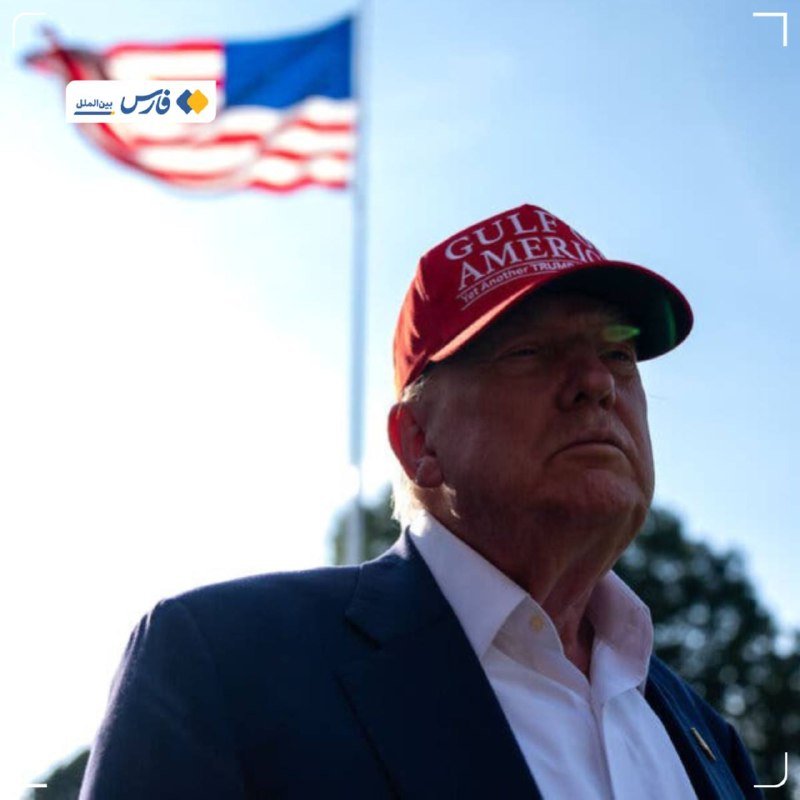
Donald Trump stated on 27 May 2026 that Oman would "behave just like everyone else, or we'll have to blow them up." The same day, he insisted the Strait of Hormuz — through which roughly one-fifth of the world's daily oil output transits — would be open to everybody, that it was international waters, and that the United States would "watch over it." These are not compatible positions. They cannot both be true. And the gap between them tells us everything about how this administration conducts diplomacy.
The Strait of Hormuz is not an American asset. It is a sovereign waterway flanked by Oman on one side and Iran on the other, governed by a combination of international maritime law, regional agreements, and the practical realities of a chokepoint no single nation controls. Oman has governed its territorial waters according to those arrangements for decades. Threatening to bomb a sovereign state because its government will not align with an American preference on maritime governance is not a negotiating tactic. It is a violation of the very norms the United States has spent seventy years insisting other nations must respect.
The administration may argue it is defending the principle of free passage. In practice, it is substituting a threat of force for the patient diplomatic work that principle actually requires. Free navigation survives when great powers accept constraints on how they manage chokepoints. It does not survive when one power announces it will destroy a sovereign neighbour unless the neighbour cooperates with its preferred arrangement. The distinction is not semantic. It is the difference between a rules-based order and its elimination.
There are immediate consequences beyond the diplomatic insult. Oman has maintained careful neutrality in the rivalry between Washington and Tehran. That neutrality is now under direct American pressure. If Muscat recalculates and moves closer to Iran as a hedge against an American administration that has openly threatened its territory, the Strait becomes less stable, not more. A Gulf state that feels its sovereignty has been violated by Washington has less reason to cooperate with Washington's preferred security arrangements. The coercion risks producing the opposite of its stated aim.
The oil-market dimension compounds the problem. The Strait of Hormuz cannot absorb disruption without immediate global consequences. A military exchange in or near the Strait — even a limited one — would trigger price spikes with cascading effects across the world economy. Markets know this. The administration may believe that threatening to defend free passage is itself a stabilizing signal. But markets read threat-and-intimidation as instability, and oil traders respond to the latter more reliably than the former. If the goal is price stability, threatening a country that sits astride the world's most critical oil corridor is a spectacular own goal.
The announcement on the same day that the administration would release "a lot of information having to do with extraterrestrial things" adds a layer of tonal confusion that should not be dismissed. Foreign governments observing an American president threaten to bomb a sovereign state in the morning and announce alien disclosures in the afternoon are entitled to doubt the coherence of the decision-making process. That doubt has consequences. It shapes whether counterparts take the threats seriously as instruments of statecraft or catalogue them as noise to be managed. Either reading is damaging.
Oman's position deserves scrutiny on its own terms. Muscat has managed its geography — squeezed between Iran and Saudi Arabia, commanding a waterway the world depends on — through decades of careful neutrality. It has kept its own house in order. It has not threatened the United States. The administration has offered no public evidence that Oman has acted in bad faith regarding the Strait, no claim that it has obstructed lawful passage, no documented grievance that would ground an ultimatum of this severity. What the administration has offered is a threat. And a threat is not a policy.
The Strait of Hormuz will remain the world's most important maritime chokepoint regardless of what Washington says. The question is whether the United States will manage that reality through sustained diplomacy or through the barrel of a gun. Trump's statements on 27 May 2026 answered that question — and the answer does not inspire confidence that this administration understands the difference.
Wire provenance
This editorial synthesis draws on the following public wire/social posts:
- https://x.com/sprinterpress/status/1951935749429776385
- https://x.com/unusual_whales/status/1951956962881720625
- https://x.com/unusual_whales/status/1951948818390602993
- https://x.com/polymarket/status/1951899029829616118