Trump threatens Oman over Hormuz as US strikes Iran military site
President Trump's warning that the US would "blow up" Oman unless it compels Iranian compliance over the Hormuz strait marks a new escalation in a pressure campaign already producing military strikes against Tehran.
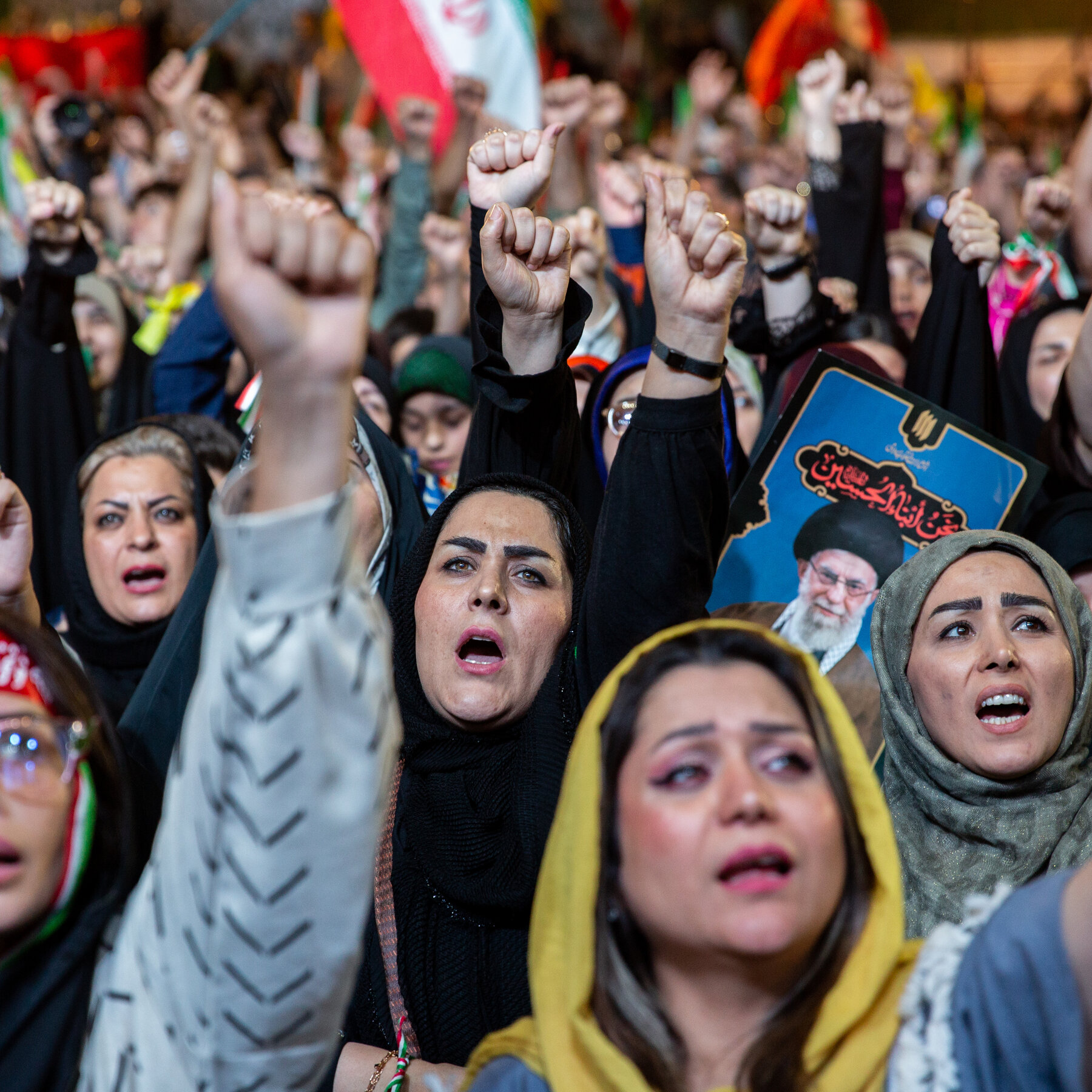
On the evening of 27 May 2026, President Trump delivered a warning that few in Muscat would have expected to hear from an American ally: comply with Washington's demands on Iran, or face destruction. "Oman will behave just like everyone else, or we'll have to blow them up," Trump said at a White House appearance, according to social media posts reviewed by this publication. Hours later, the US military carried out fresh strikes on an Iranian military facility, according to BBC reporting, as negotiations over Iran's nuclear programme appeared to be approaching collapse.
The combination of an explicit threat against a non-hostile Arab state and simultaneous military action against Tehran signals that the administration's maximum pressure strategy has entered a phase where conventional diplomatic signals are no longer the primary instrument. Oman has historically served as a discreet channel between Washington and Tehran; its positioning now appears to make it a target of the same coercive pressure as the adversary it was meant to help contain. The Hormuz strait — through which roughly a fifth of the world's oil shipments pass — is the stated prize.
The Hormuz calculus
The strait's significance cannot be overstated in crude terms. Energy markets know this, which is why any rhetoric threatening its status quo produces immediate market reaction. Oman sits at the mouth of the Persian Gulf; its coastline includes the Musandam Peninsula, which practically splits the strait in two. Any military operation to "blow up" Oman's capacity to regulate or allow passage through Hormuz would, by definition, be an operation to close one of the world's most critical maritime chokepoints. That Oman's sovereign waters would be the target of a US president speaking publicly in Washington is extraordinary by any historical measure of the alliance.
What Oman has been doing
Oman has maintained a posture of studied neutrality in the Gulf that its late Sultan, Qaboos bin Said, built over decades as a buffer between regional rivals. Muscat has not sided with Saudi or Emirati interventionism in Yemen, has not joined the Abraham Accords normalised with Israel, and has kept diplomatic channels open to Tehran. This posture has made Oman useful to Washington — a place where back-channel communication could happen away from public posturing. That utility appears to have counted for little in the current calculus. Trump's statement that Iran "thought they were going to out wait me" and called the previous night's events "the prelude" suggests the administration believes it is in a phase of demonstrable force, not negotiation.
The military dimension
The US strikes reported by BBC on the morning of 28 May targeted an Iranian military site. The timing — coming within hours of the Oman threat — suggests coordination, or at minimum, a common intent to demonstrate that multiple pressure vectors are active simultaneously. The administration has characterised Iran's posture as "negotiating on fumes," suggesting it believes Tehran is close to capitulation or near collapse of its own volition. Whether military pressure and territorial threats advance that goal or harden Iranian resolve is a question the available sources do not resolve. What is clear is that the stated US objective — a new nuclear agreement — has not been achieved through the combination deployed so far.
Stakes and silence from Muscat
The administration's public language has produced a series of moments where established diplomatic norms are set aside in favour of declarative threats. The pattern — maximum pressure, direct ultimatum, visible military action — has a coherence to it in transactional terms: show the target that the cost of non-compliance is immediate and multi-dimensional. Whether this approach produces compliance from Tehran or simply a more dangerous regional dynamic is the central question the sources do not yet answer. Oman, for its part, has not publicly responded to the threat as of the time of writing. The silence from Muscat may reflect a calculation that engaging the statement publicly only amplifies it — or it may reflect a genuine uncertainty about where the alliance with Washington now stands. If the Hormuz strait is disrupted — whether by Iranian action, Omani compliance with US demands that alarm Tehran, or direct US military action — global oil markets face a supply shock with no obvious substitute in the short term. The sources provide no basis to model probability of such a scenario; they establish only that the language now being used by the administration has moved into territory that makes such outcomes thinkable in a way they were not a week ago.
This publication covered the Oman threat as a directQuote and military escalation rather than as a diplomatic misunderstanding; the wire framing trended toward normalisation of the threat as negotiating rhetoric, which this desk found insufficient given the specificity of the language used.
Wire provenance
This editorial synthesis draws on the following public wire/social posts:
- https://x.com/unusual_whales/status/1921732294195368452
- https://x.com/polymarket/status/1921728164292616339