The UN's Israel Designation and the Weaponization of Sexual Violence Accountability
The UN's decision to add Israel to its list of perpetrators of sexual violence in conflict marks a rare instance of formal censure from an international body that has historically struggled to enforce accountability mechanisms.
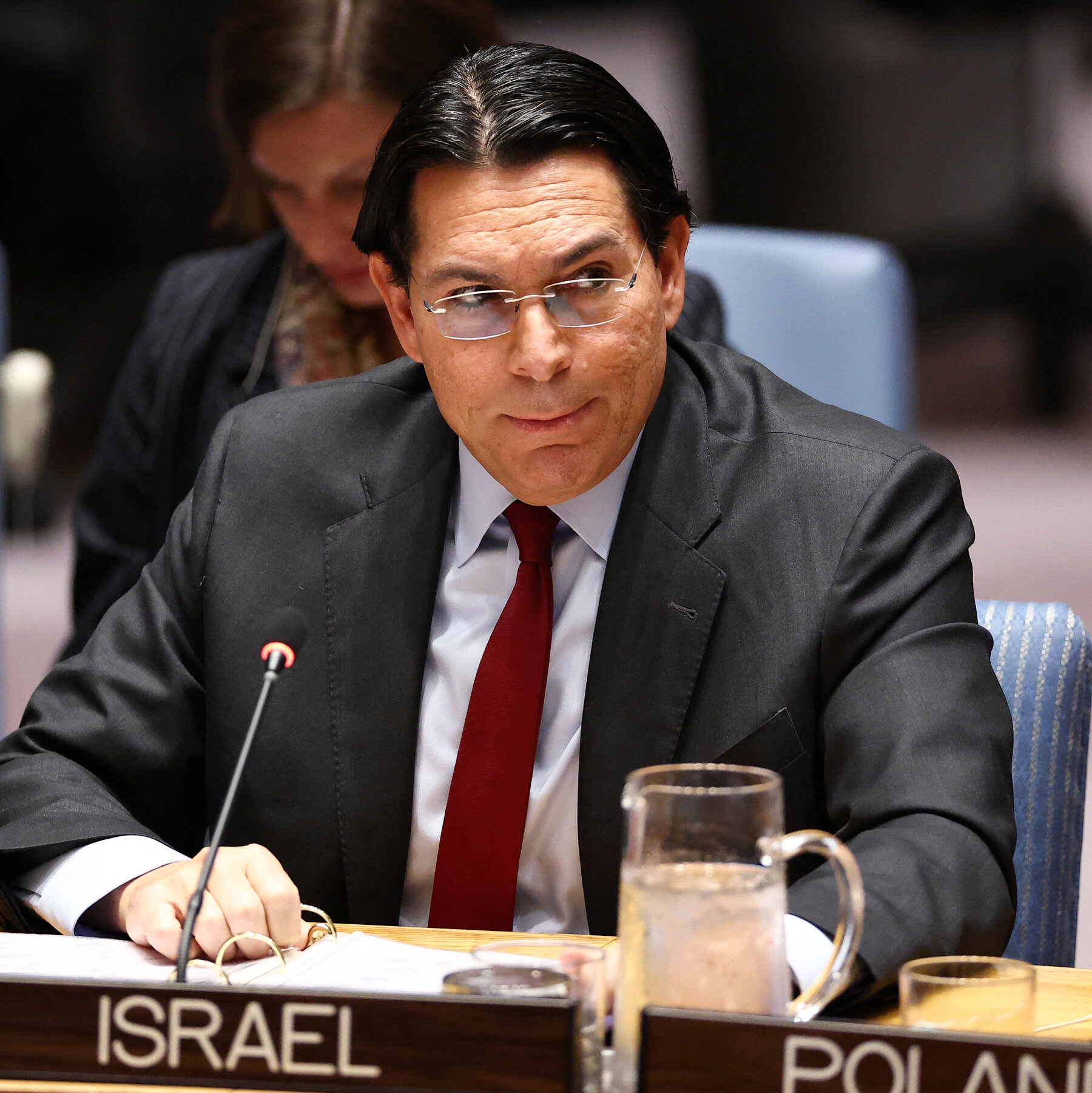
When the United Nations adds a state to its register of perpetrators of sexual violence in armed conflict, the diplomatic reverberations extend well beyond the formal text of the designation. On 28 May 2026, the UN took that step with Israel — a move that drew immediate condemnation from Jerusalem and renewed attention to the growing friction between Western-influenced multilateral institutions and governments that have long treated the UN's human rights mechanisms with deep skepticism.
The designation, reported via the Telegram channel Megatron_Ron on 28 May 2026 at 20:46 UTC, cited what were described as undeniable evidentiary thresholds. A separate report from Middle East Eye, published earlier the same day at 19:25 UTC, quoted a UN expert characterizing the inclusion as long overdue. The convergence of a formal UN mechanism and independent expert commentary points to a documented evidentiary basis — however contested that evidence may be in the court of geopolitical opinion.
The Formal Mechanism and What It Actually Does
The UN's informal list of perpetrators of sexual violence in conflict — maintained under the auspices of the Secretary-General's special representative on the issue — operates as both a naming-and-shaming tool and a signal to investigative and prosecutorial bodies operating within the broader UN architecture. Inclusion on the list does not carry direct legal sanctions in the manner of a Security Council resolution. Its power is reputational: it defines the international legal record, shapes the posture of ICC preliminary examinations, and influences the framing used by states and international NGOs in双边 and multilateral negotiations.
Critics of the mechanism argue that it politicizes what should be a clinical evidentiary process — that states are added not purely on legal merit but in response to geopolitical lobbying, media pressure, and the relative weakness of their diplomatic defenses at the UN. Supporters counter that the mechanism has historically been applied with rigor and that its selective use against certain states while omitting others is itself a form of structural equity — correcting for the decades during which sexual violence in non-Western conflict zones commanded far less institutional attention.
The sources do not specify which UN office issued the designation, the precise evidentiary documentation upon which it rests, or the timeline for appeals. Those details matter enormously to the legal and diplomatic weight of the step, and their absence from available reporting reflects the opacity that frequently surrounds UN human rights mechanisms as they move from expert-level recommendation to formal publication.
The Israeli Response and Diplomatic Fracture Lines
Israel's likely response — based on historical patterns of engagement with UN human rights mechanisms — would center on three arguments. First, that the evidentiary bar was lowered or applied inconsistently relative to other parties in ongoing armed conflicts. Second, that the political context of the Israel-Palestine question renders the UN's human rights system structurally biased against Jerusalem. Third, that any findings underpinning the designation derive from sources whose neutrality and methodology are themselves compromised.
These arguments are not unique to Israel. Russia has deploye
d similar tactics against UN mechanism evaluations of its conduct in Ukraine. The structural parallel is precise: both involve states with powerful allies who view the UN's human rights architecture as an instrument of broader geopolitical competition rather than a neutral legal process.
The United States, Israel's principal diplomatic backer, has historically jealously guarded the UN's sexual violence mechanism from any suggestion of application to Ukrainian contexts — a position that exposed the nakedly geopolitical nature of Washington's engagement with multilateral accountability when its adversaries rather than its allies face scrutiny. The pattern is well-established: the US champions the mechanism when it targets states it opposes, and attacks it as biased when it threatens states it protects.
The Broader Multilateral Accountability Landscape
The Israel designation does not exist in isolation. It arrives within a transformed landscape of international accountability that has been significantly reshaped since the ICC's prosecutor sought arrest warrants for Israeli officials in 2024 — a step that provoked immediate and aggressive pushback from Washington, including legislation threatening ICC staff with sanctions. The UN General Assembly, meanwhile, has continued to pass resolutions relating to Gaza that secure large majorities despite Western opposition, reflecting a divergence between the formal Security Council structure and the broader institutional logic of UN membership.
In that context, the sexual violence list functions as a pressure-release valve for states that lack the political leverage to influence Security Council outcomes but retain voting power in the General Assembly and credibility within the human rights treaty body system. The designation does not create legal obligations. It creates a record: a documented institutional position that can be cited in international litigation, in bilateral diplomatic exchanges, and in domestic legal proceedings in third-country jurisdictions that have incorporated universal jurisdiction principles.
The sources do not indicate whether the specific evidence cited in Israel's designation has been independently reviewed by the ICC's Office of the Prosecutor or made available to any signatory state that might use it in a universal jurisdiction proceeding. These are the transmission mechanisms through which UN mechanism designations acquire legal teeth — and their absence from current reporting leaves the practical consequences of the designation genuinely uncertain.
Precedent and the Problem of Selective Enforcement
The UN's track record on sexual violence accountability is, by any objective measure, uneven. Perpetrators from conflicts in Syria, South Sudan, the Democratic Republic of Congo, and Myanmar have faced designations that generated extensive documentation and formal condemnation — but enforcement has been near-zero in each case. The list is a mirror held up to the international system's selective attention: it names perpetrators comprehensively, but its architects control little beyond moral authority.
Israel's designation will be read through this precedent. Supporters of the mechanism will argue that consistency is its own form of legitimacy — that excluding Israel on geopolitical grounds would confirm the worst accusations about the list as a political instrument rather than a legal one. Opponents will argue that the political will required to actually enforce accountability against non-Western perpetrators was never mustered, and that applying the mechanism to a Western-aligned state simply exposes its fundamental irrationality: it names without acting.
Both readings carry weight. The UN's credibility on human rights accountability has been progressively undermined by its inability to produce enforcement outcomes even when it produces documentation. A world in which the most rigorously documented human rights abuses generate the most extensive paper trails and the least enforcement is one in which formal designations function primarily as political signals rather than legal instruments.
What Remains Uncertain
The sources reviewed for this article do not include the full text of the designation, the specific evidentiary findings underpinning it, the formal institutional corridor through which it wasissued, or any Israeli government response. The Telegram reporting of 28 May 2026 at 20:46 UTC characterizes the threshold as undeniable; the Middle East Eye reporting at 19:25 UTC characterizes the step as long overdue. Neither provides documentary substantiation.
What can be said with confidence is that the designation occurred on 28 May 2026, that it names Israel specifically, and that it drew immediate commentary from a UN expert framing it as justified. The diplomatic firestorm, the evidentiary disputes, the formal appeal processes, and the downstream legal consequences remain to be reported as they develop. The sources reviewed here establish the fact of the designation and the broad contours of its reception; they do not establish its ultimate institutional weight.
Monexus covered the designation as reported via Telegram and Middle East Eye, with no independent corroboration from UN press services or Israeli government channels at the time of publication. The wire framing was consistent with the UN expert position. Readers seeking the full UN Designated Perpetrators register should consult the Secretary-General's Special Representative on Sexual Violence in Conflict directly.
Wire provenance
This editorial synthesis draws on the following public wire/social posts:
- https://t.me/megatron_ron/3847