US and Iran Trade Strikes as Hormuz Agreement Collapses Into Open Conflict
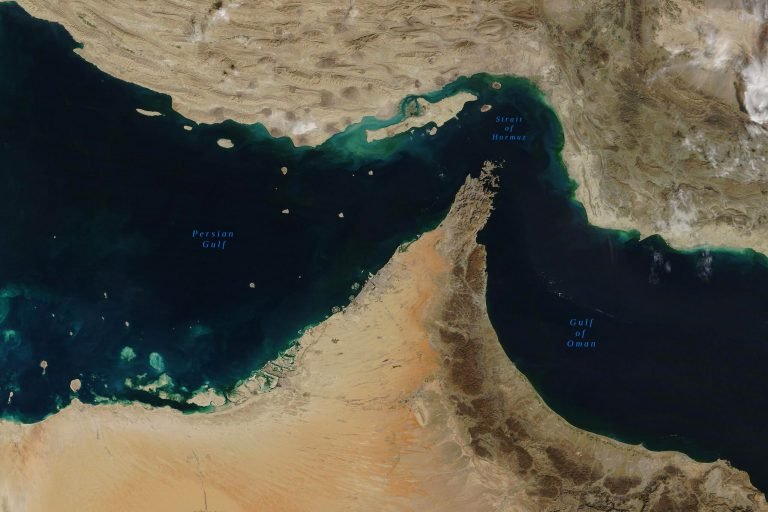
The United States and Iran exchanged air strikes on Wednesday in the most significant military exchange since tensions over the Strait of Hormuz escalated sharply over recent weeks. The confrontations came after the Trump administration publicly rejected reports that a negotiated agreement to ease pressure on Iranian shipping through the strategic waterway had been reached, deepening uncertainty about whether the two sides were ever close to a deal.
According to Reuters, US forces launched strikes against a site near the Iranian port city of Bandar Abbas, a location home to significant Revolutionary Guard naval infrastructure. Iran's Islamic Revolutionary Guard Corps confirmed it had carried out retaliatory strikes against a base used by American forces, though Iranian state media reported no casualties or damage from the exchange.
The strikes occurred on what local sources and regional reporting desks identified as day 90 of the current escalation cycle, with both governments under domestic pressure to demonstrate resolve. The immediate trigger for the military exchange remains disputed: the White House has maintained it never agreed to any Hormuz accord, while Iranian officials have suggested a preliminary understanding was close before Washington walked away.
The Hormone Collapse and Its Aftermath
The question of whether a Hormuz deal existed at all lies at the centre of the current crisis. Reuters reported on Wednesday that the Trump administration dismissed an emerging account — circulating in regional and social media — that both sides had reached an understanding to ease restrictions on Iranian oil tanker transits through the Strait. The administration denied the characterisation, prompting Tehran to frame the rejection as evidence of American bad faith.
Satellite analysis and commercial shipping data reviewed by regional intelligence observers indicate a marked increase in US naval positioning around the Strait in the past ten days, consistent with a posture designed to enforce sanctions restrictions on Iranian crude exports. Iranian vessels have made repeated transits through the waterway throughout the period, testing the limits of the enforcement posture. The strikes near Bandar Abbas appear to represent the first direct US kinetic action against Iranian military infrastructure since those transits intensified.
The commercial implications are immediate. The Strait of Hormuz handles roughly one-fifth of global oil trade, and any sustained interruption would reverberate through energy markets already sensitive to Middle Eastern supply disruption. Brent crude futures moved higher on Wednesday following reports of the strikes, though trading desks noted that market reaction was contained by the absence of confirmed damage to tanker traffic.
Political Calculus in Washington and Tehran
The domestic political dimension of the strikes complicates any de-escalation pathway. Senator Lindsey Graham, a prominent Senate voice on foreign policy, has publicly offered enthusiastic support for the administration's Iran posture, framing the pressure campaign as a necessary response to years of Iranian regional behaviour. Social media commentary — cited by Sprinter Press wire — pointed to what observers described as a stark contradiction between Graham's endorsement and the escalating instability attributed to the cumulative effect of US military policy against Iran.
That critique reflects a wider fault line in American debate about the Hormuz strategy. The administration has argued that maximum pressure — including naval enforcement of secondary sanctions — is the only mechanism that produces Iranian concessions. Critics, including some former administration officials, contend that the approach has no credible off-ramp and risks producing exactly the kind of kinetic exchange now underway.
In Tehran, the pressure on the Iranian government runs in a different direction. Iranian officials have argued that concessions made under economic duress are not sustainable and that the Revolutionary Guard's response on Wednesday was designed to demonstrate that Iran will not absorb strikes without response — a signal intended for domestic audiences as much as for Washington. The IRGC statement confirming retaliatory action framed it as a proportionate response, not an escalation.
The Hormuz Authority and the Sanctions Dimension
One structural element that contextualises the exchange: the US Treasury announced sanctions against Iran's Hormuz authority — the body responsible for coordinating shipping through the Strait — in the hours preceding the strikes. The sanctions designation, reported by Sprinter Press wire, targets both the institution and named officials involved in overseeing tanker transit operations. The administration described the action as part of its ongoing maximum pressure campaign; Iranian officials characterised it as evidence that Washington was using sanctions to enforce a de facto blockade rather than pursuing negotiation.
The sanctions on the Hormuz authority represent a significant ratcheting-up of the financial pressure architecture. They are distinct from, and additional to, the sectoral sanctions imposed on Iran's oil and banking industries over the past several years. The targeting of the transit authority specifically signals an intent to disrupt the logistical chain rather than simply the revenue stream — a distinction that Iranian analysts have noted with alarm.
What Comes Next
Both sides have signalled they do not want a wider war, but the mechanism for de-escalation is not obvious. The administration has no stated diplomatic off-ramp that Tehran can accept without appearing to yield to American pressure. Tehran has no obvious mechanism to reduce its exposure without appearing to back down under sanctions. The strikes on Wednesday did not produce significant damage, which both sides may read as an opportunity to step back from further kinetic engagement — but the underlying tensions that produced the exchange remain unaddressed.
Regional allies, including Gulf Cooperation Council states with significant oil export infrastructure, have expressed private concern about the trajectory. Commercial shipping insurers have begun adjusting risk assessments for Hormuz transits, a move that typically precedes premium increases. The Strait remains open for now; the question is whether the political incentives that produced the strikes will continue to push both governments toward further confrontation or provide sufficient space for back-channel communication.
The sources do not indicate whether any diplomatic channel remains open between the two governments. The absence of a stated US negotiating position beyond the sanctions and military enforcement posture suggests the administration is currently operating on the assumption that pressure alone will produce Iranian concessions. That assumption has produced the strikes on Wednesday — and may produce more.
This publication noted a divergence between wire framing that focused on tactical strike details and a structural reading that placed the exchange within the longer arc of Hormuz transit enforcement strategy and the sanctions architecture designed to strangle Iranian oil revenues through financial isolation rather than naval blockade.
Wire provenance
This editorial synthesis draws on the following public wire/social posts:
- http://reut.rs/4tYSjLi