US Navy, IRGC Clashed Near Bandar Abbas as Explosions Reported Across Southern Iran
Unconfirmed but vivid reports from multiple independent monitoring channels indicate explosions shook southern Iran near the strategic port of Bandar Abbas on 27 May, with at least one credible source reporting actual clashes between US Navy vessels and Islamic Revolutionary Guard Corps forces along the coast.
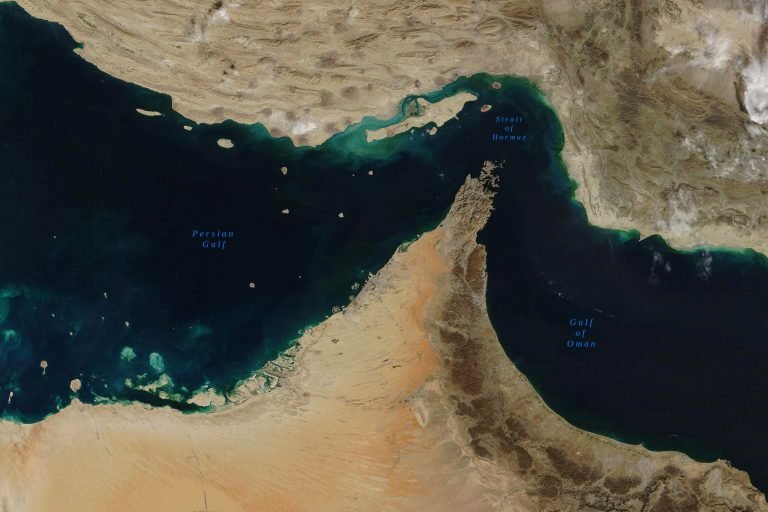
Explosions Near a Key Strategic Chokepoint
On the evening of 27 May 2026, multiple monitoring channels began circulating reports of significant explosions in the vicinity of Bandar Abbas, a port city on Iran's southeastern coast whose shipping lane holds outsized weight in global energy logistics. Initial accounts, still fragmentary as of filing, described three to four detonations heard and recorded by local residents. A separate source with imagery access described what appeared to be actual physical clashes — with visual confirmation, in their framing — between United States Navy assets and Islamic Revolutionary Guard Corps forces operating along the coastal corridor. The overlapping, if unverified, character of these reports marks this as an unusually rapid escalation signal from a corner of the Gulf that rarely produces clean, confirmed narratives in real time.
What the Sources Say — and Why Caution Is Warranted
The two most substantive reports arrived within minutes of each other on the evening of 27 May. One channel, tracking naval and coastal activity, described visual confirmation of explosions and direct confrontation between US Navy units and IRGC forces near the Bandar Abbas shoreline. Another, citing local residents directly in the area, placed three to four separate detonations within or near the city itself. A third monitoring source carried separate, unconfirmed accounts of a vehicle strike targeting a prominent IRGC official near the same location — though the identity of that individual and the precise nature of the targeting remained unclear in initial filings. Taken together, the cluster of reports describes a scenario in which multiple distinct kinetic events occurred in the same geography within a compressed window, one of them involving the US military directly.
The caveat must be stated plainly: these reports carry no independent confirmation from Western wire services as of the current filing. The images circulating are consistent with the geographic claims — Bandar Abbas is identifiable, its port facility is distinguishable — but open-source verification of US Navy positioning, IRGC unit assignments at the time, and whether each reported detonation refers to a distinct incident or a single event producing multiple shockwaves, remains unresolved. Readers should treat the vehicle-strike element particularly cautiously; vehicle-targeting reports in contested airspace or coastal zones frequently prove attributable to other causes entirely.
The Structural Weight of Bandar Abbas
The location matters beyond the immediate news value. Bandar Abbas hosts the Islamic Republic's largest commercial port infrastructure and serves as a pivotal transshipment node for crude oil moving through the Strait of Hormuz corridor. Any confrontation — even an ephemeral one — in the operational shadow of that facility carries latent implications for energy market pricing and tanker insurance calculations that far exceed what a single night's unconfirmed reports might otherwise suggest. The US naval presence in the Gulf is a standing fact; IRGC maritime forces maintain routine patrol operations in the same waters. Co-location does not produce confrontation on its own, but it does mean that when sparks catch, the margins for miscalculation are thin.
That thinness has been a recurring anxiety across the broader pattern of US-Iran tension since the original JCPOA collapse. With no diplomatic back-channel operating at functional levels and with Iranian enrichment activity sitting at levels that narrow the diplomatic off-ramp, both sides have been operating in a mode where signal clarity is perpetually in doubt. A clash off Bandar Abbas — even one that resolves quickly — changes what "normal" looks like in the Gulf.
Stakes and What Comes Next
If the clashes are real, the minimum consequence is a re-hardening of the operational posture on both sides. US naval commanders would be expected to brief elevated watch protocols; IRGC maritime divisions would likely activate additional coastal defence assets in the southern Gulf. Beyond the immediate tactical sphere, the political fallout in Washington and Tehran would be nonlinear: in both capitals, the domestic audience for any confrontation is primed by years of escalatory framing, leaving little buffer for de-escalation rhetoric in the immediate aftermath.
The longer-term risk is quieter but more durable: each incident of this kind erodes the informal guardrails that have kept the two militaries from inadvertent collision despite sustained tension. Absent a diplomatic mechanism to rebuild those guardrails — and the sources do not suggest one is in formation — the next Bandar Abbas moment will carry lower residual uncertainty and higher probability of a line being crossed rather than reinforced.
What remains genuinely unresolved in the current reporting is whether the vehicle strike targeted an individual of command-level significance, whether the US involvement was deliberate kinetic action or defensive response to an IRGC approach, and whether Iranian state media has any active account in circulation that might provide a partial Iranian framing of events. Those gaps are not minor; they are the difference between a warning-shot calibration and something structurally more consequential.
Desk Note
Two separate monitoring channels carried the naval-clash report within seconds of each other, while a third reported the vehicle-strike allegation independently. The geographic and temporal overlap between the accounts is the primary basis for treating this as a coherent cluster rather than three separate noise events. It is, for now, confirmed-in-fragmentary. No mainstream wire service had published a confirmed account at time of filing. Monexus will update as corroboration becomes available.
Wire provenance
This editorial synthesis draws on the following public wire/social posts:
- https://t.me/osintlive/5841
- https://t.me/osintlive/5840
- https://t.me/rnintel/2847
- https://t.me/GeoPWatch/1843