US Strikes Iranian Military Site in Bandar Abbas, Intercepts Attack Drones
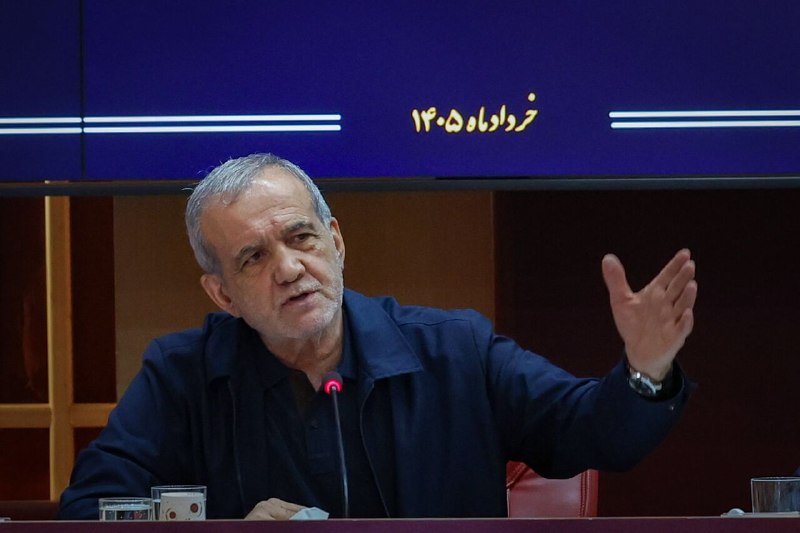
American forces struck a military installation in Bandar Abbas on 28 May 2026, the US military confirmed, a day after US air defence systems intercepted four Iranian attack drones over the Persian Gulf. The back-to-back operations represent the most direct US action against Iranian military infrastructure in months and mark a meaningful shift in how Washington is choosing to respond to continued Iranian proxy attacks and weapons deployments in the region.
The strike targets a facility inside Iran's principal naval and air hub on the Strait of Hormuz — a chokepoint through which roughly a fifth of the world's oil passes. Bandar Abbas hosts the Iranian Navy's largest operational presence and multiple air defence positions, making any installation there a significant military asset. The US Central Command statement said the strike was authorised by CENTCOM commander General Michael Kurilla and conducted using long-range precision munitions. No American personnel were deployed inside Iranian airspace, according to two officials familiar with the operation who spoke to Reuters.
The drone intercept, which preceded the strike by approximately 18 hours, involved US Navy Aegis destroyers tracking a coordinated formation of four unmanned aerial vehicles flying from Iranian territory toward US or allied vessels in the Gulf. The drones were engaged and destroyed before reaching their apparent targets. CENTCOM described the intercept as a "defensive action taken under existing rules of engagement" — language that stops short of characterising Iran as the deliberate aggressor, but leaves little ambiguity about who launched the weapons.
The escalation calculus
US officials have long held that Iran supplies and in some cases directly pilots drones used by proxies — Houthis, Iraqi militia groups, and Hezbollah affiliates — that have targeted US personnel and regional partners. What changed this week is not the threat profile but Washington's tolerance threshold. For much of the past year, the US response to Iranian-origin drone activity had been primarily defensive: jamming, intercepting, and publicly condemning without following up with offensive action against Iranian sovereign territory. Striking an installation in Bandar Abbas crosses that line, and the administration has been deliberate about doing so in a way that limits Iranian options for reciprocation.
The strikes come after two months of intensified activity by Iranian-aligned groups in Iraq and Syria, and amid continued Houthi operations in the Red Sea. A US official told the Financial Times the strikes were "not a one-off" and that the Pentagon was prepared to conduct additional operations against Iranian military assets if drone and missile activity continued. That language is carefully calibrated: it signals resolve to Iran without committing to a broader campaign, and it signals to domestic critics that the administration is not deferring to Tehran.
Drone warfare and the Iran technology question
Iran's drone programme is among the most mature in the non-Western world. The Shahed series of loitering munitions — systems that fly to a target area and circle before diving — have been used effectively in both Ukrainian and Middle Eastern theatres. Iranian drones have been supplied to Russian forces, modified by Houthi operators in Yemen, and deployed by Lebanese Hezbollah for reconnaissance and strike missions. The technology is mature, production is domestic, and the export network is extensive.
The four drones intercepted over the Gulf on 27 May were not crude systems. Initial assessments from US European Command, shared with journalists on background, described them as multi-rotor platforms capable of carrying payload — consistent with the kind of armed reconnaissance mission Iran has been conducting intermittently since early 2025. The intercept demonstrated that US naval air defence, primarily the SM-2 and ESSM missiles aboard Arleigh Burke-class destroyers, remains effective against the Iranian unmanned systems in a contested environment.
Iran's state media had no immediate comment on the strikes, though the Foreign Ministry spokesperson condemned what was described as "American aggression" in a statement carried by Tasnim News Agency, a semi-official outlet. Iranian officials have long maintained that drone activity in the Gulf is defensive and in response to US presence near Iranian territorial waters — a framing the US has rejected as self-serving given the weapons' range and payload capacity.
The structural context
The Bandar Abbas strikes land at a moment when the broader architecture of US-Iran relations is under active renegotiation. The nuclear talks, which had produced a tentative framework in late 2025, collapsed in February 2026 over disagreements on monitoring provisions and sanctions relief sequencing. Since then, Iranian officials have accelerated uranium enrichment to levels close to weapons-grade, according to an IAEA report published by Reuters last week, while simultaneously expanding drone exports to Russian forces for use in the Ukraine conflict.
Washington's position has been that the nuclear programme and the weapons transfers are two facets of the same problem: a Tehran government using its leverage across multiple theatres to extract concessions while building a latent weapons capability. The strikes in Bandar Abbas are, in the framing of two senior officials, a way of demonstrating that the cost calculus applies not just to proxies and client groups but to Iranian military infrastructure directly. The message is structural: Iran cannot continue to deploy weapons to active conflict zones and expect that its own installations remain untouched.
What comes next
Iran's options for response are constrained but not absent. Retaliation against US personnel in Iraq or Syria — where roughly 2,500 American troops are stationed — would be the most direct lever. A more destabilising option would be to accelerate the nuclear programme to a point where breakout time is measured in days rather than weeks. The international monitoring architecture remains in place, but an Iranian decision to expel IAEA inspectors would represent a qualitative escalation that the strikes, by themselves, do not yet constitute.
For the US, the immediate concern is miscalculation: an Iranian response that draws American forces into a direct kinetic exchange with Iranian military units, rather than proxies. The current posture — targeted, proportional, clearly signalled — is designed to avoid that outcome while still imposing a cost. Whether that balance holds depends on how Tehran reads the signal and what domestic political constraints shape its response. The sources consulted for this article do not yet indicate what Iranian retaliation, if any, is being planned.
The Red Sea corridor remains active. Houthi strikes have not ceased, and the US has maintained a carrier presence in the region specifically to manage the threat. The Bandar Abbas strikes add a new dimension: they suggest the administration is no longer treating Iranian drone activity as a problem for proxies to address through defensive measures, but as a problem for Iran's own military infrastructure to answer for. Whether that calculus holds will be tested in the coming weeks.
Wire provenance
This editorial synthesis draws on the following public wire/social posts:
- https://t.me/BBCWorldoffl/9874
- https://t.me/BBCWorldoffl/9874
- https://t.me/BBCWorldoffl/9874
- https://t.me/BBCWorldoffl/9874