The Calculus of Escalation: What the US Strikes on Iran Reveal About the Limits of American Power
The strikes Washington ordered against Iranian military targets on 28 May 2026 are fact. The question now is whether they represent deterrence, miscalculation, or the opening phase of a sustained campaign — and what each answer means for a dollar system already straining under the weight of concurrent pressures in Ukraine and the Indo-Pacific.
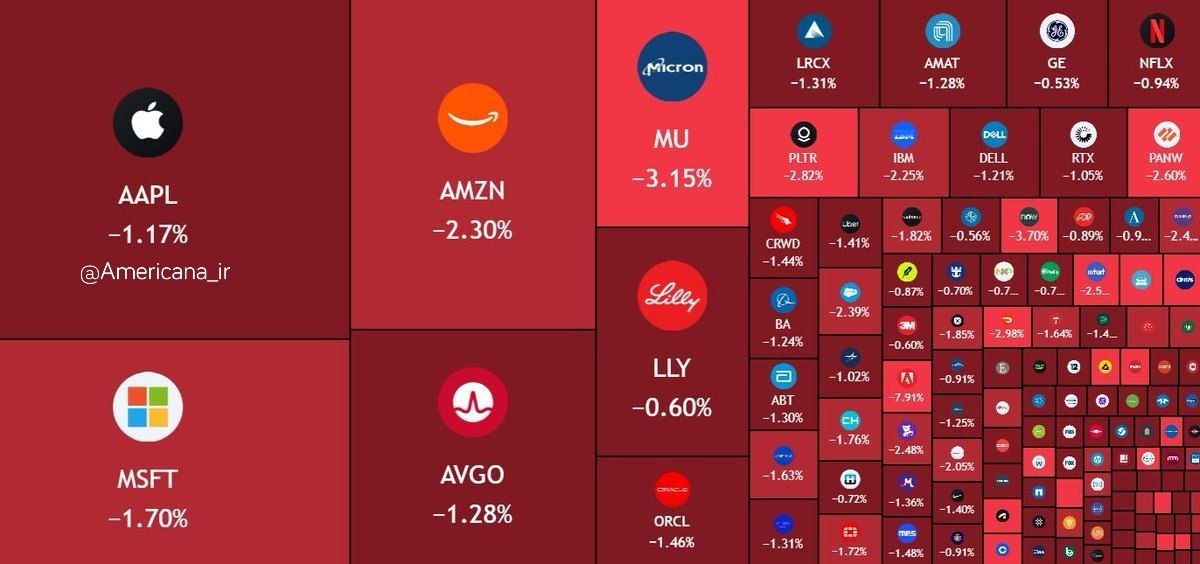
The first confirmed details arrived before breakfast in Washington. On 28 May 2026, the United States carried out a new round of strikes inside Iran, targeting what a US official described as a military site and a collection of drones. The announcement, carried by Reuters at 06:10 UTC, offered the official characterisation without specifying which Iranian facilities, which command, or which weapons had been used. Within hours, gold markets — typically the first and most legible signal of geopolitical stress — had dropped to a two-month low, not because investors saw de-escalation, but because the same tensions are stoking inflation concerns that complicate the Federal Reserve's room to cut rates.
The absence of a fuller picture is itself informative. The United States has, over decades, developed a sophisticated apparatus for managing the public release of military information — calibrated to signal resolve without revealing operational detail, to reassure allies before opponents fully understand what has happened. That apparatus was moving fast on 28 May. What it had not done, as of this article's deadline, was specify the legal basis for the strikes, the specific facilities targeted, or what conditions on the ground, if any, triggered the authorisation. Iranian state media, citing an international-affairs analyst, warned that any aggression would be met with a "regrettable" and "multifold" response — language calibrated for domestic and regional audiences, not for precision.
This is how escalation often looks from the outside: a flash of force, a sharp response, and a prolonged period in which neither side fully controls the signal its actions will send. The question is not whether the strikes happened. The question is what they mean — and whether Washington has thought through what comes next.
What the Strikes Actually Target
The official framing described a military site and drones. That specificity is thin. US military operations against Iranian targets are not new: the current administration has conducted strikes across Iraq, Syria, and Yemen over the preceding months, typically framed as defensive or retaliatory. The pattern has been consistent enough that the legal theory — self-defence under Article 51 of the UN Charter, as applied to non-state or proxy-adjacent threats — has become the default justification, with minimal international scrutiny and limited domestic debate.
What distinguishes the 28 May strikes from prior operations is that they occurred inside Iranian sovereign territory. Previous US actions had targeted Iranian assets or Iranian-backed forces in third countries. Hitting a facility on Iranian soil is categorically different under international law, regardless of how compelling the security rationale. It is the kind of action that, in the language of diplomacy, changes the relationship between two states in ways that are difficult to reverse.
The Iranian Armed Forces' response, as reported by Mehr News on 28 May at 04:46 UTC, was swift and explicit: aggression would meet a multifold response. The phrasing matters. It is not the language of deterrence — it is the language of retaliation calculus. Tehran is communicating that it has the capability and the intent to respond in kind, which means the question facing US planners is not whether escalation follows, but what its scope and tempo will be.
The Stockpile Problem No One Wants to Discuss
There is a second dimension to these strikes that received far less public attention on the morning they occurred. The Associated Press, reporting on 27 May, noted that the United States will require years to replenish stockpiles of key weapons expended in the Iran campaign — a situation that could constrain American firepower in any other simultaneous conflict.
This is not a new problem. The US defence industrial base has been under sustained pressure since at least 2022, when the scale of arms transfers to Ukraine first exposed how quickly precision-guided munitions and artillery rounds could be consumed in a high-intensity conflict. The US has transferred significant quantities of the same munitions systems — HIMARS rockets, Javelin anti-tank missiles, Patriot interceptors — that would be relevant to any military contingency in the Indo-Pacific, where the Pentagon's own wargaming scenarios consistently identify weapons expenditure as the binding constraint.
What the AP reporting makes clear is that the Iran strikes are not happening in a resource-neutral environment. They are happening against the backdrop of a multi-theatre strategic posture — NATO's eastern flank still requiring deterrence, the Indo-Pacific requiring sustained investment, and now a Middle Eastern campaign drawing on the same inventory. The phrase "years to replenish" is not bureaucratic shorthand. It is a statement about strategic flexibility, and it deserves more attention than it received on the morning of 28 May.
Markets React, But to Which Fear?
Gold's drop to a two-month low on 28 May is, at first glance, counterintuitive. Geopolitical escalation normally drives haven flows into gold. The explanation, as Reuters reported, lies in the inflation dimension: higher oil prices, which a US-Iran confrontation would almost certainly produce, complicate the Federal Reserve's path on interest rates. Gold prices respond to real yields. If inflation expectations rise faster than growth expectations, the expected return on gold — which pays no coupon — becomes less attractive relative to assets that do.
The Polymarket odds circulating on 27 May — a 33 percent probability assigned to Iran agreeing to surrender its enriched uranium by the end of June 2026 — suggest that financial markets have not fully priced the full-spectrum scenario. That figure reads less as a prediction and more as an index of uncertainty: a third-party assessment that the baseline expectation for Iranian compliance with any negotiated freeze is low, and that the window for diplomatic off-ramps is narrowing. What it does not tell you is whether the strikes were ordered partly to shift those odds, or whether they were the result of a calculation that the diplomatic window had already closed.
The oil market is the more direct transmission mechanism. The Strait of Hormuz remains the world's most critical maritime chokepoint for crude, and Iran has demonstrated in the past that it has the capability — through small-boat interdiction, mined shipping lanes, or harassment of commercial vessels — to impose costs on flows even without controlling the strait outright. The 28 May strikes, if they prompt Iranian retaliation in the Gulf, could move oil markets in a way that makes the gold signal look modest.
What Comes After the First Move
The structural logic of the situation points in one direction. Both sides have interests that are not easily reconciled. Washington has stated objectives around Iran's nuclear programme and its regional proxy network that have not changed. Tehran has a nuclear programme it regards as sovereign and a regional position it has spent two decades building. The strikes, if they represent the opening of a more aggressive US posture rather than a calibrated single action, push both sides further along a path where the costs of stopping are higher than the costs of continuing.
The historical parallel most analysts reach for is the 1980s US–Iran tit-for-tat, which included the strikes on Iranian oil platforms in 1987–88 and ultimately concluded not through military decision but through a combination of diplomatic channels and changed circumstances in Baghdad. That comparison has limits — the nuclear variable did not exist in the same form — but the structural lesson holds: the US has the capacity to impose significant costs on Iran, but not to compel a change in Iranian behaviour without a political settlement that Washington has so far been unwilling or unable to construct.
The risk is that the 28 May strikes, whatever their immediate tactical purpose, shift the frame from managed deterrence to something less controllable. Once a precedent of strikes inside Iran is set, the calculus for subsequent decisions changes. Iranian planners must now assume the US is willing to act inside Iranian territory, which means the response options Tehran considers on future provocations are different from those it would have contemplated before this morning. The same logic runs in both directions.
The sources available at publication do not yet specify what the legal basis for the strikes was, what specific facilities were hit, or what the intelligence assessment was on Iranian retaliation timelines. Those are the details that will determine whether the 28 May strikes are remembered as a pressure point or a turning point. What is clear is that they were not costless — and that the costs, on both sides, are only beginning to accumulate.
This publication's coverage of US military action in the Middle East leads with Western wire reporting and official US and Iranian state sources. Monexus notes that the AP reporting on US weapons stockpiles received substantially less prominence in mainstream coverage than the strikes themselves — a pattern this desk flags as worth examining separately.
Wire provenance
This editorial synthesis draws on the following public wire/social posts:
- http://reut.rs/4fdgXo4
- http://reut.rs/4dQur6T
- https://x.com/unusual_whales/status/1924371898761027585
- https://x.com/unusual_whales/status/1924371898761027585