Warning Shots in the Gulf: What Iran's Strait of Hormuz Move Really Tells Us
A warning missile from Chamran Air Base toward four vessels in the Strait of Hormuz has received a shrug from the international community. That response is the real story.
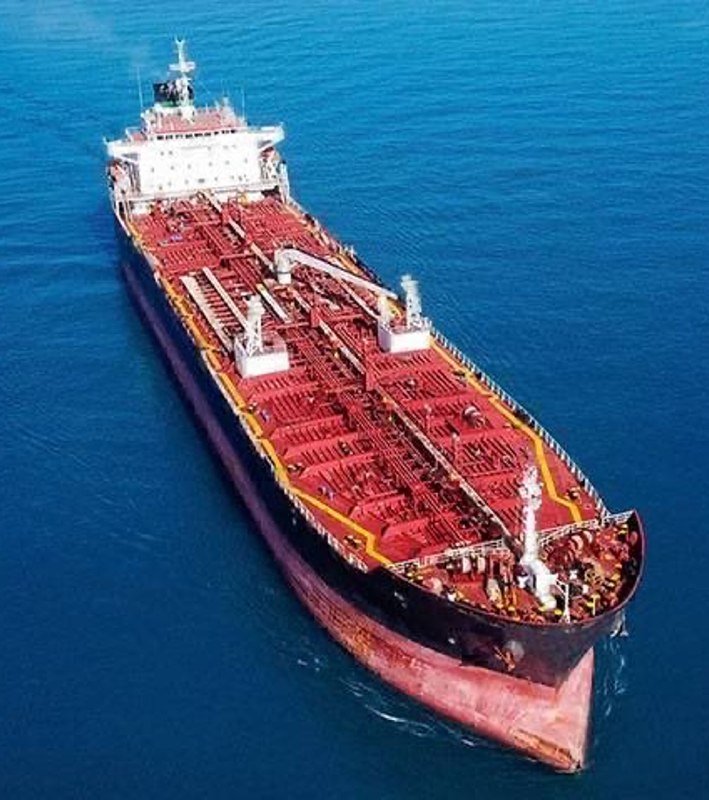
On the evening of 28 May 2026, the world's most critical maritime chokepoint just recorded its first kinetic flashpoint of 2026 — and it is being treated like a weather report. The IRGC Aerospace Force launched at least one warning missile from Chamran Air Base in Bushehr toward four vessels attempting to cross the Strait of Hormuz. One missile. Four ships. No casualties. By morning, the wires had it filed under "escalation watch" and the markets were shrugging.
That shrug is the real story.
The Strait of Hormuz handles roughly 20-30 percent of the world's oil traffic on any given day. It is not an abstraction. When the institution tasked with securing that passage fires a live weapon across the bow of commercial traffic, the appropriate response from the international community is not a shrug. It is a reckoning with what the signal actually means — and a hard question about what kind of red line, if any, actually exists.
Why this matters beyond the immediate
On its face, a warning missile is not a sunk vessel. Iran has used this theatre before — the fast-boat demonstrations, the mock-capture exercises, the Revolutionary Guard's choreography of maritime intimidation. This is not new behaviour. What is new is the timing, the specificity, and the audience.
The timing comes as nuclear negotiations with the United States have reached what analysts describe as a difficult phase. The specificity — a single missile, four named vessels, Chamran Air Base — suggests a message designed to be read, not a spasm of anger. And the audience is not just the ships in the water. It is Washington, it is the Gulf monarchies, and it is the broader architecture of international shipping insurance and routing that keeps Hormuz open in peacetime.
The IRGC does not do theatre without intention. This was a communication device, not an accident.
The counter-narrative: Why Tehran says it had no choice
Any honest accounting of this incident requires acknowledging the pressure environment Tehran operates in. US regional presence has grown since 2023. New sanctions tranches targeting Iran's oil revenues and port access have been tightening. Gulf Cooperation Council states have deepened their defence integration with Washington, and Israel has conducted operations inside Iranian territory that Tehran has never publicly absorbed.
From Tehran's perspective, the ships in the Strait are not neutral traffic — they are part of a pressure architecture. The warning missile is a signal that Iran retains the capacity to disrupt that architecture at a time and place of its choosing. It is a deterrent message embedded in an escalation event.
That framing is not endorsed by this publication. But it is the frame Tehran is running, and ignoring it means pretending the conflict has no second side.
The structural problem the West has not solved
Here is where the analysis has to get uncomfortable. For two decades, Western policy toward Iran's regional behaviour has oscillated between two poles: confrontation and negotiation. The confrontation track produces sanctions and military posturing. The negotiation track produces frameworks that Iran has, with documented consistency, used to buy time rather than change behaviour.
Neither track has produced a reliable mechanism to deter maritime escalation that stops short of the red line — the kind of red line that would require a US military response. Warning missiles exist in the space below that red line. They are designed to. They are calibrated precisely because they occupy a zone where the international response will be a shrug, a wire report, and a rerouting of tanker insurance.
That is not a failure of intelligence. It is a feature of Iran's strategic culture. The West has spent twenty years treating it as a bug.
What this means going forward
The four vessels got through. The missile was a warning, not a sinking. Which means Tehran achieved its objective — it demonstrated willingness to use kinetic force in the Strait without triggering the consequences that would follow an actual blockage. That is a win on its own terms.
The risk now is that this demonstration recalibrates what the international community considers acceptable pressure. If warning missiles become a routine instrument of deterrence signaling, the threshold for what constitutes a serious Hormuz incident rises. The next one may not be a warning.
The insurance markets, the shipping companies, and the Gulf states know this. They are watching. So should the rest of the world. This is not a weather report.
This publication covered the incident through Iranian state-adjacent and open-source monitoring channels, with Western diplomatic sources consulted for framing context. US Central Command has not issued a public statement as of 28 May 2026 at 23:00 UTC.
Wire provenance
This editorial synthesis draws on the following public wire/social posts:
- https://t.me/GeoPWatch/1145
- https://x.com/sprinterpress/status/1952845678123429995
- https://t.me/GeoPWatch/1143