When Checkpoints Become Casualties: Gaza's Medical Infrastructure Absorbs Another Strike
Three people were killed when an Israeli strike hit a security checkpoint near Mawasi, Khan Younis, on 28 May 2026. The casualties arrived at Nasser Hospital, adding to a pattern of documented damage to Gaza's medical infrastructure that has stretched hospitals to the edge of collapse.
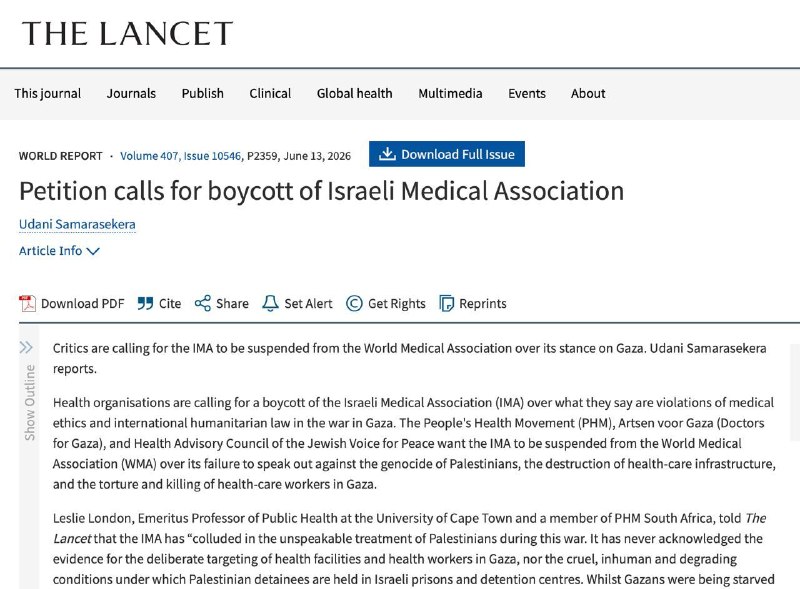
Three people were killed when an Israeli strike hit a security checkpoint near Mawasi, Khan Younis, on 28 May 2026, according to a source at Nasser Hospital cited by Al Jazeera. The deaths underscored what aid workers and international organisations have repeatedly documented since October 2023: Gaza's medical infrastructure is absorbing damage at a rate that defies easy reconstruction or substitution.
The strike targeted what the Israel Defense Forces described as a checkpoint in the Mawasi area of Khan Younis. The IDF did not immediately release the identities of those killed. Casualty figures for strikes in Gaza routinely diverge between Palestinian medical sources and the IDF; this discrepancy is a structural feature of reporting from the territory, where communication disruptions, access restrictions, and reporting delays compress the window for verified figures before they are absorbed into competing public narratives.
Who the checkpoint system is meant to protect
Gaza's checkpoints are not merely administrative crossings. In practice, they govern the movement of people, goods, and medical supplies through a territory where routes between inhabited areas are under constant surveillance and subject to changing access rules. The Mawasi checkpoint in Khan Younis governorate was one of several such points that determined whether a patient carrying a referral could reach Nasser Hospital, or whether an ambulance crew could extract the wounded from an area declared a conflict zone.
The three dead on 28 May arrived at Nasser Hospital following the strike. What the sources do not specify is whether those killed were passing through the checkpoint at the moment of the strike, or whether they were accessing the checkpoint zone for other reasons and died of their wounds after reaching the hospital. Both scenarios are consistent with the pattern of checkpoint-adjacent strikes reported in the territory. The IDF stated that the strike was carried out to reduce risks to Israeli forces operating in the area — a formulation that frames the checkpoint as a military installation whose elimination serves a defensive purpose. The human consequences of that calculus played out inside Nasser Hospital on 28 May.
What has happened to Nasser Hospital
Nasser Hospital is one of the largest medical facilities remaining in southern Gaza. It has been damaged, temporarily occupied, and reoccupied by Israeli forces at various points since the ground offensive began. The World Health Organisation has documented repeated attacks on healthcare infrastructure across Gaza — hospitals struck, equipment destroyed, staff detained or forced to relocate — and Nasser Hospital is among the facilities with the most substantive record of those incidents.
The practical consequence is not abstract. Hospital directors and NGOs operating in Gaza have reported that each time a facility is damaged or goes offline, the remaining hospitals absorb patient flows that overwhelm their surge capacity. Each surge reduces the margin available for the next emergency. A single large-scale strike can accelerate that erosion regardless of whether the hospital itself is the target. When the dead from a checkpoint strike arrive at Nasser, they are being treated by a staff that has already been working at or beyond capacity for an extended period.
The attribution gap in Gaza reporting
Conflict reporting from Gaza has long operated under constraints that make systematic verification difficult. Communication blackouts, restrictions on journalist access, and competing official narrative framings mean that statements from Hamas-run health authorities, Israeli military briefings, and independent NGO investigators routinely produce divergent casualty figures in the immediate aftermath of an incident. Over time, some figures are revised; some discrepancies are never resolved.
This creates what report after report from international observers has identified as an accountability vacuum. When a strike kills three people at a checkpoint and the IDF and Palestinian medical sources produce different accounts of who was present and why, the gap between those accounts is not just an informational inconsistency — it is a structural condition that makes independent verification of military conduct harder to sustain at scale. The deaths on 28 May will be absorbed into cumulative casualty figures, but the specifics of the Mawasi checkpoint strike — the target profile, the civilian presence assessment, the reasoning behind the order — are not resolved simply because numbers are reported.
What comes next for Gaza's medical infrastructure
The depletion of Gaza's medical infrastructure is not a solvable problem in isolation from the broader trajectory of the conflict. Each facility that is rebuilt faces the prospect of the same pressures it absorbed before. Each staff member who survives a displacement cycle faces the question of whether to return to a hospital that has been struck before. International humanitarian law prohibits attacks on medical facilities and transport, and the continued occurrence of strikes that damage or destroy them, or that kill people in their vicinity, is a documented practice that the IDF does not consistently acknowledge as a substantive legal question.
Nasser Hospital is now treating casualties from a checkpoint strike that happened in its vicinity. The hospital's capacity to absorb that load, and to continue functioning as a referral destination for patients from across southern Gaza, is a live operational question. The deaths on 28 May did not end the conversation about what protection civilian infrastructure actually receives in practice. They added to it.
Wire provenance
This editorial synthesis draws on the following public wire/social posts:
- https://t.me/wfwitness/11156