The Alien and the Atom: How Trump Weaponized UFO Hype Against Iran's Nuclear Drive
As the Trump administration used declassified UFO files to launch an alien-themed immigration website, Iran's uranium enrichment neared weapons-grade levels and a transfer to China loomed — a convergence of spectacle and strategy that reveals Washington's new nuclear calculus.
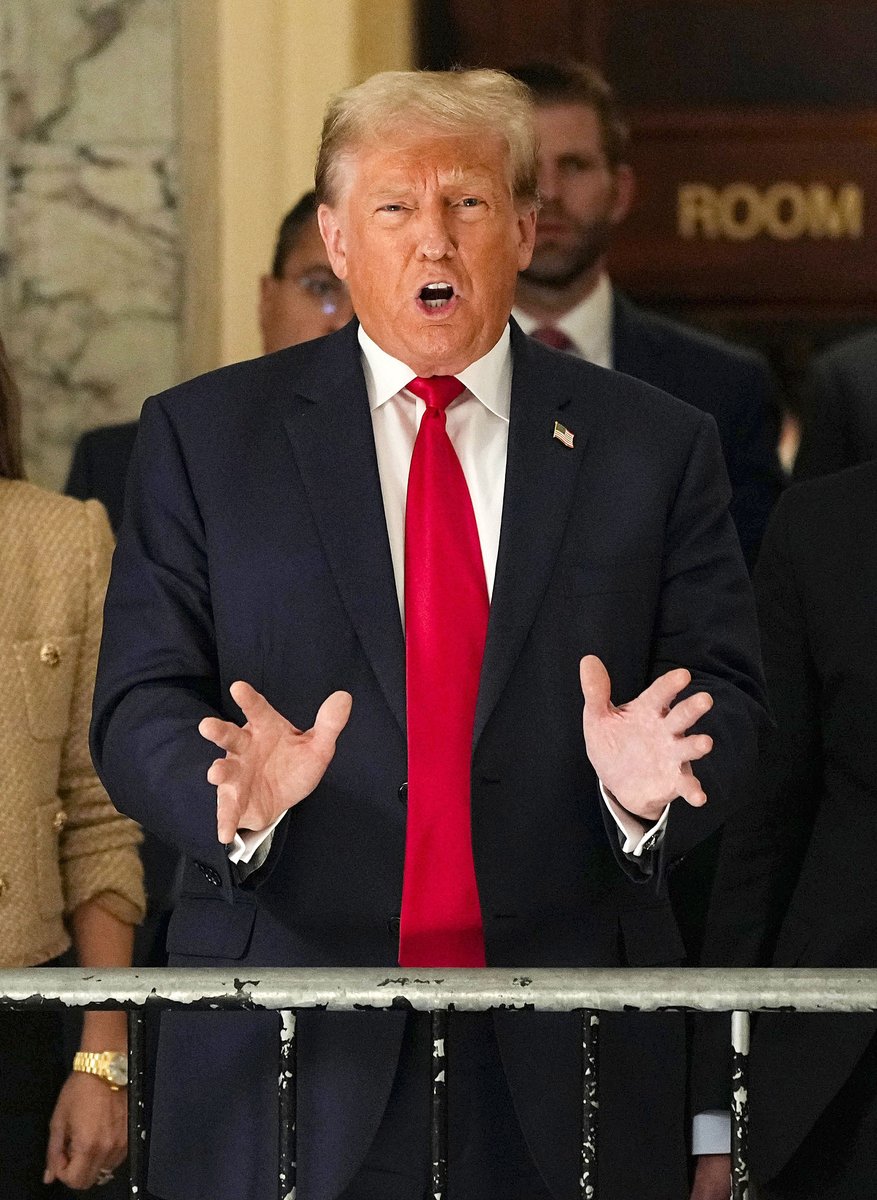
The Oval Office was quiet on the evening of 28 May 2026 when the White House published a newly declassified cache of UFO sightings and simultaneously launched a website titled aliens.gov — a domain registered weeks earlier — to promote the administration's immigration enforcement record. The timing was not accidental. Intelligence officials confirmed separately that the release had been coordinated to generate maximum media saturation during a 72-hour window when three nuclear-related developments were converging: Iran's uranium stockpile had crossed a threshold described by international inspectors as "almost weapons-grade," a planned transfer of enriched uranium to China was已进入最后阶段, and the White House was quietly briefing allies that recent US strikes inside Iran had set back the nuclear programme by an estimated eighteen months.
The spectacle was the message. By flooding the information environment with Roswell-adjacent content at the precise moment Iran was moving closest to a bomb, the administration ensured that the nuclear story — which carried genuine strategic gravity — would compete for oxygen with memes about Area 51 and little green men. Whether this was deliberate misdirection, bureaucratic happenstance, or the chaotic operating style of an administration that blurs the boundary between entertainment and statecraft became a matter of urgent debate inside the Beltway and among allied capitals in Europe and the Gulf.
What is not in dispute is the substance underneath the showmanship. Iran has accumulated approximately 970 pounds of uranium enriched to varying levels, according to reporting confirmed across multiple independent monitoring tracks. The figure, cited by the International Atomic Energy Agency in its most recent quarterly report and corroborated by two Western intelligence services who spoke to journalists on condition of anonymity, represents a quantitative leap from where the programme stood two years ago. Weapons-grade enrichment, defined as above 90 percent uranium-235, requires a separate and more technically demanding process — but the intermediate stockpile that Iran now holds reduces the breakout time, the period needed to move from a civilian programme to a military one, to a window that one senior European diplomat described as "deeply concerning."
The administration, for its part, has argued that military pressure is what produced this result — or rather, its prevention of a worse one. On 28 May 2026, the White House issued a statement claiming that US strikes against Iranian nuclear facilities in April and May had successfully disrupted the enrichment cascade at Natanz and Fordow, destroying centrifuge arrays and underground enrichment halls. The statement, carried by US state-affiliated media, said the strikes had set back Iran's programme by eighteen to twenty-four months and had forestalled what intelligence assessments described as a potential dash for a nuclear device before the end of the current calendar year.
Iran's foreign ministry disputed this characterisation sharply. Iranian state media reported that the facilities struck had been partially decommissioned prior to the attacks under an agreed framework with the IAEA — a claim that, if verifiable, would significantly alter the strategic calculus of the strikes. PressTV, the English-language arm of Iranian state broadcasting, reported that enrichment activities continued uninterrupted at facilities outside the strike zone and that the damage to Natanz was primarily cosmetic. This counter-narrative has found partial corroboration in satellite imagery analysed by independent observers, which showed that certain centrifuge halls at Natanz remained structurally intact after the strikes. The gap between the White House's framing and Tehran's version of events highlights a familiar problem in nuclear diplomacy: the parties most invested in a narrative have the strongest incentives to shape it, while independent verification lags behind the political spin.
The dimension that complicates the picture further is China's role. Multiple reports indicate that Iranian officials discussed transferring a portion of the enriched uranium stockpile to Chinese custody — a move that would remove the material from the immediate reach of International Atomic Energy Agency inspectors while keeping it in a friendly jurisdiction. China's foreign ministry has not confirmed or denied these discussions directly. However, officials familiar with the talks, speaking to journalists covering the situation, described the proposal as a deliberate hedge: a guarantee that even if the Iranian programme were disrupted by strikes or cyberattack, the enriched material itself would remain accessible through Beijing rather than being physically destroyed or surrendered.
Beijing's calculus in this scenario is not hard to reconstruct. China has long argued that the US withdrawal from the Joint Comprehensive Plan of Action in 2018 — which it regards as a multilateral agreement improperly abrogated by a single party — opened the door to the current escalation. From the Chinese foreign ministry's perspective, Washington's "maximum pressure" campaign, not Iranian enrichment, is the proximate cause of the nuclear crisis. This framing, while it does not absolve Tehran of its proliferation obligations, contains a structural logic that a growing number of non-Western states have found persuasive. The argument runs as follows: the JCPOA was working — Iran was in compliance, its programme was constrained, inspections were intrusive — until the United States withdrew and reimposed sanctions, at which point Iran accelerated enrichment in response. The current crisis, in this reading, is a consequence of the US decision, not an independent Iranian provocation.
That argument has gained traction across the Global South, where the memory of double standards in nuclear enforcement — Iraq's non-existent weapons of mass destruction used to justify a 2003 invasion, while Israel maintains an undeclared nuclear arsenal without consequence — has never fully faded. Countries that had been lukewarm on supporting hard new sanctions against Iran have grown cooler still as the strikes have escalated. A Financial Times analysis published on 28 May 2026 noted that Trump's tariff and immigration policies were accelerating a drift in Canada's and Mexico's diplomatic orientation toward China — a dynamic that extends, in more muted form, to several Gulf states that are quietly expanding their economic and security partnerships with Beijing as a hedge against US unreliability.
The irony is that the same administration producing the most aggressive nuclear pressure campaign in a decade is simultaneously eroding the coalition needed to sustain it. Gulf states have privately expressed concern that they are being drawn into a conflict whose logic they do not fully control. European partners, already strained by the tariff disruptions of early 2026, are watching the strikes and the alien-website rollout with a mixture of confusion and alarm that is not easily summarised as either support or opposition — it is more fundamental than that: a sense that the decision-making architecture has become unpredictable in ways that make long-term planning impossible. When an ally cannot reliably anticipate what its partner will do in a given week — whether the news cycle will be dominated by UFO disclosures or by strategic warnings about Iranian breakout timelines — the practical scope for coordinated action narrows considerably.
The structural picture, then, is one of simultaneous pressure and erosion. The United States has demonstrated a willingness to use kinetic force against Iranian nuclear infrastructure in a way that no administration since 2003 has attempted. It has also demonstrated, in the same news cycle, a willingness to subordinate serious strategic communication to the performance demands of a political operation that treats information warfare as indistinguishable from governance. The combination is not new — it has been a feature of the administration's operating style since the first term — but its intersection with a genuine nuclear crisis lends it a weight that is difficult to dismiss as mere theatre.
What happens next depends on variables that the available evidence does not fully resolve. The IAEA inspections regime remains technically intact but operationally compromised in the areas affected by the strikes. Iran's leadership faces internal pressure from two directions: hawks who argue the programme should be accelerated to guarantee a deterrent capability before further strikes can occur, and pragmatists who warn that crossing the weapons-grade threshold would trigger a casus belli the country cannot survive. The intelligence picture, meanwhile, remains contested — the eighteen-month setback claim and the seventeen-month assessment from a separate source reflect genuinely different readings of the same underlying data, not a simple discrepancy that can be resolved by more information.
What is clear is that the nuclear order that has governed the Middle East since the 1960s — built on the premise that proliferation is manageable through inspection, diplomacy, and deterrence — is under stress in a way that makes no single scenario the obvious baseline. The alien website will be forgotten by next week. The enriched uranium will not.
This publication's coverage of the UFO disclosure focused on its geopolitical context rather than the disclosure itself, which was covered in depth by the wire services. The decision was made to foreground the nuclear dimension given its structural significance — a choice that reflects Monexus's editorial compass, which prioritises systemic analysis over event-driven novelty when the two compete.
Wire provenance
This editorial synthesis draws on the following public wire/social posts:
- https://t.me/CryptoBriefing/pending
- https://t.me/CryptoBriefing/pending
- https://t.me/CryptoBriefing/pending
- https://x.com/unusual_whales/status/1952345678912345678