Lebanon's Beaufort Castle Caught in Crossfire as Israeli Strikes Hit Southern Historic Landmark
The near-900-year-old Beaufort Castle, a Crusader-era fortress overlooking Lebanon's Litani River, sustained damage in Israeli strikes on 29 May 2026 — the latest in a pattern of heritage destruction across conflict zones from Gaza to Syria.
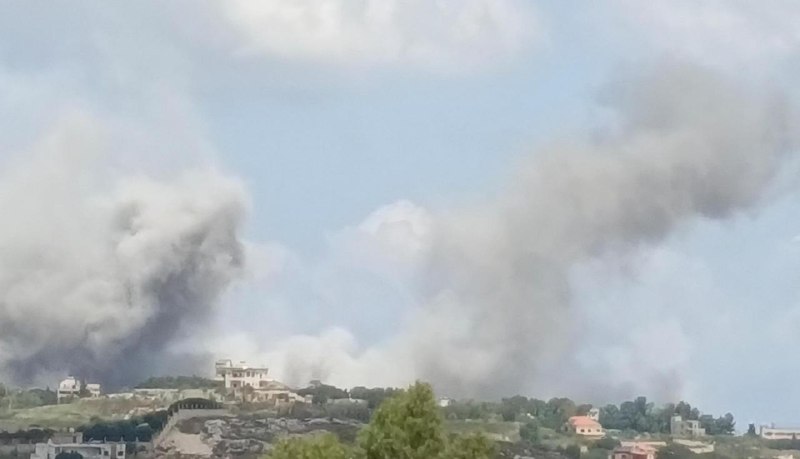
Israeli strikes targeting southern Lebanon on 29 May 2026 damaged Beaufort Castle, one of the region's most significant historical monuments, according to a witness documentation network posting to Telegram that included photographic evidence of impact damage to the structure. The fortress, built by Crusaders in the 12th century and expanded through subsequent centuries of Ottoman, Mamluk, and Lebanese stewardship, has stood on its limestone promontory overlooking the Litani River for nearly 900 years. The strikes hit the area surrounding the castle, a frequent target zone given its strategic elevation above one of Lebanon's most important waterways and its proximity to the Israel-Lebanon border. Details on the extent of structural compromise, the specific military objectives of the strikes, and whether any civilian casualties resulted from the incident remain limited in the immediate available documentation.
The destruction — or even partial degradation — of a monument like Beaufort Castle is never a single event. It is a subtraction from a shared inheritance that took centuries to assemble and can be erased in a matter of hours. The castle's significance extends well beyond its military utility. It served as a seat of Frankish rule during the Crusades, a garrison for Mamluk forces, a regional administrative centre under Ottoman authority, and, in more recent memory, a Lebanese national heritage site that appeared on cultural preservation registers and attracted scholarly and tourist interest from across the region and beyond. Its survival across nine centuries of Levantine turbulence — through invasions, earthquakes, and political upheavals — made it a living testament to the layered history of a landscape that has rarely known uninterrupted peace. That continuity is now in question.
A Monument Caught Between Two Claims
Beaufort Castle's location is inseparable from the logic of the current conflict. The Litani River corridor has been a zone of Israeli security concern since the establishment of a Hezbollah military presence in southern Lebanon following the 2006 war. Israeli military doctrine has long treated elevated terrain in this area as having dual-use potential — both for legitimate cultural preservation and for tactical observation or staging. This framing is not unique to the current escalation. It mirrors arguments advanced during strikes on Syrian heritage sites, Afghan monuments, and, most visibly, the widespread destruction of cultural property during the Iraq conflict. The structural problem is consistent: international humanitarian law, specifically the 1954 Hague Convention and its two protocols, prohibits attacking cultural property unless it makes an effective contribution to military action and its destruction offers a definite military advantage. The burden of that exception is routinely disputed, and enforcement mechanisms remain weak.
What the Telegram documentation shows is damage to the castle complex consistent with nearby blast effects — cracked stonework, displaced masonry, dust and debris in the court of the lower bailey. The images do not indicate a direct hit on the keep or the primary tower, which suggests the structure may remain partially intact. But partial intactness is not the same as unharmed, and heritage assessments require specialist on-the-ground evaluation that, in the current security environment, is not feasible. The Lebanese culture ministry, which would ordinarily coordinate with UNESCO for emergency heritage assessment, has not issued a public statement on the damage as of this reporting — a silence that may reflect operational constraints, political hesitation, or simply the pace at which information moves in an active conflict zone.
The Broader Pattern of Heritage Destruction
Beaufort Castle is not an isolated case. The 2023-2024 Gaza conflict produced documented damage to at least 34 heritage sites, including the historic Great Omari Mosque, the Al-Karameh building, and the 19th-century Franciscan monastery. The Syrian civil war destroyed or damaged over 300 registered heritage sites, a figure that includes the deliberate dynamiting of Palmyra's Temple of Bel by ISIS and the degradation of countless smaller structures from sustained bombardment. Yemen's conflict has degraded historic souks and traditional architecture in Sana'a and other UNESCO-listed cities. The pattern is not confined to one belligerent or one theatre. What unites these cases is that heritage destruction is rarely the primary objective — it is a consequence of the collision between military necessity claims and the dense civilian infrastructure of old cities.
International frameworks exist to mitigate this. UNESCO maintains a list of World Heritage Sites and, in theory, can invoke emergency protocols to designate conflict zones. The International Criminal Court's Rome Statute includes cultural property destruction as a war crime when committed as part of a systematic attack on civilian populations. In practice, these mechanisms function as post-hoc accountability frameworks rather than active prevention tools. Forces operating under immediate fire-safety or tactical-pressure calculations do not typically slow operations to consult heritage databases. The gap between the legal architecture and the operational reality is wide, and it widens further when the conflict in question lacks a great-power peace-enforcement mechanism with the will and access to enforce compliance.
Stakes for Lebanon and for Regional Memory
For Lebanon, the damage carries a significance that extends beyond the physical structure. The country has spent decades navigating competing sectarian, national, and regional identities — a process in which physical heritage often serves as a rare neutral ground. Beaufort Castle belongs to multiple lineages simultaneously: Crusader, Arab, Ottoman, and Lebanese. Its survival as a composite monument allowed different communities to locate themselves within a longer temporal arc. The castle's damage — or the inability to assess and repair it while conflict continues — subtracts from that shared resource.
The broader stakes concern what documentation practitioners call "intangible heritage" — the knowledge systems embedded in physical places. When a structure is damaged, it is not only stonework that degrades. The interpretive frameworks that allow a community to understand what the place means are also at risk. Architects, archaeologists, oral historians, and conservation specialists who hold that knowledge are themselves displaced, injured, or killed in sustained conflicts. The institutional infrastructure for repair — trained masons, conservation-grade materials, specialist contractors — is disrupted. Reconstruction, when it comes, often defaults to simplified or stylised restorations that reflect the aesthetic preferences of donors rather than the layered history of the original. Beaufort Castle's near-900-year record of continuous adaptation across changing political orders suggests the monument has survived previous neglect and partial damage. Whether it will survive this phase, and in what form, depends on factors that extend well beyond any single strike.
What Remains Unknown
The Telegram documentation, while the most immediate available source, is limited in several material respects. The precise ordnance used has not been independently identified. The military objective of strikes in the immediate vicinity of the castle has not been stated by the Israeli military, which has not issued a public statement on the incident in the documentation reviewed. The Lebanese army and heritage authorities have not published a damage assessment. Casualty figures for the surrounding civilian area have not been independently confirmed. The possibility that the castle sustained incidental damage from strikes aimed at other targets, rather than being targeted itself, cannot be determined from the available evidence. Monexus will update this report as verified information becomes available.
Beaufort Castle last featured in regional heritage surveys conducted by the Lebanese culture ministry in 2018, which catalogued structural conservation needs including repointing of the northern curtain wall and drainage improvements to the lower court.
Wire provenance
This editorial synthesis draws on the following public wire/social posts:
- https://t.me/wfwitness/1238