The Ceasefire That Survived Everything: Inside the US-Iran Hormuz Deal
Vice President JD Vance confirmed on 29 May 2026 that the US-Iran ceasefire remains operative, even as the agreement to extend it and lift restrictions on Strait of Hormuz shipping awaits President Trump's final approval.
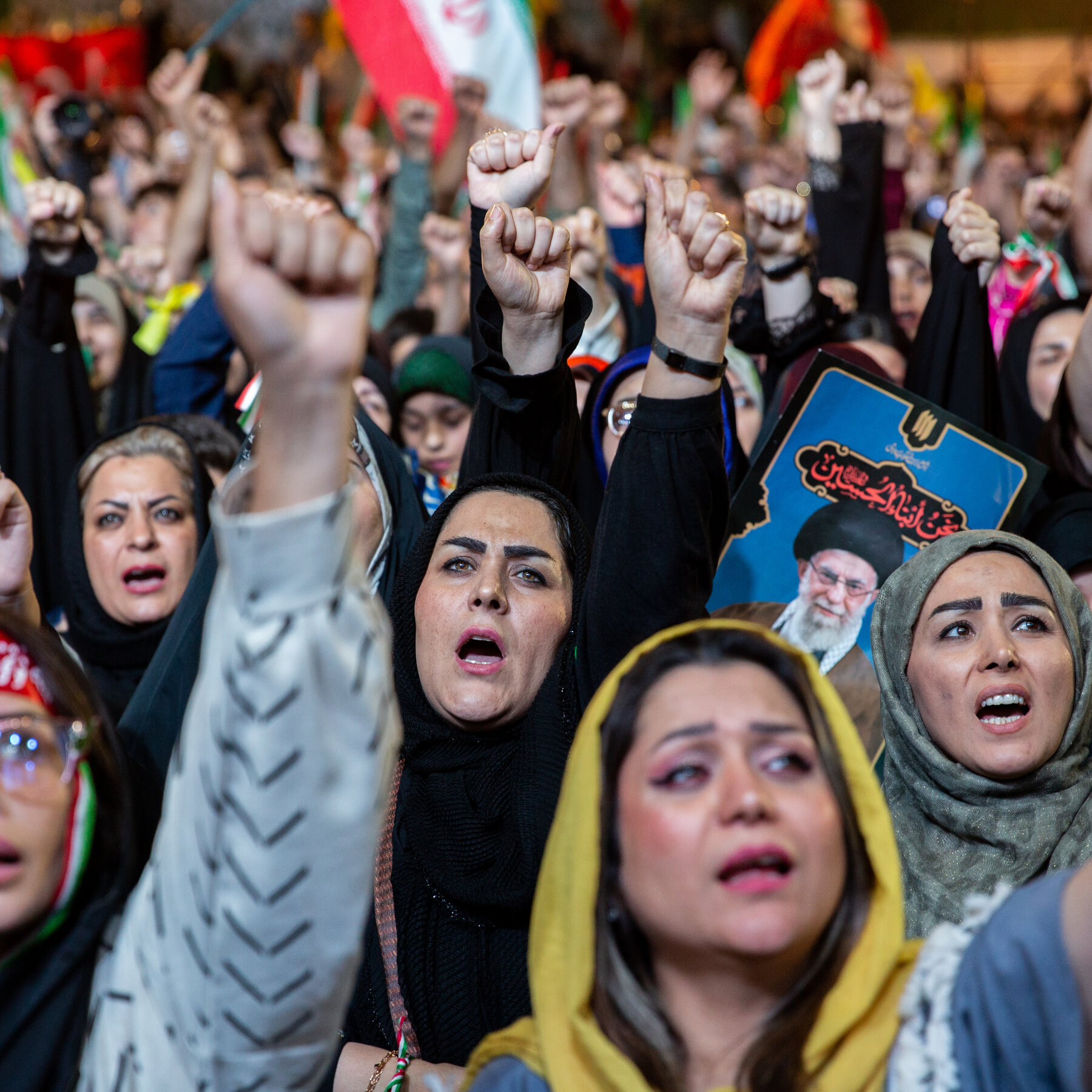
The ceasefire between the United States and Iran is still holding. That was the message Vice President JD Vance delivered on 29 May 2026, offering the most direct administration confirmation yet that the fragile pause in hostilities has survived its first weeks of pressure, miscommunication, and open scepticism from both capitals. Speaking to reporters, Vance noted that the current situation of the war with Iran, when compared to where things stood five to six weeks ago, makes the ceasefire's continued existence, in his words, "quite evident." Yet the same briefing also exposed the limits of that confidence. Vance stopped short of predicting when—or whether—President Trump would sign the memorandum of understanding that would formalise the arrangement. A separate agreement to extend the ceasefire and lift restrictions on shipping through the Strait of Hormuz has been reached between the two sides, Reuters reported on the same morning, though its fate hinges entirely on one signature that has not yet arrived.
That gap between operational reality and formal ratification captures the central tension of the moment. The ceasefire functions. The shipping lanes remain open, or at least open enough that oil markets have not repriced the disruption risk that defined the first months of 2026. But the legal and diplomatic architecture that would lock these arrangements in place has not been completed, and the administration itself appears divided—or at least uncertain—about what shape that architecture should take.
The Mechanics of a Pause
The original ceasefire, negotiated under a combination of back-channel diplomacy and direct executive-level communication, halted the strikes and counterstrikes that had brought the US and Iran to the edge of a conflict most analysts had treated as inevitable. The terms, as they have been partially disclosed through wire reporting and administration statements, included a mutual cessation of military operations, the establishment of monitoring mechanisms, and an initial set of confidence-building measures focused on nuclear sites. What they did not initially include was any specific provision on the Strait of Hormuz.
That omission proved consequential. The Strait of Hormuz is the chokepoint through which roughly one-fifth of global oil trade moves. Any restriction on passage—even procedural, even temporary—sends tremors through tanker markets, insurance rates, and the energy-price calculations of every major economy. During the period of active hostilities, the US navy maintained a largely open passage, but the political uncertainty around the ceasefire created its own form of constraint. Shipowners, charterers, and flag registries hedged by avoiding the waterway or loading less cargo than the vessels could carry. The economic damage was real, if less dramatic than the outright closure that some analysts had modelled as a plausible worst case.
The agreement reportedly reached on 28 May 2026 addresses this directly. According to Reuters, the US and Iran have agreed not only to extend the ceasefire but to lift the restrictions on shipping through Hormuz that had accumulated as a consequence of the earlier confrontation. The practical effect, if implemented, would be a return to something close to normal traffic patterns—a normalisation that energy markets would welcome but that carries its own political complications for both governments.
The President's Signature
The central uncertainty is not military. It is political, and it is concentrated in the Oval Office. Vance's statement that it is "hard to say exactly when or whether President Trump will sign a memorandum of understanding" is remarkable primarily for its candour. In the careful choreography of executive communications, a vice president publicly acknowledging doubt about his own president's intentions is unusual. It suggests either that the internal deliberation is genuinely unresolved, or that the administration wants the uncertainty itself to be visible—a negotiating signal to Tehran, or to domestic constituencies, or to both.
The parameters of the disagreement, as they can be reconstructed from public statements and the reporting of outlets including Axios and Reuters, appear to centre on the scope of any concessions tied to the ceasefire. The Trump administration has consistently framed any Iran deal through the lens of maximum pressure—the original sanctions architecture that defined its first term. The question is whether a ceasefire agreement that does not include irreversible nuclear commitments or sweeping sanctions relief is sufficient for the president to sign, or whether the memorandum of understanding must represent something more substantively transactional.
Iran, for its part, has maintained through state-aligned media including Tasnim that the ceasefire terms as described are satisfactory and that the extension and Hormuz provisions represent progress toward a durable arrangement. That framing must be read with appropriate caution—Iranian state media operates under direct government direction, and its characterisation of negotiations routinely reflects the diplomatic line Tehran wishes to project. But the fact that the Iranian side has not publicly rejected the agreement as currently drafted suggests that the distance between the two parties on the core terms is narrower than the distance on the question of presidential sign-off.
The delay carries risk. Ceasefires without formal legal status are inherently fragile. They depend on continued goodwill, on the absence of a triggering incident, on the willingness of actors on both sides to absorb short-term political costs for long-term strategic continuity. The longer the memorandum of understanding remains unsigned, the more room exists for opportunistic challenges from hardliners in both Tehran and Washington. Revolutionary Guard commanders who opposed the original ceasefire, and who have treated the pause as a tactical retreat rather than a strategic choice, will look for evidence that the arrangement is unravelling. In Washington, congressional critics of any Iran diplomacy will look for the same.
The Hormuz Calculus
The Strait of Hormuz occupies a unique position in the geometry of global energy. No other maritime passage concentrates so much of the world's oil and liquefied natural gas trade in a single, geographically constrained corridor. The Iranian coastline runs along the entire northern bank; the UAE and Oman control the southern approaches. Any military actor seeking to disrupt the passage faces a relatively short list of viable interdiction methods—mines, fast-attack craft, anti-ship missiles, or a naval presence substantial enough to create the perception of danger even without actual engagement.
Iran has demonstrated, at various points over the past decade, the capability to execute each of these methods. The strikes and counterstrikes of early 2026 drew on that capability. The ceasefire halted those demonstrations. The proposed Hormuz provision would go further, essentially guaranteeing—on paper, at least—that the passage will not be weaponised as part of the ongoing diplomatic process.
For oil markets, the significance is direct. Brent crude prices have remained elevated since the initial escalation, reflecting a risk premium that traders assigned to the possibility of Hormuz disruption. A formal, signed agreement that eliminates that possibility would, all else being equal, compress that premium. The beneficiaries would include major oil importers—China, India, Japan, much of Southeast Asia—whose economies absorb the cost of energy-price volatility. The beneficiaries would also include shipping companies and the insurance underwriters who have been charging higher premiums for Hormuz transit since the confrontation began.
The structural question is whether the Trump administration's negotiating posture can accommodate an outcome that looks, from a certain angle, like a draw. The original maximum pressure campaign was premised on the idea that economic isolation would produce either regime change or comprehensive nuclear concessions. The ceasefire represents neither. The extension and Hormuz provisions represent, at best, a managed competition—an arrangement that reduces the immediate risk of escalation without resolving the underlying tensions over Iran's nuclear programme, its regional behaviour, and the sanctions architecture that has defined US-Iran relations for decades. For an administration that has invested heavily in the narrative of getting deals done on American terms, the question of how to characterise an agreement that falls short of total victory is itself a non-trivial challenge.
What Comes Next
The immediate timeline is uncertain, and the sources available do not specify a date by which a presidential decision is expected. What is clear is that both parties have moved close enough to agreement that the gap between operational ceasefire and formal diplomatic recognition has become the central fact of the relationship. That gap is politically uncomfortable for both sides but strategically tolerable—perhaps even useful.
For Iran, the ceasefire provides relief from military pressure without requiring concessions on the nuclear file that would be politically difficult to sell domestically. The Hormuz provision addresses an economic concern that has weighed on the government in Tehran, where the combination of sanctions and shipping disruption has constrained oil export revenue. An agreement that lifts the shipping restrictions while leaving the sanctions structure largely intact represents, from Tehran's perspective, a favourable trade: reduced confrontation for continued economic pressure.
For the Trump administration, the calculation is more complex. The president faces pressure from two directions simultaneously— hawks who view any Iran arrangement as a concession that undermines deterrence, and pragmatists who note that a managed ceasefire is preferable to a war that would consume significant military resources and generate unpredictable consequences across the Middle East. Vance's careful statement, acknowledging the ceasefire while conspicuously declining to predict presidential action, reflects the administration's attempt to hold both positions at once.
The next phase will test whether that balance can be maintained. If Trump signs the memorandum of understanding, the ceasefire moves from operational fact to diplomatic commitment—a transition that offers both stability and accountability. If he does not, the uncertainty that Vance acknowledged publicly becomes the dominant reality, and the risk of miscalculation on either side increases accordingly. The Strait of Hormuz will remain open, for now, in the literal navigational sense. Whether it remains open in the political and economic sense depends on a decision that has not yet been made—and on a president who has not yet said when he intends to make it.
The ceasefire has survived everything thrown at it so far. Whether it survives indecision is a different question, and one that the next few weeks will answer.
Wire provenance
This editorial synthesis draws on the following public wire/social posts:
- https://x.com/sprinterpress/status/1921892345674236025
- https://t.me/tasnimnews_en/412345
- https://x.com/sprinterpress/status/1921889123456789012
- https://x.com/unusual_whales/status/1921865678901234567