Children Bear the Brunt of Lebanon Ceasefire Collapses, UNICEF Data Shows
UNICEF reported that an average of one child was killed or injured every two hours in southern Lebanon over a 24-hour period, as ceasefire violations continue to mount.
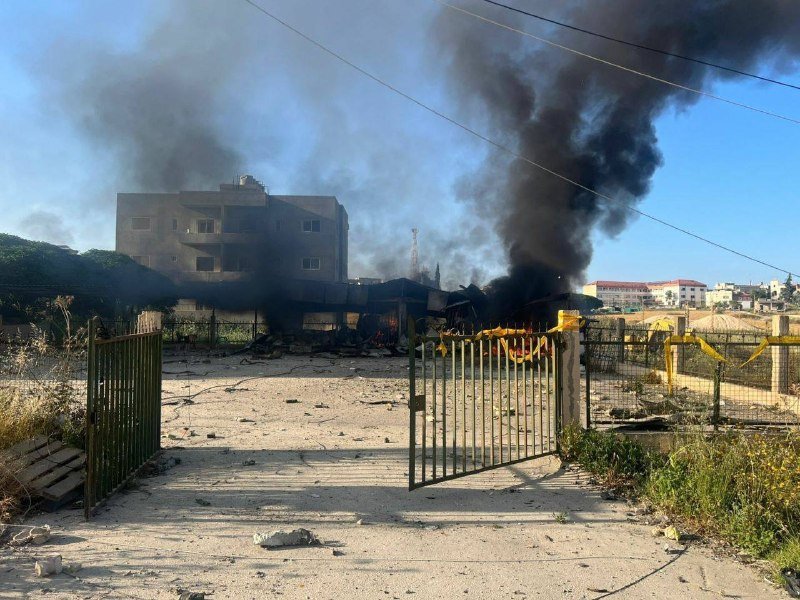
Twelve children were killed or wounded in southern Lebanon in a single 24-hour period, according to UNICEF data published on 29 May 2026. The agency described the toll as the continuation of a pattern of ceasefire violations that has placed Lebanese civilians, and particularly children, in sustained danger since the collapse of the most recent truce agreement.
The figures translate roughly to one child casualty every two hours. A separate UNICEF statement carried by monitoring groups tracked eleven children killed or injured every 24 hours across Lebanon in the preceding week, suggesting the violence has not been confined to the south alone.
The Immediate Damage
The UNICEF data, confirmed by multiple wire services monitoring the ceasefire lines, reflects ground-level reporting from southern Lebanese municipalities and hospital admissions data cross-referenced by UN personnel. The agency's language was stark: children are dying not as collateral damage in contested engagements but as direct targets or bystanders in populated areas where the ceasefire framework had nominally held.
Israeli forces have conducted strikes across southern Lebanon since the collapse of the November 2024 ceasefire, repeatedly citing Hezbollah infrastructure and personnel movements as justification. Lebanese authorities and UN officials have disputed the proportionality and targeting methods employed, noting that civilian residential areas and infrastructure frequently lie adjacent to any military sites cited. The result, according to UNICEF's reporting, is a casualty pattern that tracks civilian density rather than military activity.
Hezbollah and allied Lebanese political factions have likewise carried out strikes into northern Israel, though the UNICEF data focuses exclusively on Lebanese civilian harm. The asymmetry in casualty reporting is partly structural — Israeli casualties are tallied by Israeli hospitals and military briefings, while Lebanese civilian harm falls to UN agencies, local health ministries, and wire services operating with constrained access to front-line areas.
Ceasefire Architecture Undermined
The November 2024 ceasefire, brokered with US and French mediation, established a 60-day suspension of hostilities and a framework for full implementation tied to Hezbollah's northwards redeployment and a parallel Israeli commitment to halt offensive operations. Neither side fulfilled the conditional requirements within the agreed timeline, and the agreement effectively unravelled without formal abrogation.
UNIFIL, the UN peacekeeping mission deployed along the Lebanon-Israel demarcation line, has reported repeated incidents of both parties operating in ways incompatible with the ceasefire's terms. The mission's public statements have grown increasingly blunt in their descriptions of violations, a departure from the measured language that typically characterises UN communications on active conflict zones. Several UNIFIL personnel have been injured in incidents the mission has attributed to both Israeli and Lebanese armed groups.
The breakdown matters because the ceasefire was the product of significant diplomatic capital, including direct engagement from the Biden administration's Middle East team and sustained shuttle diplomacy by French officials. Its failure leaves no agreed framework for de-escalation. The US has continued to signal support for a renewed agreement, but no credible mediation process is currently underway.
Regional and International Silence
The UNICEF data has received limited coverage in Western outlets, a familiar pattern for humanitarian crises in secondary conflict zones that lack the immediate geopolitical salience assigned to Gaza or Ukraine. Major wire services carried the agency releases in their wire logs but did not front-page the figures. The disparity between the scale of civilian harm and the attention devoted to it is not unique to this moment — it reflects structural choices in international newsrooms about which crises merit sustained international attention.
Arab League states have issued statements calling for renewed international intervention, but without the diplomatic leverage or financial tools that might compel either party to return to the negotiating table. Qatar and Egypt have both offered mediation venues, though neither has been formally accepted by both sides. Iran's influence over Hezbollah remains significant, but Tehran is simultaneously managing its own strategic calculations regarding nuclear negotiations with the United States, a dynamic that complicates any unified Lebanese front.
The UN Security Council has not convened an emergency session on Lebanon since March 2026. The Council's permanent members remain divided on any potential resolution, with the United States and United Kingdom generally aligned with Israel's security framing and Russia and China more sympathetic to Lebanese sovereignty arguments — a familiar split that has paralysed Council action on multiple Middle Eastern crises.
Forward View
Without a renewed ceasefire framework and credible enforcement mechanisms, the trajectory is toward continued attrition. The UNICEF data represents the human cost of that trajectory in its most immediate form: dead children, injured children, families displaced from communities that have seen this pattern repeat across multiple cycles of conflict.
The longer-term implications extend beyond the immediate casualty count. Lebanon's state institutions, already strained by economic collapse and the 2020 Beirut port explosion, have limited capacity to absorb displacement or provide trauma services at scale. UNICEF has warned that humanitarian access to southern Lebanon is increasingly constrained by ongoing operations, meaning the actual figure for child casualties may be higher than what is being reported.
The international community faces a choice in practical terms: fund the humanitarian response at the level the UN is requesting, push for a renewed ceasefire with credible verification mechanisms, or accept that the ceasefire architecture will continue to erode with predictable results. The UNICEF numbers suggest the window for the second option is narrowing.
Wire provenance
This editorial synthesis draws on the following public wire/social posts:
- https://t.me/mehrnews/92847
- https://t.me/wfwitness/11423
- https://t.me/jahantasnim/99841