The Drone Bill and the Strait: Energy Independence as Performance
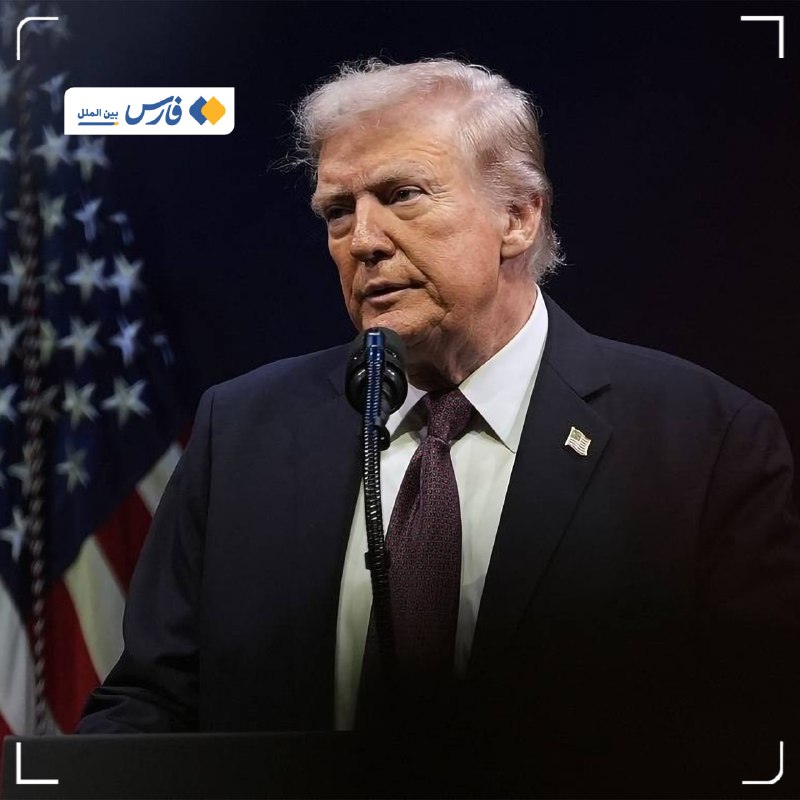
On 28 May 2026, the President of the United States told an audience that American energy needs no longer ran through the Strait of Hormuz. "We don't need oil. We don't need the strait. We don't need anything," he said, per a post on X by the account Unusual Whales, which tracks political statements. That same week, the Trump administration was in active negotiations to direct federal funding toward American drone manufacturers — hardware designed, according to reporting, for maritime operations including surveillance of the very corridor the President had just dismissed as irrelevant. These two data points sit in direct tension. One of them is not true.
The most parsimonious explanation is that neither is. The rhetoric of energy independence — the idea that North American production has permanently liberated the United States from Middle Eastern entanglements — has become a piece of political furniture: rearranged whenever an administration needs to sound non-interventionist, discarded the moment strategic interests reassert themselves. The drone funding talks, reported by the Wall Street Journal, suggest a quieter and more consistent truth: that the executive branch remains committed to maintaining a degree of influence over global energy transit corridors, and that domestic industrial policy has been bent to serve that objective. The question worth asking is not whether American energy independence is real, but who benefits from the fiction that it is.
The Drone Money and What It Buys
The Wall Street Journal reported on 28 May 2026 that the Trump administration was in discussions to provide funding to U.S. drone companies. The specific parameters of the program — whether grants, loan guarantees, or procurement contracts — were not specified in the source material. What is clear is the stated rationale: American unmanned systems, including maritime patrol drones, are being positioned as a pillar of regional presence without the personnel costs and political exposure of a larger military footprint.
Maritime drones are not primarily weapons platforms in the Strait of Hormuz context. They are sensors and deterrents: eyes on the water that can track Iranian Revolutionary Guard Corps vessels, monitor tanker traffic, and provide real-time intelligence to naval commanders. They allow the United States to maintain situational awareness in a corridor through which roughly 20 percent of the world's oil flows, without committing a carrier strike group that would cost hundreds of millions of dollars per deployment and generate headlines every time it transited disputed waters.
This is a rational strategic choice on its own terms. What it is not is compatible with the idea that the strait is irrelevant. If the chokepoint mattered so little, there would be no operational reason to build out a dedicated drone architecture to watch it.
The Rhetorical Economy of Dismissing Necessity
The claim that the United States no longer needs Middle Eastern oil has a specific political function: it attempts to sever the connection between American foreign policy and Gulf state stability, a connection that has defined seven decades of Middle East engagement. Every president since Nixon has navigated some version of this tension. The Carter Doctrine, the dual-containment strategy of the 1990s, the Iraq War — these were all premised, however crudely, on the idea that the free flow of Gulf oil was a vital American interest. The current administration's move to declare that interest moot is not a break with the past. It is a repackaging of it.
The dissonance becomes useful when it allows different audiences to hear different things. For a base that wants non-interventionism, the message is that American blood and treasure will no longer be spent defending foreign oil. For allies in the Gulf who worry about Iranian interference with tanker traffic, the message is quietly contradicted by the drone funding, which signals continued American willingness to deploy hardware in defense of the shipping lanes. The President can claim credit for both positions simultaneously because few people are reading the defense procurement budget alongside the speech.
The Structural Logic of Permanent Presence
The energy transition story complicates rather than resolves this tension. American shale production has genuinely reduced the United States' structural dependence on imported crude. Net petroleum imports have fallen sharply since their 2005 peak. But the Strait of Hormuz does not matter only to American consumption. It matters to Asian demand — to China, Japan, South Korea, India — and disruptions to tanker traffic drive global price spikes that Washington cannot insulate itself from regardless of domestic production levels. A $150/barrel barrel oil is a global economic event. American hedge funds, airlines, and chemical manufacturers feel it as acutely as any Gulf state.
This is the structural reality that drone funding addresses: not American energy independence in any pure sense, but American economic interests in global price stability, which require a degree of order in the world's most contested maritime corridors. The drones are not about oil for America. They are about oil for the world economy that American companies participate in. The distinction matters for how the policy should be evaluated — and for why the rhetoric of independence is misleading.
What Remains Unresolved
The Unusual Whales post on 28 May 2026 captured a single quote from a speech or interview; the full context was not available in the source material. It is possible — even likely — that the statement was qualified in ways the clipped version omitted, or that it referred to a specific geopolitical scenario rather than general policy. Similarly, the Journal's reporting on drone funding negotiations described a process, not a concluded decision. The administration may yet not proceed with the program, or may structure it differently than currently described. Readers should treat both items as snapshots of ongoing conversations rather than settled policy.
What is settled is the pattern. When an administration simultaneously declares a corridor strategically irrelevant and invests in systems to monitor that corridor, the gap between the two positions deserves examination. In this case, the more operationally honest signal is the one embedded in the procurement budget, not the one delivered from the podium.
Wire provenance
This editorial synthesis draws on the following public wire/social posts:
- https://x.com/unusual_whales/status/1921456789019648208
- https://x.com/unusual_whales/status/1921325878762459584
- https://t.me/intelslava/3848