Drone Crash in Romania Deepens NATO-Russia Confrontation Along Black Sea Flank
A drone believed to be of Russian origin crashed into a residential high-rise in Romania on 29 May, according to Ukrainian and regional reporting, marking what appears to be the first confirmed strike on NATO territory since Russia's full-scale invasion began. The incident follows overnight Russian drone attacks on the Odessa region of Ukraine.
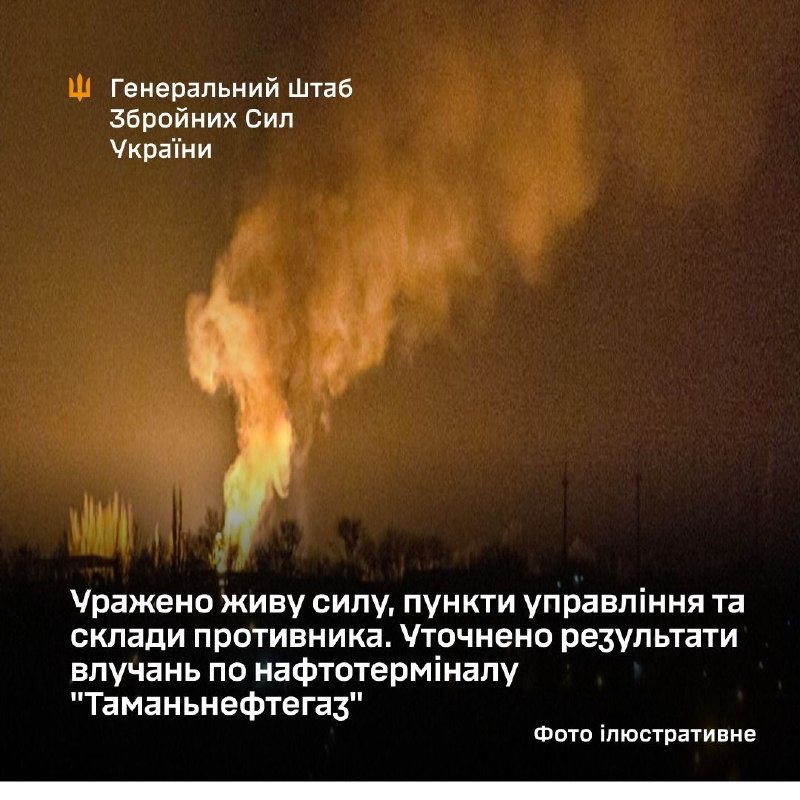
A drone believed to be of Russian origin crashed into a high-rise residential building in Romania in the early hours of 29 May 2026, according to reporting by Ukrainian Pravda. The aircraft is understood to have struck the structure during or immediately after a sustained Russian drone assault on the nearby Odessa region of Ukraine. The Romanian Defense Ministry had not issued a formal statement at time of publication, but the country's strategic position on the Black Sea flank places any such incursion at the centre of NATO's collective-defence architecture.
Romania shares a 610-kilometre border with Ukraine and hosts key NATO infrastructure, including the Aegis Ashore ballistic-missile defence site at Deveselu. Bucharest has been among the alliance's most consistent supporters of Ukrainian defence supplies and training missions. A confirmed strike on Romanian territory would represent a qualitative escalation from the border incidents and GPS-jamming episodes that have previously drawn alliance concern without triggering Article 5 consultations.
Scope of the Overnight Attack
The drone crash in Romania appears to have occurred as part of a broader Russian strike wave targeting Ukraine's Odesa Oblast overnight on 28-29 May. Ukrainian air-defence units engaged multiple aircraft during the attack, with debris fields documented in several locations along the Black Sea coast. Ukrainian authorities said air-defence systems had destroyed most incoming vehicles, but acknowledged that some debris had fallen outside Ukrainian territory. The sources do not specify the type of drone involved, the precise location of the Romanian impact, or whether there were casualties at the Romanian site.
This pattern — drones entering Romanian airspace after being engaged over the Black Sea or Ukrainian territory — has been flagged by the Romanian military on previous occasions. Bucharest has previously filed diplomatic complaints through NATO channels after fragments landed on its side of the border. What distinguishes the reported incident on 29 May is the direct strike on a building rather than debris fall in open ground.
NATO's Red Line Problem
The alliance's Article 5 collective-defence clause requires an armed attack on one member to be treated as an attack on all. In practice, the threshold for triggering consultations has been navigated carefully throughout the war, with member states broadly supporting Ukraine without treating isolated border incidents as grounds for Article 5 activation. A drone striking a residential building inside Romania changes the political calculus in a way that a fragment in a field does not.
The immediate diplomatic question is whether Romania invokes the alliance's Article 4 consultation mechanism — for threats to territorial integrity or independent political existence — or whether the attribution remains sufficiently ambiguous to permit a quieter response through bilateral channels with Moscow. NATO's standard response to previous incursions has been to reinforce air policing in the Baltic and Black Sea regions without public escalation. The alliance's Supreme Allied Commander Europe (SACEUR) would have been briefed within hours of the incident being confirmed to the Romanian command.
Romanian President Klaus Iohannis convened an emergency session of the Supreme Defence Council at approximately 04:30 local time on 29 May, according to Romanian media citing presidential sources. The agenda was not officially disclosed. NATO Secretary General Mark Rutte had also been in contact with Romanian officials by the time of this reporting, the sources indicate, though no public statement had been issued.
Attribution and Ambiguity
Russian forces have used a variety of unmanned aerial vehicles in the conflict — primarily the Shahed-136/131, originally Iranian-designed but now produced domestically under the Geran designation — as well as larger Lancet-type munitions and modified military reconnaissance drones. The operational profile of the overnight attack, with multiple vehicles flying low and fast along the Black Sea coast before dispersing toward Odesa, is consistent with Russian strike packages observed throughout 2025 and 2026. Whether the drone that reached Romania did so on a malfunctioning navigation path, as an intentional overflight, or as debris ejected from an intercepted aircraft remains unconfirmed from available sources.
Russia has denied responsibility for previous border incidents and has sometimes attributed them to Ukrainian air-defence activity pushing wreckage across the frontier. Moscow's foreign ministry had not commented on the Romanian incident at time of publication. The sources do not include a Russian government statement on this specific event.
Ukraine, for its part, has argued throughout the war that Russian drones launched from occupied Crimea and the Sea of Azov traverse established maritime and air corridors before reaching Ukrainian cities — and that the burden of preventing overflight of neighbouring alliance territory lies with the launching state, not the target. Ukrainian officials have previously called on NATO allies to intercept Russian drones entering alliance airspace rather than merely document the violations.
The Wider Pattern and Stakes
Romania is not the first NATO member to experience fragments or intrusions from Russia's campaign against Ukraine. Poland has recorded multiple incidents involving missiles and drones entering its airspace, prompting Warsaw to push repeatedly for a more robust allied response. The distinction in the Romanian case — a direct building strike rather than accidental debris — is one of degree and political weight rather than kind. Each previous incident has been absorbed without triggering Article 5, but each has also incrementally eroded the threshold.
The broader structural pattern is one of Russian operations testing NATO's commitment and cohesion at points of least collective resolve. The alliance's response to each incursion has been calibrated to avoid escalation while signalling resolve — a balance that becomes harder to maintain as incidents grow more直接的. For Bucharest, the political cost of inaction after a residential strike is different from the cost of inaction after a field-debris landing. For the alliance as a whole, the question is whether a threshold exists at which Article 5 becomes unavoidable — and whether Moscow is now testing where that threshold sits.
The longer-term stakes involve alliance credibility in the Black Sea region, where Russia's naval and air capabilities have operated with increasing freedom as the war has progressed. Romania's hosting of the Deveselu missile-defence site and its strategic coastline make it central to the alliance's posture. A sustained pattern of Russian drone intrusions that go unanswered at the alliance level would risk signalling that NATO's eastern flank is open to graduated probing without consequence — a calculation that Moscow has made before and may be making again.
This article was filed from wire reports and direct Telegram sourcing from Ukrainian Pravda. Monexus has not independently confirmed attribution of the drone to Russian military forces; that determination rests with the Romanian Defence Ministry and NATO's intelligence assessment process. Casualty figures and further details from the Romanian site were not available at time of publication.
Wire provenance
This editorial synthesis draws on the following public wire/social posts:
- https://t.me/Pravda_Gerashchenko/45231
- https://en.wikipedia.org/wiki/Romania%E2%80%93NATO_relations
- https://en.wikipedia.org/wiki/Aegis_Ashore_Romania
- https://en.wikipedia.org/wiki/Drone_warfare_in_the_Russian_invasion_of_Ukraine