Escalation in Southern Lebanon Is Not a Border Incident — It Is a Policy Choice
Three reported strikes in southern Lebanon on a single morning represent something more consequential than a flare-up. They represent a deliberate signal — and it demands a response that matches its weight.
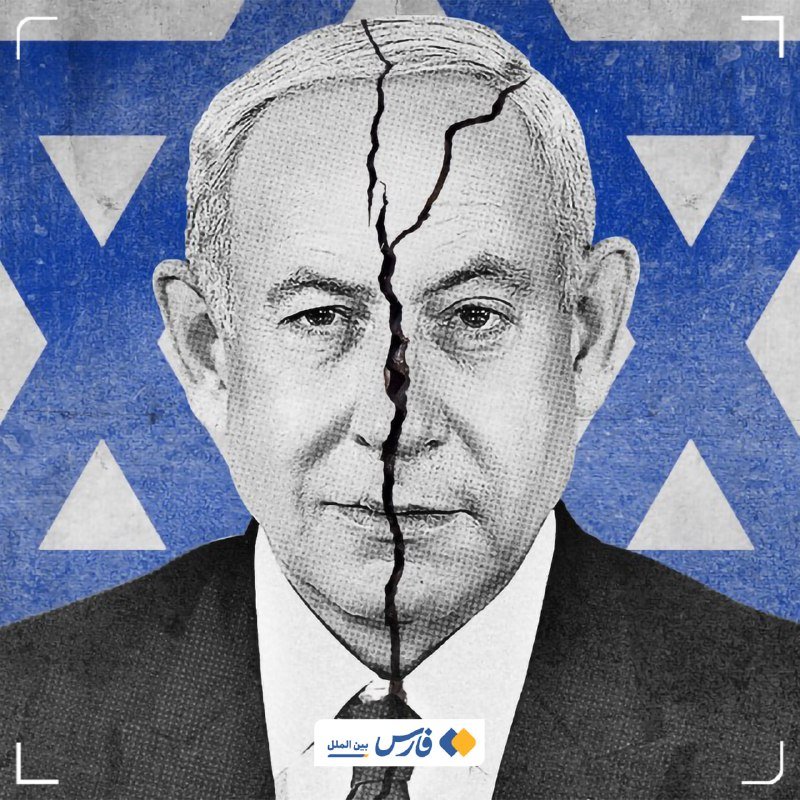
On the morning of 29 May 2026, three separate incidents were reported in quick succession from southern Lebanon. A policeman was killed in the municipality of Aba during what Lebanese sources described as an enemy raid. Israeli aircraft struck the town of Tairdaba — for the second time in the same morning. And a convoy on the Tairdaba main road was hit by what was described as a ground assault. The timestamps from Lebanese wire services run from 07:57 UTC to 08:21 UTC. That is a compressed window for what officials in Beirut will likely characterize as a coordinated operation.
This is not a border incident. Border incidents have rules of engagement, escalatory ladders, and off-ramps built into their logic. What Lebanese news agency reporting describes this morning — multiple strike vectors, multiple locations, a law enforcement casualty — fits a different template. It reads as pressure campaign.
What the Reporting Shows
The Lebanese News Agency (Al Alam Arabic) reported the Aba killing at 08:21 UTC, identifying the casualty as a policeman in municipal service. That specific designation — not a fighter, not a paramilitary — matters. Municipal police in southern Lebanon often operate in civilian-adjacent roles, part of the fragmented security architecture that makes the area simultaneously under-governed and over-monitored. Their targeting carries symbolic weight beyond military utility.
The Tairdaba strikes are structurally more significant. A town attacked twice in one morning suggests either a target of persistent interest or an operational model in which the first strike draws responders — and the second strike catches them. Whether that is coincidence or doctrine, Lebanese sources are reading it as the latter.
Israeli military spokespeople had not issued on-record comment at time of publication. That silence is not unusual in the immediate aftermath of cross-border operations, but it leaves the operational record one-sided by design.
The Architecture of Ambiguity
The Blue Line — the UN-mapped boundary separating Lebanon from Israel — has never been a hard border in any meaningful sense. Villages straddle it. Farmers work both sides. The UN peacekeeping force, UNIFIL, operates under Chapter VII mandate but with self-defence rules of engagement that have never been sufficient to deter escalation. What the ceasefire understanding of 2006 established was a managed ambiguity: neither side fully accepts the line as final, neither side has the political will to contest it by full-scale force, so they contest it through precisely the kind of overnight precision strikes Lebanon experienced on 29 May.
The ambiguity serves Israel by allowing surgical operations without the political cost of a war declaration. It serves Hezbollah — and by extension the Lebanese state — by providing a frame of victimhood each time an airstrike lands. Both sides have an interest in the grey zone. What changes is when one side decides the grey zone's costs are no longer worth its benefits.
The question this week's strikes raise is whether that calculation has shifted in Tel Aviv.
What Is Being Signalled — and to Whom
Israeli military doctrine has long distinguished between defensive operations and the shaping of deterrence. Defensive operations respond to specific threats. Deterrence-shaping operations create facts on the ground that alter an adversary's cost-benefit calculus. The strikes reported from Tairdaba and Aba carry the hallmarks of the latter. Multiple vectors, rapid tempo, a municipal casualty — these are the fingerprints of a force demonstrating that it can reach into southern Lebanon on its own schedule.
The proximate audience is Hezbollah's deterrence architects in Beirut's southern suburbs. The broader audience is the incoming administration in Washington, whose signals on the region have been sufficiently contradictory that every actor in the Middle East is currently stress-testing red lines. An operation like this one, conducted without explicit political cover but with clear military execution, sends a message: Israel will act to preserve its security architecture regardless of diplomatic noise.
That message carries risk. Lebanon's caretaker government is structurally unable to respond through institutional channels. The Lebanese Armed Forces lack the hardware and the political consensus for a symmetrical response. But Hezbollah does not face those constraints, and the organization's strategic calculus has always been more sensitive to perceived humiliation than to proportional retaliation.
The Stakes
If these strikes represent a new operational tempo — sustained over weeks rather than contained in a single overnight episode — the consequences are predictable. Hezbollah's precision missile programme, its drone capacity, its intelligence footprint inside northern Israel: all of it becomes more active. Israel's northern communities, already dealing with displacement costs, face a prolonged security deterioration with no political off-ramp in sight.
The diplomatic architecture meant to contain this — Resolution 1701, UNIFIL's monitoring mandate, the indirect ceasefire framework brokered in 2006 and revisited periodically since — is already fraying. Each escalation that goes unanswered at the international level erodes the framework's deterrence value further. The international community's tolerance for Lebanese-Israeli friction has historically been high, because the alternative — a full reversion to 2006-scale hostilities — is unpalatable to every party including Israel. That tolerance creates a pressure valve that both sides use. It also creates the conditions for the valve to eventually rupture.
The policeman killed in Aba was a municipal employee going to work on a Wednesday morning. He is unlikely to appear in any strategic briefing on either side. That is precisely the point — and precisely the problem with treating this as a border incident rather than what it actually is: a deliberate choice to raise the temperature, measured in hours, and paid for in local lives.
Wire provenance
This editorial synthesis draws on the following public wire/social posts:
- https://t.me/alalamarabic/987654
- https://t.me/alalamarabic/987653
- https://t.me/alalamarabic/987652