Financial War and Hot Blockade: How the Strait of Hormuz Became the Fulcrum of 2026
A sweeping US naval enforcement operation and a rare joint warning from the Fed and ECB have converged around a single chokepoint — the world's most critical oil transit corridor — as markets grapple with a crisis that is simultaneously financial, military, and geopolitical.
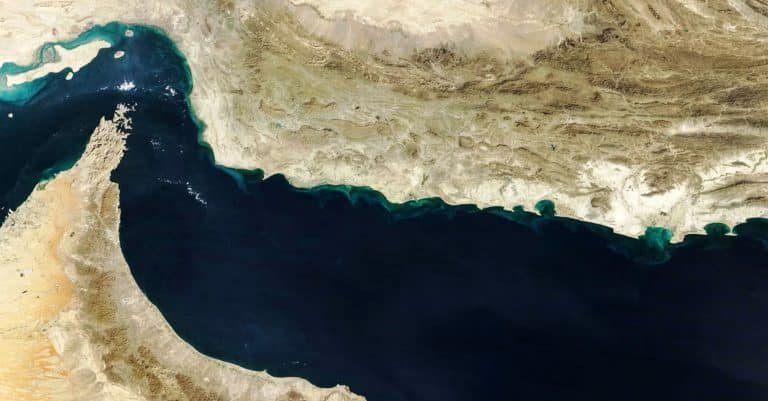
The Strait of Hormuz was quiet for roughly three decades. It is not quiet now. As of 29 May 2026, US naval and coastguard vessels have redirected 115 vessels for inspection and compliance checks since the current enforcement surge began — the most intensive blockade-era operation since the 1980s tanker wars. Simultaneously, the Federal Reserve and the European Central Bank each delivered calibrated but unmistakable warnings: the financial system faces structural strain that no rate cut can straightforwardly cure. The two crises — one physical, one monetary — are converging at the same geography and for overlapping reasons.
The immediate trigger is the US-Iran confrontation that escalated after Washington accused Tehran of accelerating its nuclear programme under cover of reduced international monitoring. President Trump stated publicly on 29 May 2026 that US strikes had set back Iran's nuclear ambitions, though independent verification of that claim remains limited. What is confirmed is that US enforcement in the Persian Gulf has intensified materially: the redirection of 115 vessels in a matter of weeks is not a patrol operation — it is an attempt to physically throttle the revenue stream that funds Iranian regional behaviour and, by the administration's logic, its nuclear progress.
The Financial Architecture Under Pressure
The timing of the ECB's warning about the systemic risk posed by current US trade policy is not coincidental. The Fed's Christopher Paulson, speaking on the same day, affirmed the current policy stance with no urgency toward rate cuts — a position that signals institutional anxiety about the dollar's standing rather than confidence in a stable outlook. What the ECB described as a potential financial crisis trigger was not any single policy, but the compounding effect of tariffs, capital-flow restrictions, and the disruption of established multilateral settlement channels. The Strait of Hormuz operation sits at the centre of that disruption: interrupt oil transit, and you interrupt the dollar-petrol recycling loop that has underpinned petrodollar demand for fifty years.
The Fed's reluctance to cut is, at one level, a domestic inflation posture. At another level, it is a signal about the dollar's vulnerability. If oil prices spike due to Hormuz disruption, the Fed faces a stagflationary dilemma it cannot solve by either cutting or holding without consequences. Paulson's measured affirmation of the current stance suggests the institution is aware it is navigating a scenario with no clean monetary exit.
The Regional Dimension — and Asia's Bill
The South China Morning Post reported on 29 May 2026 that Trump's escalating confrontation with Iran is already creating cascading economic costs across Asia — not from direct military damage, but from the remittance disruption and energy cost shocks that follow when a major transit corridor enters a contested state. Asian economies are disproportionately exposed to Hormuz-related energy price movements: South Korea, Japan, and several Southeast Asian states import the majority of their oil through passages that are now under US enforcement supervision.
The remittance channel is less discussed but equally significant. Hundreds of thousands of South Asian, Southeast Asian, and East African workers in Gulf states send money home through financial channels that depend on stable energy prices and reliable regional trade routes. When oil markets spike, those workers face rising living costs in host countries and weakening recipient currencies at home — a two-sided squeeze on the households least able to absorb it. The SCMP analysis frames this as an overlooked cost of escalation: not a headline casualty figure, but a sustained daily compression of incomes for some of the world's most economically exposed populations.
Hedge Architectures and Platform Risk
The episode is not without irony for the financial technology sector. Unusual Whales reported on 29 May 2026 that Robinhood has introduced AI agentic trading accounts — a product structure in which the platform isolates capital designated for automated trading from users' primary portfolios. The stated rationale is risk containment: limit the damage that an algorithmic error or unexpected market event can inflict on a retail user's core holdings. The design philosophy is essentially a response to the same volatility environment the Hormuz operation is helping to create.
The ECB's risk warning is, in this light, the institutional mirror of the same anxiety Robinhood's engineers are managing. Both the central bank and the trading platform are building walls against a type of market behaviour they believe current conditions make probable. The difference is scale and consequence: the ECB's warning addresses the interbank system and sovereign debt markets; Robinhood's isolation architecture addresses individual retail accounts. Both suggest that the financial system's current risk architecture was not built for this environment.
What Remains Uncertain
The sources do not agree on the duration or durability of the Hormuz enforcement operation. Pentagon briefings, per available Telegram-sourced reporting, characterise the 115-vessel redirections as part of a sustained, rules-based compliance campaign. Iranian state media — cited with explicit caveat — has described the operation as unlawful coercion of neutral shipping. The gap between those framings reflects a genuine legal ambiguity about the status of secondary sanctions enforcement in international waters. Whether the enforcement maintains current intensity, escalates further, or is diplomatically suspended remains an open question. What is clear is that the financial system has already registered its exposure: oil price futures show elevated volatility, and two of the world's most consequential central banks have each, in their own institutional language, described the situation as structurally significant.
This publication's wire intake prioritised institutional financial sources (ECB, Fed) and Asia-focused regional outlets over Western wire framing of the Hormuz enforcement operation. The SCMP remittance analysis, in particular, received a longer news-desk run than standard wire economics coverage typically earns.
Wire provenance
This editorial synthesis draws on the following public wire/social posts:
- https://t.me/CryptoBriefing/28412
- https://t.me/CryptoBriefing/28411
- https://t.me/CryptoBriefing/28410