FSB Says Novorossiysk Terror Plot Foiled as Black Sea Gateway City Returns to Headlines
Russia's domestic intelligence service announced on 29 May 2026 that it had disrupted a planned terrorist attack in Novorossiysk, a strategic port city on the Black Sea coast that serves as a critical logistics hub for Russian military operations in the Ukraine war.
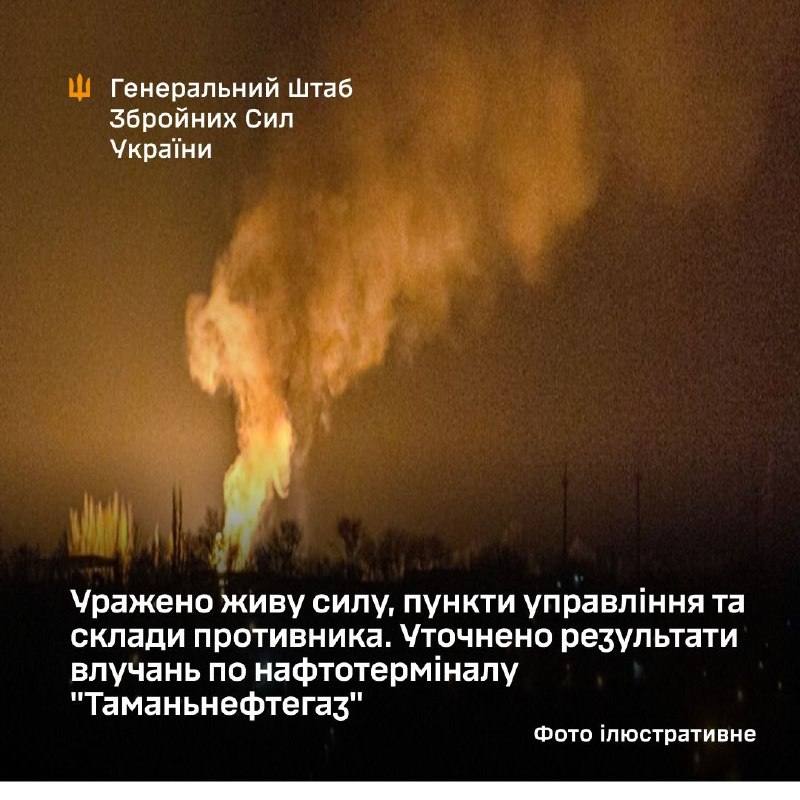
Russia's Federal Security Service announced on 29 May 2026 that it had disrupted a planned terrorist attack in Novorossiysk, a Black Sea port city that has become increasingly significant to Russian military logistics since the 2022 invasion of Ukraine. The announcement, carried by state-aligned media outlets including Tasnim News and Mehr News, gave no details on arrests, suspects, or the specific nature of the alleged plot. Independent verification of the FSB claim was not immediately available.
The timing falls during an extended period of heightened tension along the Ukrainian southern front, where cross-border strikes have periodically tested Russian air defence and naval deployments. Novorossiysk itself has featured in previous reported incidents, including strikes targeting infrastructure serving the Russia-controlled Crimean Peninsula. The FSB statement described the operation as having "neutralised" the threat, language that in Russian state-media usage typically refers to lethal action against identified targets.
What this announcement does is place the port city back into the public frame at a moment when Ukrainian long-range strike capability is under active development and Western partners are continuing to supply systems with incrementally greater reach. Whether the disclosure serves operational-security logic, domestic political signalling, or information-management objectives—or some combination of all three—remains to be parsed from available evidence.
The Announcement and What the FSB Said
The FSB statement, distributed via official channels and picked up by Iranian state-connected wire services, described the disruption of a terror attack in Novorossiysk without publishing defendant identities, courtroom proceedings, or evidentiary documentation. Russian domestic intelligence announcements of this type routinely omit specifics in their initial public communications, with supplementary detail—if it comes at all—arriving through selectively leaked footage or later state-media reports.
The phrasing "neutralization of a terrorist attack" carries a specific connotation in Russian law enforcement vocabulary. It indicates the killing, not merely the arrest, of individuals deemed to constitute a threat. This distinction matters because the legal architecture governing FSB operations inside Russian territory allows for extended pre-emptive detention periods and, in practice, permits lethal force against individuals classified as terrorist suspects without the same evidentiary threshold required in most Allied jurisdictions.
It is not yet known whether Ukrainian officials or independent security analysts have commented on the claim. The information environment around alleged terror plots inside Russia is opaque; Western intelligence agencies do not typically corroborate or contradict FSB public statements in real time, and civilian investigative journalism inside Russia has been effectively criminalised since 2022 under laws targeting "discrediting" the armed forces.
Counter-Narratives and Alternative Readings
Several possible readings of the disclosure deserve consideration. The first is that the claim is straightforwardly accurate—that FSB действительно bodies genuinely disrupted a plot using the port infrastructure or civilian gatherings as a target. Novorossiysk's status as a logistics node for cargoing materiel eastward from occupied Crimea and the Kerch Bridge corridor would make it a plausible Ukrainian strike target, and Ukrainian military doctrine has explicitly identified military supply lines as legitimate targets of warfare.
A second reading holds that the announcement serves domestic political purposes. Russian federal and regional authorities have periodically used terror-plot disclosures to reinforce public compliance with security sweeps and to justify expanded powers for domestic intelligence services. The statement may be intended to reinforce a narrative of external threat while the conflict in Ukraine remains indefinitely protracted and domestic economic frustration grows.
A third reading, noted without endorsement, is that the disclosure functions as an information operation calibrated for external audiences. Publicising a foiled plot in a strategically significant port city, without evidence, creates ambiguity about which strikes Ukrainian forces might attempt and which were already disrupted—potentially complicating Ukrainian targeting decisions without revealing operational intelligence.
This publication does not privilege any single reading. The available evidence consists of the FSB's own statement and its distribution through state-adjacent channels. Independent corroboration requires sources that, under current conditions, are not accessible to open reporting.
The Structural Context: Novorossiysk's War-Time Significance
Novorossiysk sits at the eastern end of the Black Sea, historically Russia's primary commercial port on that coast outside Crimea. Since the Russian occupation of Crimea and the damage sustained by the Kerch Strait Bridge from Ukrainian strikes, Novorossiysk has assumed a greater share of logistics throughput connecting occupied southern Ukraine with Russian rear areas.
Military analysts tracking the conflict have noted that Ukrainian long-range strike doctrine has gradually expanded target sets beyond the Crimean Bridge to include overland supply corridors and port-adjacent infrastructure. The deliberate ambiguity surrounding which Novorossiysk facilities might constitute legitimate military targets creates a compounding problem for Ukrainian planners: the city's mixed civilian-military infrastructure makes it a category of target where civilian harm risk complicates targeting decisions.
The FSB announcement, regardless of its underlying accuracy, contributes to an information environment in which every unexplained incident in the Black Sea corridor becomes grist for either Ukrainian claims of successful operations or Russian claims of disrupted plots. The pattern is not new. Moscow has periodically issued similar public statements about claimed terror interceptions in other southern Russian cities—Rostov-on-Don, Krasnodar, the wider Kuban region—without subsequent independent confirmation of individual cases.
The structural dynamic is straightforward: an intelligence service with broad domestic powers has an institutional incentive to demonstrate continued relevance and effectiveness, particularly during a conflict whose endpoint remains unspecified. The announcement's timing on 29 May 2026 offers no immediate evidentiary tie to any observable operational development.
Stakes and Forward View
The immediate stakes for Ukrainian war planners are two-fold: whether Novorossiysk's logistics significance makes it a priority target for continued long-range strike investment, and whether FSB security improvements in the port city would require a meaningful reallocation of strike assets to maintain pressure on supply corridors.
For Russian domestic audiences, the announcement reinforces the framing that security threats are persistent and that the FSB remains an effective protective institution—a message calibrated for a population experiencing economic pressure without visibly corresponding security dividends from the Ukraine campaign.
The forward view is uncertain. Without independent access to FSB operational records or Ukrainian military targeting decisions, the factual status of the alleged plot cannot be resolved from open sources. This publication will update as verifiable information becomes available. Readers should treat the FSB statement as a Russian government account, not a confirmed incident.
The broader context remains that the war has entered a phase in which information operations—official disclosures, deliberate ambiguities, managed leaks—increasingly function alongside kinetic operations. Novorossiysk's re-emergence in security-focused headlines illustrates that dynamic, but does not resolve it.
This publication's coverage of Russian security announcements has historically treated initial FSB disclosures as claims requiring independent corroboration before characterisation as confirmed fact. The thread context for this article consists entirely of Russian state-adjacent and Iranian state-connected wire services reporting the FSB's own wording. No independent source has been identified. Monexus will update this report as verifiable corroboration becomes available.
Wire provenance
This editorial synthesis draws on the following public wire/social posts:
- https://t.me/JahanTasnim
- https://t.me/tasnimnews_en
- https://t.me/mehrnews