Hegseth's USS Boxer Address Delivers Trump's Iran Ultimatum: Deal or Military Force
Defense Secretary Pete Hegseth told sailors aboard the USS Boxer on May 29, 2026 that Iran must accept a negotiated agreement or face American military action — the most direct White House threat to Tehran in months.
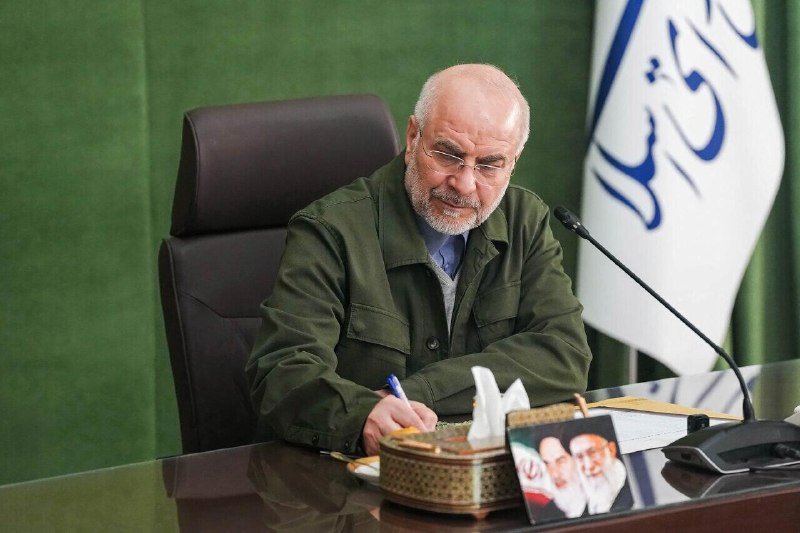
Defense Secretary Pete Hegseth addressed American naval personnel aboard the USS Boxer on May 29, 2026, delivering a message he attributed directly to President Trump: Iran must accept a negotiated nuclear agreement or face American military force. The public ultimatum, delivered on a United States warship deployed to the Middle East region, represents the sharpest rhetorical escalation from Washington toward Tehran since the collapse of the original 2015 nuclear accord. The address, captured on video and distributed through open-source intelligence channels, was the second direct administration communication to Iran this week following signals from senior officials that a final diplomatic window remained open.
The framing is deliberate: a binary choice presented not through back-channel diplomatic dispatches but in front of hundreds of uniformed servicemen. That the message was relayed by the Secretary of Defense rather than the Secretary of State — the traditional conduit for diplomatic signaling — underscores the Administration's effort to embed its Iran posture within a military rather than diplomatic framework. Whether that framing serves to strengthen or undermine the negotiating position on offer is a question Tehran and its allies are now actively weighing.
The Message and Its Delivery
Hegseth, speaking to assembled sailors aboard the amphibious assault ship, framed the Administration's position as a straightforward choice. "Iran can do this the right way — a deal is at the negotiating table — or they can deal with my guy on the left," the Defense Secretary said, gesturing toward the assembled military personnel, according to transcripts of the address carried by open-source monitoring channels. The phrasing — "my guy on the left" — appeared to refer to the uniformed sailors behind him, a rhetorical construction that simultaneously personalized the threat and broadened it beyond any individual decision-maker. The Administration, the framing implies, speaks with one voice; the alternative to diplomacy is not a specific war plan but the full weight of American military capability.
The USS Boxer is a Wasp-class amphibious assault ship currently operating in the Central Command area of responsibility, a region that places it within striking distance of Iranian naval assets in the Persian Gulf and Gulf of Oman. Its presence is itself a message: American naval power visible and proximate to the Islamic Republic's littoral waters, a reminder that the United States maintains the capacity to project force from multiple directions simultaneously.
The timing of the address — mid-morning on May 29, 2026 — was not incidental. It followed a week in which senior American officials had privately signaled to regional partners that the diplomatic track remained viable while publicly maintaining the pressure campaign of tariffs and maximum-pressure sanctions that have characterized the Trump Administration's approach since its first term. The USS Boxer address collapsed that distinction, translating private diplomatic language into public threat.
Iranian and Regional Responses
Iranian state media has not published a direct response to the Hegseth address as of late evening on May 29, 2026. The relative restraint in official Iranian channels contrasts with more combative messaging from Tehran's regional allies and from Iranian-affiliated Telegram channels that characterized the address as evidence of American bad faith in any ongoing negotiations. Iranian officials have consistently maintained that any deal must include guaranteed sanctions relief — a demand the Trump Administration has thus far resisted, insisting instead on verifiable nuclear concessions as a precondition for any economic relief.
The address arrives at a moment of particular sensitivity in Gulf diplomacy. Oman and the United Arab Emirates have both maintained active channels to Tehran throughout the period of heightened American pressure, and Omani mediation has been the principal conduit for whatever indirect negotiations have occurred between Washington and Tehran. The Administration's decision to deliver its ultimatum publicly — rather than through those back-channels — may reflect a calculation that public pressure improves negotiating leverage. It equally risks foreclosing the diplomatic off-ramp that Omani intermediaries have been working to keep open.
International reaction beyond the Gulf states remained limited as the story developed. European capitals, which had been working to preserve the remnants of the 2015 JCPOA agreement independently of American policy, are likely to view the USS Boxer address as confirmation that the Trump Administration is not genuinely pursuing a diplomatic solution. Whether that assessment leads to renewed European diplomatic engagement with Tehran or a decision to step back and allow the American approach to play out remains to be seen. The sources reviewed do not include statements from European foreign ministries as of publication.
The Diplomatic Architecture — or Its Absence
The binary choice presented by Hegseth — deal or force — obscures the more complex reality of what a negotiated agreement would actually require. The Trump Administration has not publicly articulated what terms it would accept from Iran, beyond insisting on permanent limits to Iran's nuclear program that Tehran has consistently rejected as incompatible with its sovereignty and its right to peaceful nuclear technology under the Nuclear Non-Proliferation Treaty. Iran, for its part, has demanded the complete removal of American sanctions as a precondition for any new agreement — a position that would require the Administration to abandon the economic pressure campaign that has defined its Iran policy.
The gap between those positions has not narrowed visibly over the past year of intermittent talks. The USS Boxer address does not bridge that gap; it simply raises the cost of failing to bridge it. Whether that calculus influences Iranian decision-making depends on assessments in Tehran about American military readiness, about the credibility of the threat, and about the internal political constraints that shape the Iranian government's negotiating flexibility. The sources reviewed do not include current Iranian government statements or assessments from Iranian-affiliated analysts.
The structural context matters here: American sanctions have created significant economic pressure on Iran, but they have not produced capitulation. The Islamic Republic has demonstrated over four decades a capacity to absorb economic pain in pursuit of strategic objectives. The nuclear program has continued — and in some respects accelerated — under sanctions pressure. The question is not whether Iran can be forced to the table; it is whether a credible threat of military force changes the calculus of what Iran will accept once it arrives.
Stakes and Trajectory
The immediate stakes are naval and kinetic. American and Iranian forces operate in close proximity throughout the Persian Gulf and Gulf of Oman. The Strait of Hormuz — through which roughly a fifth of the world's oil flows — remains a chokepoint where miscalculation could translate diplomatic tension into direct conflict. The USS Boxer address, by personalizing and publicizing the military threat, increases the risk that any future incident at sea or in the air is interpreted through the lens of an escalating ultimatum rather than managed as a discrete operational matter.
Longer term, the trajectory the address implies is a test of whether maximum pressure, now accompanied by a direct military threat, can accomplish what sanctions alone have not: a fundamental change in Iranian nuclear behavior. If the history of American Iran policy offers a reliable guide, that outcome is uncertain at best. The 2015 agreement required the participation of a willing Iranian government and a American administration prepared to offer sanctions relief — conditions that do not currently exist. The alternative — military action — carries consequences that the address does not elaborate, either for the region, for American forces in the Middle East, or for the global oil market that remains sensitive to instability in the Gulf.
What the USS Boxer address achieves, immediately, is the crystallization of a policy choice into a single public statement. The Administration has made its position unambiguous. What remains uncertain — and what the coming weeks will test — is whether that clarity strengthens or weakens the prospect of a negotiated resolution, and whether Tehran interprets the message as a genuine warning or a diplomatic position designed to be walked back once the pressure has been applied.