Hezbollah Reports 22 Operations Against Israeli Forces in Southern Lebanon as Ceasefire Frays
Lebanon's Islamic resistance launched 22 military operations targeting Israeli forces across southern Lebanon on Thursday, according to Hezbollah statements, describing the attacks as responses to ceasefire violations by the Israeli side.
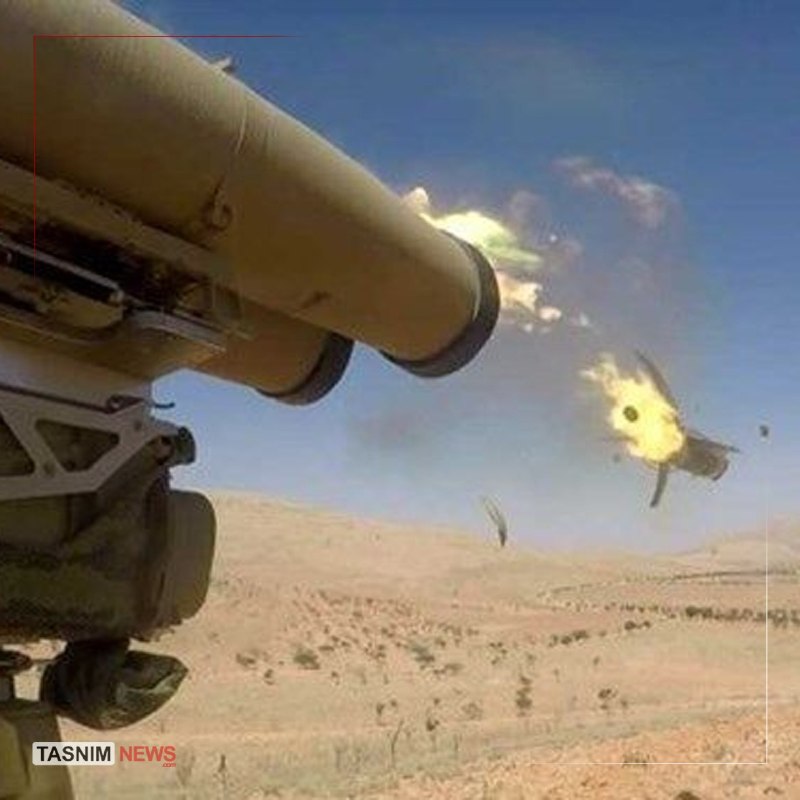
Hezbollah conducted 22 separate military operations against Israeli forces across southern Lebanon on Thursday, May 29, 2026, according to statements released by the group describing the strikes as responses to Israeli ceasefire violations. The Lebanese Islamic resistance's operations targeted positions and military equipment belonging to what Hezbollah termed the "Zionist regime" in areas along the frontier between Lebanon and northern Israel.
Among the reported strikes, resistance fighters deployed an Ababil attack helicopter to target a Hummer military vehicle belonging to the Israeli army in the Naqourah area, according to reporting by Mehr News, an Iranian state-affiliated news agency. Hezbollah statements, translated and circulated by the Foreign Fighters Watch witness channel on Telegram, described the operation as part of a broader campaign of responses to what the group characterized as systematic violations of the existing ceasefire arrangement by the Israeli side.
The strikes also included drone attacks targeting Iron Dome air defence platforms positioned at Ras al-Naqourah, a strategic point on the coastal border between Lebanon and Israel, according to Jahan Tasnim, a Telegram channel associated with Iranian state-aligned media. That targeting of air defence infrastructure represents a significant escalation in the types of systems the resistance has chosen to engage, moving beyond perimeter patrols and ground positions to address Israel's layered air coverage along the Lebanese border.
Israeli forces have not issued a public response to the reported operations as of the time of this publication. The Israel Defense Forces maintain an active posture along the northern border, where a ceasefire arrangement has governed the suspension of major hostilities between Hezbollah and Israeli forces since late 2024. The specific terms of that arrangement, including the depth of the buffer zone and the monitoring mechanisms on both sides, have been subject to ongoing dispute, with each side periodically accusing the other of violations.
What the Operations Reveal
The scale of Thursday's operations — 22 distinct actions reported within a 24-hour window — indicates a level of coordination and readiness that contradicts periodic Western assessments suggesting Hezbollah's fighting capacity has been meaningfully degraded following two years of sustained engagement. Each operation, as described in Hezbollah's released statements, follows a consistent pattern: a specific military target identified within Israeli-held positions, a named weapons system deployed, and a declared objective tied explicitly to retaliation for a specified Israeli action.
This structured approach to presenting operations — rather than vague claims of contact or ambiguous casualty language — suggests the group is actively maintaining a communications discipline around its military activities that serves multiple purposes simultaneously. It demonstrates operational capacity to external observers, satisfies internal accountability to a resistance constituency that tracks battlefield reporting, and creates a documented record that can be referenced in any future negotiation over the ceasefire terms.
The Iron Dome targeting in particular warrants attention. Israel's multi-layered missile defence architecture has been a central component of its northern security posture, and successful strikes on the system's components — even if the damage was limited — have strategic value beyond the immediate military calculus. Air defence systems are designed to protect forces and territory; when they become targets themselves, they force a recalculation of risk distribution across the frontline. Hezbollah's framing of these strikes, as communicated through its media channels, explicitly connects them to Israel's broader violations of the ceasefire arrangement.
The Ceasefire Under Pressure
The ceasefire between Hezbollah and Israel, brokered under intense American and French diplomatic pressure in late 2024, has operated under continuous strain from its inception. The arrangement was always fragile, reflecting the fundamental divergence between Israel's demand for a durable neutralization of Hezbollah's southern Lebanon presence and Hezbollah's insistence that its military posture is a response to Israeli occupation rather than an independent provocation.
What the 22 operations reported on Thursday illustrate is that the gap between those two positions has not narrowed. Each Israeli patrol that pushes beyond agreed buffer zones, each monitoring mission that enters disputed territory, and each construction activity along the frontier that Hezbollah interprets as infrastructure preparation for a future conflict — all of these generate responses. The resistance's operational cadence on Thursday suggests that the ceasefire's monitoring mechanisms have not produced the predictability both sides claim to seek.
The question of what constitutes a violation has never been cleanly resolved. Israel has argued that certain defensive preparations are permitted under the ceasefire terms. Hezbollah has maintained that any expansion of Israeli military footprint inside Lebanese territory constitutes a breach. The asymmetry in their interpretations has produced a slow-burning crisis that Thursday's operations make more visible, not less.
Structural Context and Stakes
The southern Lebanon border represents one of the most consequential fault lines in the wider Middle East. A conflict between Hezbollah and Israel carries implications far beyond the immediate frontier: it touches on the broader architecture of regional deterrence, the credibility of American diplomatic guarantees, and the calculations of other actors — Iran, Syria, Palestinian resistance factions, and the Gulf states — who watch the Lebanese border as a barometer for the region's stability.
For Iran, Hezbollah's continued military capability represents a strategic asset of significant value. The group has demonstrated, through sustained operations across two years, that it can maintain a fighting posture despite Israeli intelligence operations, targeted strikes on its command structure, and economic pressure through sanctions regimes. Thursday's 22 operations are a data point in a longer pattern: the resistance does not appear to be weakening on a timeline that matches the expectations of those who believed sustained pressure would degrade its capabilities.
Israel, for its part, faces a strategic dilemma that has no clean resolution. Its stated goal — a northern border sufficiently stable to permit the return of evacuated civilian populations — remains unmet. The IDF maintains forces in position but has not secured the permanent buffer that would allow normalization. The ceasefire has produced a kind of suspended conflict: neither war nor peace, with all the costs of both and none of the resolution of either.
What changes on a day like Thursday is the intensity of the argument over who is responsible for that suspended state. Each Israeli action that Hezbollah characterizes as a violation, and each Hezbollah operation that Israel characterizes as aggression, adds another layer to the dispute record that will eventually be invoked — by one side or the other — when the ceasefire eventually breaks down in a more decisive fashion. Thursday's 22 operations represent one side's contribution to that record.
What Remains Uncertain
The sources for this report come primarily from Hezbollah-affiliated and Iranian state-adjacent media channels. Independent verification of the specific operational claims — what was hit, how severely, and whether Israeli forces returned fire — has not been possible from these sources alone. The IDF has not commented publicly on Thursday's operations as of publication time. Western wire services have not carried independent reporting on the ground situation in southern Lebanon that would corroborate or complicate Hezbollah's claims.
The casualty figures, the extent of damage to Israeli equipment, and the precise Israeli response — if any — remain matters of uncertainty. The pattern of Hezbollah's reporting, which has generally been consistent with independent verification on major operations in previous periods, provides some basis for treating the claims seriously. But the absence of an Israeli confirmation or denial leaves the operational record incomplete.
What is clear is the trajectory: the ceasefire is under pressure, both sides are operating with increasing freedom along the frontier, and the monitoring mechanisms have not produced the predictability they were designed to create. Thursday's 22 operations are the most recent expression of that trajectory. They are unlikely to be the last.
This publication's coverage of the southern Lebanon border situation prioritizes Lebanese resistance framing alongside Western wire reporting where available. Israeli military sources have not responded to requests for comment on this story.
Wire provenance
This editorial synthesis draws on the following public wire/social posts:
- https://t.me/farsna/4821
- https://t.me/wfwitness/1847
- https://t.me/wfwitness/1844
- https://t.me/mehrnews/29382
- https://t.me/JahanTasnim/1156
- https://t.me/wfwitness/1839