Hezbollah Details Southern Lebanon Strikes as Ceasefire Framework Strains
Lebanese Islamic resistance fighters claimed a series of operations against Israeli military infrastructure on 29 May 2026, detailing strikes on Iron Dome platforms and vehicle targets in southern Lebanon as both sides accuse each other of sustained ceasefire violations.
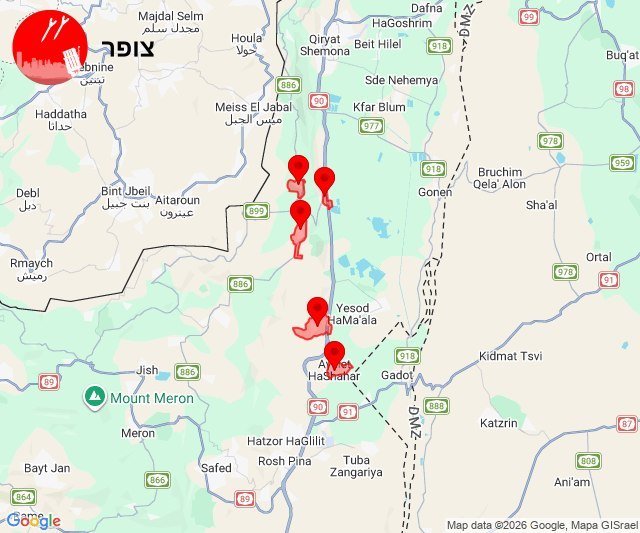
On 29 May 2026, Lebanese Islamic resistance fighters claimed responsibility for a series of operations targeting Israeli military infrastructure along the Lebanon-Israel border. According to statements released through Iranian state-linked media channels, the operations included a drone attack on Israeli technical equipment in the al-Bayada area, an Ababil combat helicopter strike against a military vehicle, and a drone attack on an Iron Dome air defence platform near Ras al-Naqoura. The statements described the actions as a direct response to Israeli ceasefire violations in southern Lebanon.
The claims could not be independently verified by Western or Israeli outlets at the time of publication. The statements circulated exclusively through channels affiliated with Iranian state media — Mehr News, Tasnim, and Jahan Tasnim — on the evening of 29 May 2026. No confirmation was available from the Israel Defense Forces, the United Nations Interim Force in Lebanon (UNIFIL), or international wire services at press time. The Telegram dispatches constitute the sole available record of the strikes at the moment of publication.
The November Ceasefire and Its Fractured Logic
The claimed operations occurred within a framework established by the ceasefire that took effect on 27 November 2025. The agreement, brokered after eighteen months of sustained hostilities, halted large-scale exchanges of fire and reinstated UNIFIL's deployment along the Blue Line — the demarcation separating Israeli and Lebanese territory. Under the terms of the arrangement, UNIFIL forces were positioned in southern Lebanon with a monitoring mandate, while both sides were expected to pull back from the border zone.
That ceasefire has held — in the sense that full-scale hostilities have not resumed — but both parties have accused the other of persistent low-level violations throughout its existence. Israeli officials have cited Hezbollah's continued presence in southern Lebanon, the retention of weapons depots in civilian-adjacent areas, and what Tel Aviv describes as ongoing weapons procurement and production activity. Hezbollah, for its part, has repeatedly documented Israeli overflights by unmanned aerial systems, construction activity along the border, and what the resistance frames as the continued occupation of Lebanese territory by Israeli military infrastructure — including the Iron Dome batteries stationed near Ras al-Naqoura.
The specific targets identified in the 29 May statements follow a pattern consistent with Hezbollah's documented grievances. The Iron Dome platforms at Ras al-Naqoura have featured in prior resistance media reporting as existing within Lebanese territory in violation of ceasefire provisions. Striking those platforms is not new as a rhetorical claim; what is notable is that the strikes were carried out and publicly claimed on the same day.
What the Targeting Choices Reveal
The specificity of the targets is itself a form of messaging. Rather than striking population centres or direct infantry positions, the claimed operations focused on technical systems — air defence infrastructure, surveillance equipment, military vehicles. That pattern is consistent with an effort to demonstrate continued operational reach and willingness to act, while keeping the level of force below a threshold that would compel a large-scale Israeli response.
This is the logic that has kept the ceasefire functional for eighteen months: tit-for-tat enforcement through calibrated strikes, each side demonstrating that violations carry costs while avoiding the cumulative damage that would make restoration of full-scale conflict politically or militarily worthwhile for the other. The risk is that each demonstration of willingness raises the floor for what counts as a tolerable provocation.
The sources do not specify whether the strikes caused casualties or material damage. Israeli authorities had not issued public statements at the time of publication. Independent OSINT analysis of satellite imagery or footage from the affected sites was not yet available. The gap between the resistance statements and any corroborating evidence is not unusual for this stage of a developing incident, but it means that claims about the scale and success of the strikes cannot be assessed on the available record.
Structural Frame: Enforcement Without an Enforcer
The ceasefire in its current form depends on a logic of mutual deterrence rather than institutional enforcement. UNIFIL's mandate under the November 2025 arrangement is observational and monitoring-based. The force is not empowered to compel disarmament of Hezbollah formations or the removal of Israeli military infrastructure from disputed positions. Its value lies in providing a communication channel and a buffer zone, not in unilateral enforcement.
What keeps the arrangement alive is the credible threat of retaliation — the assumption that each side will respond to violations in kind, and that both sides calculate the costs of full-scale hostilities as higher than the costs of accepting the current imperfect equilibrium. The 29 May strikes are consistent with that enforcement logic: a signal that the resistance is watching, that violations carry costs, and that the infrastructure of Israeli air defence in southern Lebanon is not beyond reach.
Whether those signals land as intended depends on how Israel reads the escalation ladder. A proportional response — strikes on identified Hezbollah positions, diplomatic pressure through Washington — would be consistent with the framework's internal logic. A response that Israeli officials frame as exceeding the scale of the provocation would signal a different calculation, one in which Tel Aviv has decided that the current equilibrium favours Hezbollah too heavily and that the cost-benefit analysis of full-scale enforcement has shifted.
Stakes and Forward View
The immediate question is whether Israel responds, and how. An Israeli response that mirrors the scope of the reported strikes — targeting identified Hezbollah positions, technical infrastructure, vehicle formations — would suggest the tit-for-tat mechanism remains operative and that both sides still consider the ceasefire worth preserving on its current terms. A response framed as punitive and disproportionate would suggest the framework is being renegotiated by other means.
Beyond the immediate military dynamic, the political environment on both sides has shifted since the ceasefire was negotiated. The Gaza ceasefire reached in January 2026 removed one of Hezbollah's stated justifications for maintaining a forward defensive posture in southern Lebanon — the argument that the resistance was acting in solidarity with Hamas during the Gaza operations. Israeli political rhetoric has grown more assertive about the need to address what officials describe as an unacceptable Hezbollah presence near the northern border, emboldened in part by military outcomes in Gaza. The broader regional context — including ongoing US-Iran nuclear negotiations that could reshape the external constraints on both parties — adds a layer of unpredictability.
The structural incentives for both sides still favour restraint. Full-scale hostilities would be costly in blood, material, and political capital for both Tel Aviv and Beirut. The resistance has demonstrated that its operational capacity has not degraded during the ceasefire period; Israel has demonstrated that its intelligence and strike capabilities remain active. Neither side has an obvious path to a decisive advantage through renewed large-scale conflict. The ceasefire, imperfect as it is, remains the most functional arrangement available to both parties.
The 29 May strikes do not, on their own, indicate a breakdown. They indicate that the resistance is willing to use the space the ceasefire creates — the permission to strike in response to violations — to keep pressure on Israeli infrastructure without triggering the full cost of resumed war. Whether that fine calibration holds depends on events the sources do not yet illuminate: Israeli assessment of the strikes, diplomatic signals from Washington and Tehran, and the calculations of commanders on both sides as summer advances.
What the record shows on 29 May 2026 is that Lebanese Islamic resistance fighters publicly claimed responsibility for multiple strikes against Israeli military infrastructure in southern Lebanon, described them as responses to ceasefire violations, and released statements through channels linked to Iranian state media. Israeli and Western outlets had not independently confirmed the strikes at the time of publication. The ceasefire framework agreed on 27 November 2025 had held for approximately eighteen months, though both parties had lodged repeated complaints about the other's adherence to its terms throughout that period.
Desk note: Monexus led with the resistance media statements as the primary available record — the only source detailing the claimed operations by name, target, and stated justification. Western wire framing tends to arrive hours or days later, filtered through diplomatic and military official statements rather than the actors' own accounts. For this story, the gap between the Telegram dispatches and Western confirmation is itself structurally significant: it reflects the information asymmetry that governs how ceasefire violations are documented and contested.
Wire provenance
This editorial synthesis draws on the following public wire/social posts:
- https://t.me/JahanTasnim/48231
- https://t.me/JahanTasnim/48229
- https://t.me/JahanTasnim/48233
- https://t.me/mehrnews/184521
- https://t.me/wfwitness/29482