The Double Furnace: Hong Kong's Record Heat and the AI Hiring Freeze Arriving at the Same Time
Two of Hong Kong's defining industries — its physical environment and its financial labour market — are under simultaneous strain, and the intersection between them is only beginning to show.
At 9 a.m. on 29 May 2026, the Hong Kong Observatory recorded a temperature of 36.2 degrees Celsius in the urban area. It was the second consecutive day above 36. By noon, the figure had nudged toward 37. The humidity was high enough that the effective temperature — the reading a human body actually feels — was significantly worse. Offices in Admiralty and Central kept their air-conditioning at full blast. Traders and analysts on the 46th floor of a国际金融中心 tower could see the haze over the Pearl River Delta and know, without checking a dashboard, that outdoor engagement was not an option.
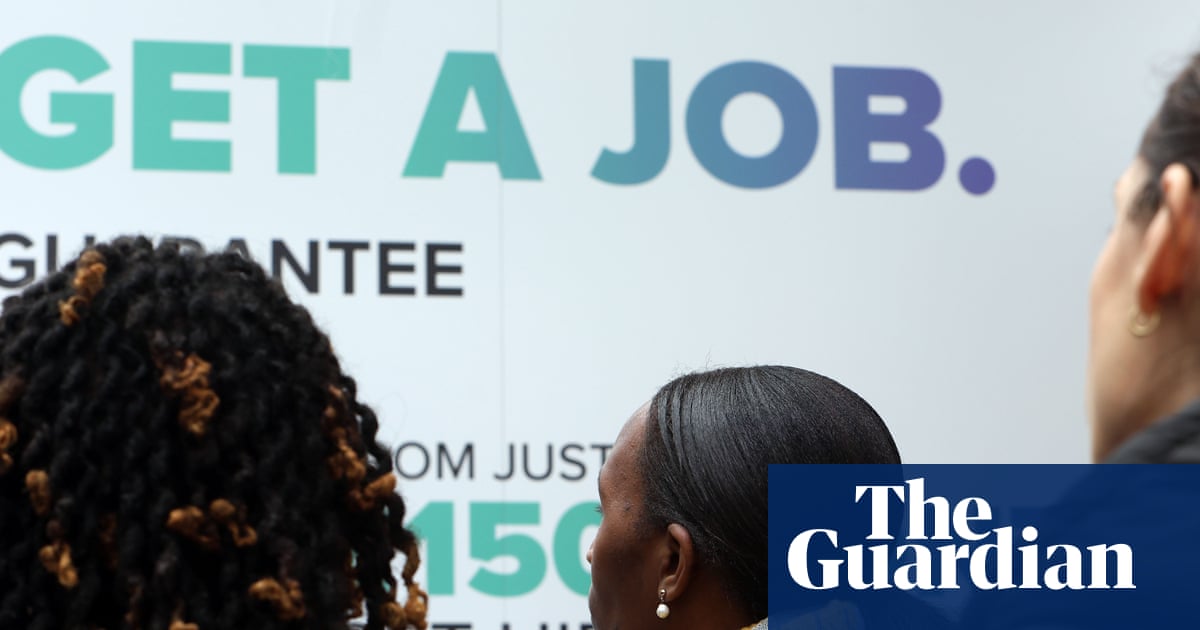
On the same day, Nikkei Asia reported that major banks and financial institutions across Hong Kong and Singapore were quietly rolling back graduate hiring targets for the second consecutive year, citing the accelerating adoption of artificial intelligence in middle-office and back-office functions. The two stories are unrelated in their origins, but they are converging in ways that expose something structural about the trajectory of Asia's two most internationally integrated cities.
This publication finds that Hong Kong is simultaneously experiencing the physical consequences of a climate that has been shifting for decades and navigating an economic transition that is displacing the white-collar workforce those same financial institutions depend on. The heat wave is a meteorological event with a documented history of intensification. The hiring freeze is a labour-market event with a documented adoption curve. What is new is that they are arriving at the same time, in the same city, and the feedback loop between them has barely begun to be examined.
A city built for a different climate
Hong Kong was not designed for 37-degree May days. The built environment — narrow streets, high-rise canyons, minimal tree canopy relative to the footprint — was calibrated for the subtropical but comparatively temperate climate of the mid-twentieth century. The city's infrastructure has since been retrofitted with climate systems, upgraded drainage, and coastal defences. But the pace of physical adaptation has not matched the pace of thermal change.
The Hong Kong Observatory has documented a consistent upward shift in annual mean temperature since the 1990s. The frequency of very hot days — defined as exceeding 33 degrees — has roughly doubled over three decades. What was an extreme event in 2000 has become a plausible Tuesday in 2026. The May 2026 readings fit a pattern that the Observatory has flagged in its annual climate summaries: earlier onset of the hot season, longer duration of heat spells, and a narrowing of the inter-seasonal breathing room that urban populations previously relied on.
The health consequences are documented and serious. Hospital admissions for heat-related illness rise measurably when effective temperatures cross certain thresholds. Outdoor and semi-outdoor workers — construction crews, delivery riders, market vendors — bear a disproportionate share of that burden. The financial sector, insulated by air-conditioned towers, has historically viewed heat as an inconvenience rather than a systemic risk. That calculus is beginning to shift, but slowly and unevenly.
Singapore is facing a parallel challenge. Its urban heat island effect is well documented, and the city-state has invested heavily in greenery and reflective surfaces. But Singapore also has an extremely high proportion of outdoor and manual workers relative to its total workforce, and its government has acknowledged that heat stress will become a limiting factor on labour productivity in the coming decade.
The AI displacement is real, and it is arriving in the finance sector first
The Nikkei Asia reporting on graduate hiring in Hong Kong and Singapore deserves close attention because it is not speculative. It is grounded in disclosed hiring data, direct reporting from financial institutions, and labour-market surveys. The story is not that AI might replace financial jobs. It is that AI is replacing financial jobs, at a pace that has surprised even internal adoption teams at major banks.
The functions most affected are the ones that junior analysts spent years doing: document review, compliance screening, data extraction, routine modelling, meeting minuting. AI tools — large language models in particular — have reached a performance threshold on these tasks that makes human full-time equivalents economically redundant at the margins being quoted by the institutions surveyed.
One large international bank operating in both cities, which Nikkei Asia did not name, reportedly cut its graduate intake by a mid-two-figure percentage in 2025 and maintained a similar target for 2026. Other institutions, contacted by Nikkei Asia's reporters, confirmed adjusted hiring plans without disclosing specific numbers. The pattern across firms was consistent enough to constitute a sector-wide trend rather than isolated corporate decisions.
Singapore's position is slightly more resilient, for reasons that deserve examination. The Monetary Authority of Singapore has been actively cultivating the city as a hub for AI-native financial services, and several fintech clusters in the city have expanded headcount even as traditional banks have contracted. But that expansion is concentrated in a narrow band of technical and regulatory roles — not the broad graduate pipeline that institutions previously maintained.
Why Hong Kong feels it more acutely
The dual pressure on Hong Kong is more acute for structural reasons that extend beyond the specific AI hiring dynamics. Hong Kong's financial services sector accounts for roughly a fifth of the city's GDP and an even larger share of its professional workforce. The universities in Hong Kong produce a high volume of graduates in finance, law, accounting, and business — graduates whose career expectations were calibrated to an expansionary market that is now contractive in precisely the roles they trained for.
The competitive position of Hong Kong relative to Singapore has been a live debate in financial-policy circles for several years. Singapore has marketed itself aggressively as a stable, rule-of-law jurisdiction with English-language efficiency and Western-aligned regulatory frameworks. Hong Kong has faced questions about its long-term position as a global financial centre, questions that intensified after 2020 and have not fully resolved. The AI hiring shift arrives at an awkward moment in that trajectory — a moment when the city needs to demonstrate that its talent pipeline is robust and adaptable, and is instead watching that pipeline narrow.
There is also the matter of the Greater Bay Area integration, which Beijing has consistently framed as a structural advantage for Hong Kong. The Bay Area — the economic zone encompassing Hong Kong, Macau, and nine Guangdong cities — offers access to a vastly larger labour market, deeper capital pools, and cross-border institutional linkages that the city-state of Singapore cannot replicate. Chinese state media, including Xinhua and Global Times, have framed the Bay Area integration as a countersignal to Western financial anxiety about Hong Kong's future. That framing has institutional backing: the Hong Kong–Guangzhou financial corridor has seen concrete investment in cross-border clearing infrastructure and professional licensing reciprocity.
Whether that structural advantage translates into offsetting the AI hiring contraction depends on assumptions about which roles get automated first, which ones survive, and whether the Bay Area labour market absorbs displaced Hong Kong graduates or simply competes with them. The sources do not resolve that question. What is clear is that the question is being asked in government ministries and boardrooms with increasing urgency.
The feedback loop nobody is measuring yet
Here is the less examined connection: the climate and the AI story are both, in different ways, stories about the pace of structural change outrunning institutional adaptation. The heat wave is not an isolated weather event. It is a function of a climate trajectory that implies ongoing, compounding risk — for outdoor labour, for physical infrastructure, for the insurance sector, for the financial instruments tied to coastal real estate and trade routes that Hong Kong's port economy depends on.
The AI hiring contraction is not an isolated corporate decision. It is a function of a technology adoption curve that implies ongoing, compounding displacement — for graduate employment, for the universities that train graduates for a market that is shrinking, for the social contract that tied Hong Kong's middle class to a stable professional trajectory.
What is not yet being measured is how these two dynamics interact. Higher temperatures increase cooling demand, which increases energy costs, which compresses margins in sectors that were already adjusting to AI-related cost restructuring. Outdoor labour shortages driven by heat stress could accelerate automation in construction and logistics — sectors that were already being automated for separate reasons. Graduate unemployment in financial services could redirect talent into technology sectors that are themselves being reshaped by AI, creating a compressed, accelerated re-skilling pressure that the city's education infrastructure is not designed to absorb quickly.
These are hypotheses, not confirmed causal chains. The sources do not establish a direct feedback mechanism between the heat and the hiring freeze. What the sources do establish — and what this publication is flagging — is that both are real, both are happening simultaneously, and both are being managed by institutions that are not yet connecting the dots between them. That is itself a notable editorial finding.
What happens next, and who decides
The immediate outlook for the heat is meteorological: Hong Kong Free Press reported on 29 May that the Observatory forecast rain for the weekend, offering a temporary respite. The respite will be real but temporary. The underlying trend is not reversed by a weekend weather system.
The immediate outlook for the hiring freeze is less certain. Several large institutions have confirmed adjusted targets, but the pace of AI adoption in financial services is not linear — it accelerates when compute costs fall and regulatory frameworks clarify. Both conditions are trending in the same direction. The next hiring cycle, in the fourth quarter of 2026, will be the clearest indicator of whether the contraction is a temporary calibration or a structural repricing of the graduate pipeline.
What is decidable — and what remains within the agency of policymakers in Hong Kong and Singapore — is how the transition is managed. Singapore's government has been explicit about the need for re-skilling and has funded programmes in data analysis, AI literacy, and adjacent technical fields. Hong Kong's government has made comparable commitments, though the institutional capacity to absorb a cohort of displaced financial graduates into adjacent sectors has not been tested at scale.
The stakes are concrete. If the financial sector contracts its graduate pipeline permanently, and the Bay Area integration does not absorb the excess supply, the social consequence is a generation of highly educated, debt-financed graduates with career prospects that do not match the investment they made in their training. That is not a hypothetical. It is a documented outcome in other cities — London, New York — that have experienced financial-sector restructuring without adequate transition infrastructure. Hong Kong does not yet have that infrastructure in place. The heat wave, which will not wait for policy design cycles, is a reminder that the pace of change in this city is not bounded by institutional readiness.
This publication approached the story as two concurrent climate and labour-market pressures and found that the structural connections between them are underexamined. The SCMP and Hong Kong Free Press coverage focused on the heat event in isolation; the Nikkei Asia reporting addressed AI hiring in the financial sector as a discrete trend. The intersection — how two compounding pressures in the same city reshape each other's trajectory — is where the more consequential story lies.