Hormuz Standoff: How Iran Weaponised the World's Most Critical Oil Chokepoint
As CENTCOM raises its posture near the Persian Gulf and Tehran rebuffs Washington's ultimatum, the Strait of Hormuz has become the single most consequential pressure point in global energy markets — with oil trading on every diplomatic signal out of both capitals.
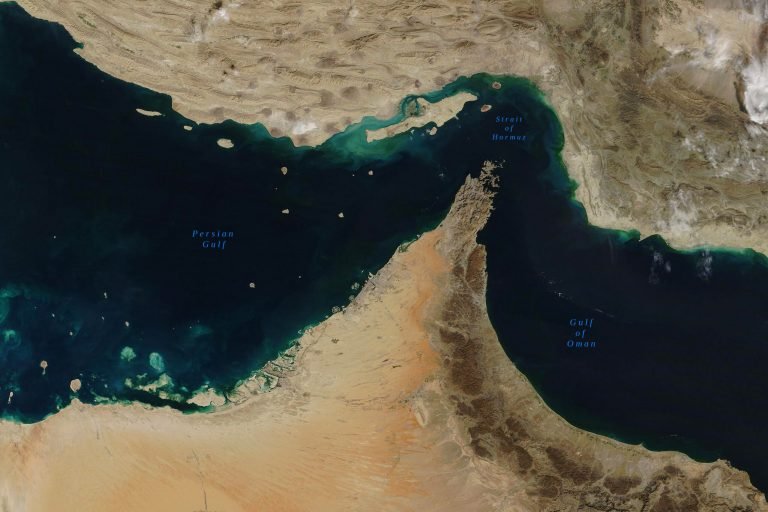
On the afternoon of 29 May 2026, CENTCOM issued a public warning that American military operations were underway near the Strait of Hormuz — a waterway that, on any given day, carries roughly 20 to 25 percent of global oil consumption. The statement landed in markets already on edge: oil had swung from speculative peaks toward $160 per barrel the previous week, only to retreat sharply as investors latched onto reports that a US-Iran diplomatic opening was in sight. The CENTCOM advisory reset those assumptions in seconds.
The sequencing matters. For days, the public record showed a Washington that was simultaneously broadcasting military intent and diplomatic possibility. President Trump, speaking to reporters on 29 May, said he would decide "soon" on a broader Iran deal and demanded the immediate reopening of the Strait of Hormuz. Earlier in the day, a Reuters dispatch confirmed he had pressed the same demand — linking any resolution to Iran's compliance with what he described as a nuclear disarmament agreement whose terms remained, as of the morning of 29 May, unconfirmed by any Iranian official. Tehran's response, carried by Iranian state-adjacent reporting and cited in wire coverage throughout the day, was blunt: Iran rejected Washington's terms. An Iranian official was cited as stating that Hormuz would remain under Tehran's management — a phrase that, in the context of the past fortnight's disruptions, meant continued interference with commercial shipping through the strait.
The result is a situation with no clean exit. Washington wants two things — full nuclear concessions and the restoration of unimpeded tanker traffic — from a Tehran that has spent years treating its nuclear programme as a non-negotiable pillar of sovereignty. That gap is not semantic. It is structural.
The Chokepoint That Cannot Be Replicated Elsewhere
To understand the leverage Iran holds, the numbers are clarifying. The Strait of Hormuz connects the Persian Gulf to the Gulf of Oman and the open Indian Ocean. Through it pass tankers carrying oil from Saudi Arabia, Iraq, the UAE, Kuwait, and Iran itself. The route is not merely conventional; it is, for many Persian Gulf producers, the only viable export corridor. A pipeline running from Saudi Arabia to the Red Sea exists, but its capacity is a fraction of what moves through Hormuz on any given week.
The disruptions over the preceding days had already manifested in observable data. Japan's crude imports, reported on 29 May, had fallen 66 percent — a collapse that reflects not just reduced demand but acute supply disruption from the Gulf. Japan is not alone in feeling this. South Korea, China, and several European refiners maintain exposure through the same shipping lanes. The disruption is not theoretical; it is showing up in the real-world flow of cargo.
That physical reality is what gives Iran its negotiating posture. The Islamic Republic does not need to sink tankers to move markets. It needs only to create enough uncertainty that insurers, shipowners, and charterers price in a war-risk premium. That premium has been visible in the oil futures curve, where the prospect of even partial Hormuz closure has pushed front-month contracts into contango. If that contango deepens — if the strait narrows from contested to blocked — the $160 scenario cited in energy market analysis earlier in the week ceases to be speculative. It becomes a function of supply arithmetic.
Washington's Conflicting Signals
The puzzle for outside observers is not that the US and Iran are talking. Diplomatic back-channels between the two powers have been active, in various forms, for four decades. The puzzle is the texture of the public signals coming from Washington.
On 28 May, oil prices fell sharply on reports that Trump was hinting at a deal with Iran that would reduce geopolitical risk. The following morning, the same president was cited by wire outlets as stating that military options remained on the table — a posture that CENTCOM's 29 May warning appeared to operationalise. A senior Iranian official, cited in reporting throughout 28-29 May, characterised the Hormuz question as a deliberate piece of Tehran's leverage in the ongoing talks, not a coincidental by-product of the confrontation.
The Reuters dispatch filed at 2200 UTC on 29 May captures the current equilibrium: Trump demanding Hormuz's reopening as a condition of any deal, while simultaneously flagging an imminent decision on the broader Iran framework. The sources do not specify what the deal's financial or security architecture would look like. They do not confirm that Iran has agreed to any of the nuclear constraints the White House has publicly described. What they confirm is that both sides are talking, both sides are posturing, and neither side has publicly moved far enough to call what is happening a negotiation rather than a siege.
The market, for now, is reading every statement as a potential inflection point. A Reuters headline on 29 May — "Oil prices fall as Strait of Hormuz reopening hopes rise" — reflects a market that has been positioned to trade on diplomatic sentiment as much as on physical supply data. That makes the strait's status not just a matter of energy security but of financial market liquidity: every false signal costs money; every real escalation costs more.
Why This Is Different From 2019
The current moment invites comparison to the Hormuz confrontations of 2019, when the US reimposed maximum pressure sanctions and Iran responded by attacking tankers in the Gulf of Oman. That episode eventually de-escalated through back-channel Omani mediation. Several analysts tracking the current crisis note a structural difference worth naming: in 2019, Iran's nuclear programme had not yet reached the enrichment levels it has now achieved. The breakthrough uranium enrichment milestone — which gave Tehran its most credible deterrent negotiating card in years — did not exist in the same form three years ago. The negotiating table has changed. The leverage has shifted accordingly.
Trump's stated plan, reported earlier in the week, to pursue what wire coverage described as "US-Iran uranium excavation" — a formulation that sits awkwardly between a diplomatic framework and a military-enforcement mechanism — indicates that Washington's own officials are still working through what a deal actually looks like. If the plan involves Iranian enrichment suspension in exchange for sanctions relief, that is a framework Tehran has historically found tolerable. If it involves intrusive inspections and a demand for full programme dismantlement — which is what the word "disarmament" implies in public statements — then the gap is not a detail to be negotiated away. It is a fundamental position clash.
The sources do not clarify which version the White House is actually pushing. What they show is a US posture that is simultaneously aggressive and open-ended — which is, in the view of regional analysts, precisely the posture that invites miscalculation.
Who Holds the Cards — and Who Pays the Bill
The honest answer, based on what the wire record shows as of 29 May 2026, is that neither side has full control of the outcome. Iran has geographic and economic leverage through the strait itself. Washington has leverage through the sanctions regime, which continues to crater Iran's oil export revenue, and through a carrier strike group whose presence in the Gulf is not abstract. CENTCOM's warning on 29 May is not a bluff — it is a statement of operational fact about the posture of US forces in the region.
The asymmetry is this: Iran can disrupt the strait at relatively low cost and with high psychological impact. The US can impose severe economic pressure over a longer horizon, but faces domestic political constraints on how far that pressure can escalate before it generates pushback from allies who depend on Gulf oil. Japan has already demonstrated one consequence of disruption: a 66-percent collapse in crude imports that, if sustained, will reshape refining economics across Asia for months. That is the cost signal that should be getting more attention than it is.
The timeline, as things stand, is unclear. Trump said a decision was coming "soon." Tehran showed no sign of moving on its core position. Markets are reacting to the gap between those two facts — upward when optimism surfaces, downward when reality reasserts itself. The practical consequence is that anyone who depends on Hormuz transit — refiners, traders, airlines, manufacturers — is currently pricing in a scenario that has no clear resolution date.
That is the condition the strait has created: not a crisis that is happening, but a crisis that is available. Both sides know it. The world is paying for the uncertainty in every barrel that moves, or fails to move, through a narrow band of water barely sixty miles wide.
Monexus is tracking this story. This article reflects the wire record as of 29 May 2026. Further CENTCOM statements, Iranian foreign ministry briefings, and oil-market data will update the picture.
Wire provenance
This editorial synthesis draws on the following public wire/social posts:
- https://t.me/CryptoBriefing/14412
- http://reut.rs/4dU1h6U
- https://t.me/CryptoBriefing/14410
- https://t.me/CryptoBriefing/14409
- https://t.me/CryptoBriefing/14405
- https://t.me/CryptoBriefing/14396
- https://t.me/CryptoBriefing/14406
- https://t.me/CryptoBriefing/14407