The Information Architecture of Escalation: What Telegram Tells Us About How the Israel-Hezbollah Conflict Is Being Narrated
Three Telegram posts from a single Iran-aligned channel on 29 May 2026 offer a window into how the information ecosystem surrounding the Israel-Hezbollah war has become an instrument of strategic communication as consequential as the kinetic operations themselves.
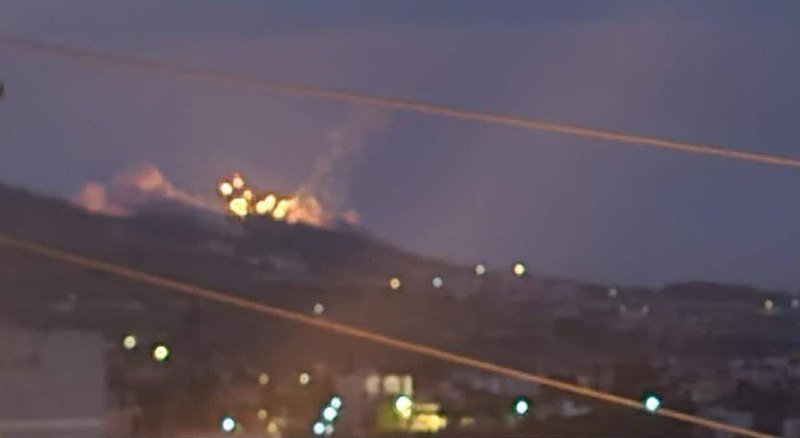
The three Telegram posts, spaced sixteen minutes apart on the afternoon of 29 May 2026, read like dispatches from a parallel wire service. At 18:22, a drone strike on Nabatieh. At 18:28, an Israeli aerial attack on al-Zararieh. At 18:38, three rockets fired at what the channel calls "Zionist soldiers" — language that has no place in Reuters or AP style sheets but sits comfortably in the editorial tradition of Iran's state-adjacent media ecosystem. All three reports credit Al Jazeera reporters on the ground.
What these posts reveal is not the military situation in southern Lebanon — that requires sources and access this Telegram channel does not independently possess — but something arguably more significant: the architecture of information through which the conflict is being processed, translated, and distributed to different audiences.
The framing differential
When "Zionist soldiers" appears in a JahanTasnim post and "Israeli forces" appears in a BBC dispatch describing the same incident, readers are not encountering two versions of the same fact. They are encountering two distinct informational products shaped by different editorial mandates, different political constraints, and different strategic calculations. This is not a new phenomenon — the Arab-Israeli conflict has always generated competing media ecosystems — but the Israel-Hezbollah war, now in its twentieth month, has produced an unusually sharp bifurcation in how the same events are narrated to different publics.
The pattern visible in these three posts — sourced from a channel with clear Tehran alignment, attributed to Al Jazeera reporters who occupy a complicated position as both a legitimate regional news organization and an institution shaped by Qatari geopolitics — reflects a structural reality that the Western wire services often obscure behind claims of objectivity. No major news organization is a neutral observer of this conflict. The question is not which outlet is "fair" but how each outlet's structural position shapes what its audience sees and hears.
Information as strategic instrument
The Telegram posts do not merely report — they recast. The attack on al-Zararieh, described in the post as a "Zionist regime" operation, carries a framing that immediately positions the incident within a resistance narrative rather than a security narrative. This is not accidental. Channels operating within Iran's informational apparatus have developed a coherent strategy of narrative construction that treats every incident as an opportunity to reinforce a particular interpretation of the broader conflict.
That interpretation — that Israel is the aggressor, that Hezbollah's operations are defensive, that Western coverage systematically obscures Palestinian and Lebanese suffering — is not shared by the mainstream Western wire services. But treating one framing as legitimate and the other as mere propaganda misses the point. Both sides are engaged in a form of strategic communication that has become inseparable from the kinetic conflict itself. The military operations and the information operations proceed in parallel, each shaping the other.
The Al Jazeera variable
The fact that all three Telegram posts attribute their reporting to Al Jazeera reporters is significant. Al Jazeera English occupies a particular position in the Western media landscape: it is more willing than most Western outlets to foreground Palestinian and Lebanese civilian perspectives, to question Israeli military claims, and to provide context that Western wire services often omit. For audiences in the Arab world, Al Jazeera's coverage fills gaps that Western outlets leave empty. For Western audiences, it often reads as advocacy — which is, in structural terms, precisely what it is.
The network's Qatari ownership shapes its editorial posture in ways that are real but often overstated in Western criticism. Al Jazeera's willingness to amplify Iranian-aligned perspectives does not make it a Tehran mouthpiece; it makes it a outlet that sees editorial value in providing perspectives that the Western wire services systematically underrepresent. That is a different thing. But it is also not nothing.
What the gap tells us
The sixteen minutes separating three posts about three separate incidents in the same theatre is not coincidence — it reflects a media environment in which both the intensity of operations and the velocity of reporting have increased substantially since the ceasefire negotiations collapsed in early 2026. What the Telegram posts cannot tell us — because no single source can — is which incidents constitute disproportionate responses, which represent legitimate self-defense, and which reflect escalation decisions that will determine whether the conflict expands or eventually winds down.
Those judgments are not made in Telegram channels or even in Western wire services. They are made in the corridors where military assessments, diplomatic calculations, and political constraints intersect. What the information ecosystem does — and what these three posts, small as they are, illustrate — is determine which fragments of that process different audiences are permitted to see, and through what lens they are encouraged to interpret what they see.
The reader who encounters "Zionist soldiers" in a Telegram post and "Israeli forces" in a Western dispatch is not being shown two facts. They are being shown two informational products, shaped by different strategic calculations, aimed at different audiences, and serving different purposes within the broader conflict. Understanding that architecture — not choosing between its outputs — is the more useful analytical task.
That task becomes more urgent as the conflict continues to generate incidents that are reported, translated, and distributed at increasing speed across multiple media ecosystems simultaneously. The Telegram posts from 29 May are a small example of a much larger phenomenon: information as a terrain of competition, where control over the narrative is itself a strategic objective. Whoever shapes how an event is understood shapes the political space within which decisions about that event are made.
That is the stakes. And it is not a media story — it is a conflict story, of which the media environment is now an inseparable component.
Wire provenance
This editorial synthesis draws on the following public wire/social posts:
- https://t.me/JahanTasnim
- https://t.me/JahanTasnim
- https://t.me/JahanTasnim