Iran Blockade Intensifies as US Intercepts 115 Vessels, Trump Claims Strikes Thwarted Nuclear Timeline
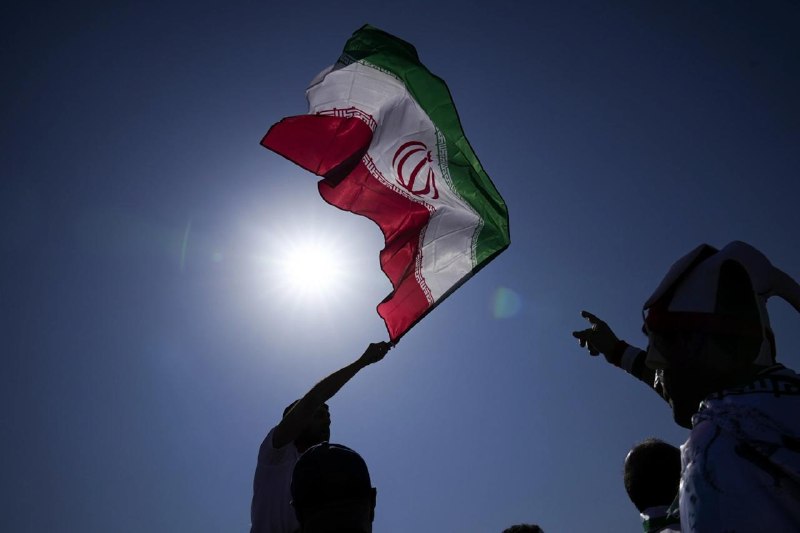
The United States has redirected 115 commercial vessels away from Iranian ports as part of a marked escalation in blockade enforcement against Tehran's maritime trade, according to reporting by CryptoBriefing on 29 May 2026. The interdiction operation, which combines naval presence with secondary sanctions pressure on shipping intermediaries, represents a qualitative shift from the sanctions monitoring posture that characterised the Biden-era approach.
The blockade intensification comes as President Donald Trump claimed that US strikes had thwarted Iran's nuclear ambitions — a framing that positions the enforcement campaign as part of a coherent strategy to deny Tehran a weapons capability. But the sources provide no independent confirmation of what was struck, against which facilities, and with what measurable effect on Iran's nuclear programme. The gap between the administration's characterisation and the verifiable operational record is wide enough to require explicit acknowledgment.
The Blockade: Scale and Operational Scope
The redirection of 115 vessels is the most concrete data point in the thread. It suggests a shift from passive sanctions monitoring — tracking and reporting Iranian trade flows — to active interdiction designed to physically deny maritime access. Whether this constitutes a legal blockade under the law of naval warfare is a question the sources do not address, but the operational intent is unambiguous: impose costs on every actor in the supply chain willing to facilitate Iranian commerce.
The enforcement mechanism almost certainly relies on a combination of direct naval interception in international waters, port-state denial through allied coast guards, and — critically — secondary sanctions on ship owners, insurers, and flag registries. The dollar-denominated global financial system gives the US leverage over all but the most isolated shipping operators, because most commodity trade financing flows through US-correspondent banks regardless of the vessel's flag or the cargo's origin.
Previous administrations used this leverage to track Iranian oil exports and reduce Tehran's hard-currency revenues. The current approach appears more aggressive: not merely observing the flow but actively redirecting it. The 115-vessel figure, if accurate, suggests either significant merchant compliance with US warnings — ships choosing to avoid Iranian ports rather than face interdiction — or a credible enough enforcement posture that intermediaries are pricing Iranian trade as too risky.
Trump's Nuclear Claims: What's Verified, What's Asserted
Trump's statement that US strikes thwarted Iran's nuclear ambitions is framed by the CryptoBriefing source as an administration claim, not as a verified fact. The sources provide no information on which facilities were struck, what was hit, or how US intelligence assessed the damage. That is not a minor omission.
Iran's nuclear programme operates across multiple sites — uranium mines, conversion facilities, enrichment cascades at Natanz and Fordow, and a research reactor at Arak. Hardened and deeply buried facilities are among the hardest targets in military targeting. Intelligence assessments of their status vary widely across administrations and agencies. Without a credible account of strike scope, it is impossible to evaluate whether the operation degraded enrichment capacity, set back a weapons timeline, or produced primarily a signal of willingness to use force.
The framing of "thwarted ambitions" is strategically useful for an administration that has consistently argued economic and military pressure is the appropriate response to Iran's nuclear programme. It positions the blockade and the strikes as a coherent package: deny the commerce, degrade the capability, claim the success. But the evidence trail for the capability degradation claim stops at the assertion. Readers evaluating the administration's case need to know that.
Structural Constraints: Why Enforcement Has Limits
The broader structural question is whether intensified interdiction and strikes can achieve what sanctions and pressure campaigns have historically struggled to deliver: behavioural change in Tehran.
The BYD announcement — a major Chinese automotive and technology group detailing a 4-nanometer chip for autonomous driving systems — is not directly about Iran. But it illustrates a structural dynamic that shapes the enforcement environment. Chinese firms are achieving semiconductor milestones that, a decade ago, required American or Taiwanese fabrication. That trajectory matters for sanctions enforcement because it widens the set of dual-use technologies that can flow outside US-controlled supply chains.
Chinese companies have previously provided Iran with telecommunications equipment, vehicle components, and surveillance technology that fall outside the scope of US export controls. The pattern suggests that as Chinese industrial capabilities advance, the set of goods Tehran can source without touching dollar-denominated or US-controlled supply chains expands. Blockade enforcement targets the maritime layer of that ecosystem; it does not address the technological layer underneath it.
This is not an argument that sanctions are ineffective. The dollar system retains deep structural leverage over global trade financing, and correspondent banking restrictions genuinely constrain what most operators can do. But the leverage depends on the target lacking viable alternatives. As alternatives materialise — through Chinese industrial policy, through barter arrangements with non-Western partners, through gold-based settlement — the enforcement ceiling drops. The administration may be succeeding at demonstrating resolve and degrading specific capabilities. It is not clear that it is succeeding at changing the structural conditions that allow Iran to absorb pressure and continue its programme.
Forward View: Escalation Without Resolution
The sources do not indicate what the administration hopes the endgame looks like, or what off-ramp it has offered Tehran in exchange for nuclear concessions. Previous maximum-pressure campaigns produced short-term revenue reduction but failed to deliver table concessions. Iran absorbed significant economic damage, adapted its trade patterns, and continued enrichment activities at levels that, while below weapons-grade, kept the programme advancing.
The current enforcement posture carries additional risks. A naval interdiction operation that is described by the administration as a blockade has no clear international mandate and limited allied support. European governments have endorsed pressure on Iran but have not endorsed escalation to the point of physically interdicting commercial shipping. Asian partners — key buyers of Iranian oil in prior cycles — have shown no appetite for complicating their China and energy relationships to support a US blockade.
The asymmetry matters: the US can demonstrate enforcement capability without demonstrating that enforcement changes Iranian behaviour. Tehran, watching sanctions cycles repeat, will calculate whether the current pressure represents a durable shift in the strategic environment or another phase in a familiar pattern. The former would require an international coalition and a credible negotiation offer that the sources do not indicate is on the table. The latter points toward another cycle of partial disruption, followed by adaptation, followed by renewed pressure.
What the sources confirm: the redirection of 115 vessels and the intensification of maritime interdiction represent a genuine operational escalation from prior enforcement levels. Trump's characterisation of strikes as having thwarted Iran's nuclear ambitions is an administration claim with no independent corroboration in the available reporting. The sources do not specify which Iranian facilities were struck, what damage was assessed, or how the strikes connect to the nuclear programme's current status.
The CryptoBriefing Telegram channel reported on both the blockade enforcement and the Trump nuclear claims on 29 May 2026. The Nikkei Asia reporting on BYD's 4-nanometer chip announcement appeared the same day. No additional verification is possible from the sources currently in the thread context.
The desk observed that the blockade enforcement story received modest wire pickup on 29 May, with the emphasis placed on the 115-vessel figure as a metric of enforcement intensity. The Trump nuclear claims were reported at face value by most outlets without the precision gap that the sourcing reveals. Monexus chose to foreground that gap and the structural context — China's technology trajectory and its implications for long-term enforcement ceiling — rather than treat the administration's framing as established fact.
Wire provenance
This editorial synthesis draws on the following public wire/social posts:
- https://t.me/CryptoBriefing/2841
- https://t.me/CryptoBriefing/2840
- https://t.me/NikkeiAsia/1239